Artist Tom de Freston has channelled the profound experience of seven pregnancy losses and eventual parenthood into a powerful new exhibition that reconsiders artistic traditions and personal trauma.
Transforming Grief Through Art
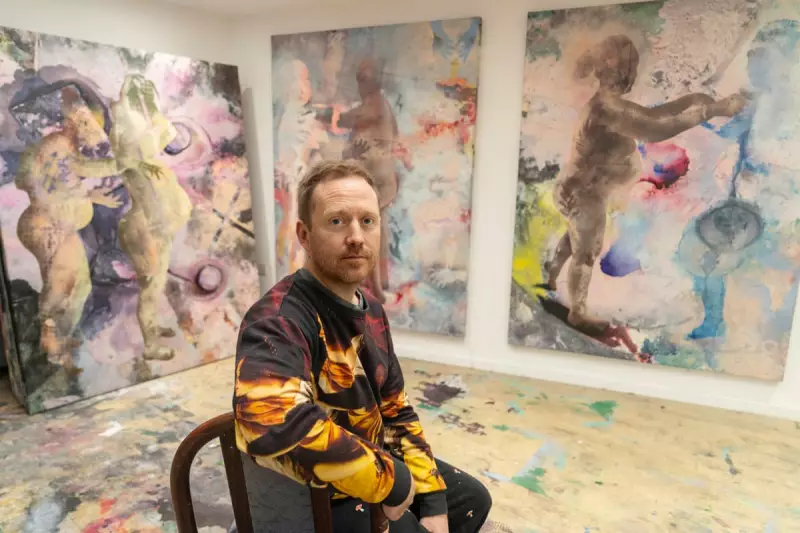
Surrounded by large-scale nude portraits in his Oxfordshire studio, de Freston explains how painting his wife, novelist Kiran Millwood Hargrave, became a crucial method for processing their collective grief. The couple endured seven pregnancy losses before welcoming their daughter, Coral, in 2023, with the artworks initially created as private therapeutic exercises rather than for public display.
"The studio was my space to work through stuff that was beyond language, without burdening Kiran with it," de Freston reveals. The paintings capture Millwood Hargrave at various stages of pregnancy, documenting both the hope and heartbreak of their journey toward parenthood.
Challenging Artistic Traditions
De Freston's exhibition, Poíēsis at London's Varvara Roza Galleries from 30 November to 20 December, draws inspiration from Titian's Poesie series while consciously questioning the male gaze tradition. The artist deliberately engages with the problematic history of male artists depicting female subjects, asking: "What does it mean as a male artist to be looking at the female figure? And where does the agency sit?"
Unlike traditional artist-muse relationships, Millwood Hargrave actively collaborated in the creative process. "These aren't posed," she clarifies during a telephone interview. "They are all from photographs that he took in the domestic space throughout my pregnancies." She describes the works as "worshipful and considered" rather than sexualised, noting that "you can feel the love in them."
From Grief to Connection
The mythological story of Eurydice and Orpheus provided a powerful framework for de Freston's exploration of distance and longing between partners experiencing pregnancy loss. "You're trying to get to this figure, or to their unseen internal world. And even though you're intimately connected to them, you can't," he explains, highlighting the emotional chasm the works attempt to bridge.
Following their daughter's birth, de Freston experienced a dramatic shift in perspective. "She took a breath, and it instantaneously felt like the whole world somehow unlocked," he recalls. Becoming a father shattered his "sense of you as this artist, with the importance of your vision of the world", replacing it with profound awareness of life's interconnectedness.
Millwood Hargrave views the paintings as "elegies" that capture a precious, terrifying time. "We were so ecstatic and scared in this pregnancy," she remembers, acknowledging the magical thinking that accompanies pregnancy after multiple losses. De Freston describes the creative process as "ritualistic, like spells" and "in a kind of secular way, like prayers."
The exhibition represents a significant contribution to visual art's engagement with pregnancy and miscarriage, topics that remain relatively rare in gallery spaces. Through these intimate works, de Freston has created both a personal testament to resilience and a broader meditation on love, loss, and the transformative power of parenthood.