Christian Kracht's new novel Air presents two parallel narratives that initially seem unrelated. In one, a reclusive interior designer named Paul travels from Orkney to Stavanger, Norway, to paint a data centre's interior white—not just any white, but the perfect white. After a freak power outage, Paul vanishes, and the magazine editor Cohen, who commissioned him, overdoses on barbiturates. In alternating chapters, a medieval fantasy unfolds: a stranger, shot by a nine-year-old girl who mistook him for a deer, flees a vengeful duke with the girl through a plague-ridden town, a barren wasteland, and into a subterranean stone city.
Connections Between Worlds
The two stories connect through obscure clues: a painting of Merlin and Lancelot in Paul's home, references to neopaganism and Arthurian legend, and a startling anachronism—the stranger uses a modern handgun. After Paul's disappearance, Cohen finds a manual for 3D-printing a ceramic pistol in Paul's bag. The power outage at the data centre seems to have created a glitch, opening a portal between modern subjectivity and a medieval fantasy world.
Themes of Consciousness and Ennui
During their meeting, Cohen speculates that if thoughts can reside in physical space like a digital server, they might transcend organic life. The stranger later becomes aware of himself as a character, experiencing deja vu and feeling the world flatten into two dimensions. The novel's metaphysical puzzle is rooted in mundane middle-aged ennui: Paul laments a world of Instagram and vernacular architecture, dreaming of a remote island with no electricity. Cohen is bored with Nordic chic and believes future wars will be waged out of boredom.
Satire and Style
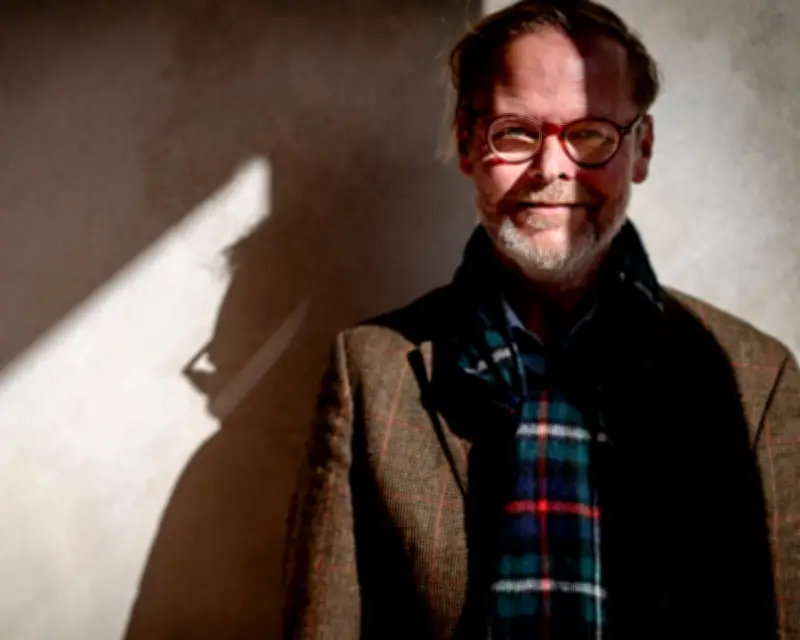
Kracht, a Swiss author in his late 50s, is known for satirizing gen X affluence. Air replaces the playful spirit of his previous novel Eurotrash with a dull, world-weary sardonicism. Paul and Cohen are archetypes of cosmopolitan privilege, their self-hatred conveyed through cultural references like Muji stationery and 90s normcore. The prose, in Daniel Bowles's translation from German, is emotionally inert. When Cohen overdoses, it is not out of sadness but because he just didn't care.
Escapism and Parable
The fantasy narrative offers sublime visions of natural beauty—ice sheets, rock formations, migrating birds, the aurora—providing wishful escapism from spiritual malaise. Cohen's desire to redecorate the data centre feels therapeutic: an attempt to declutter the psyche through a visual cleanse. The novel's rough-hewn quality befits its fuzzy, porous reality. Air is best understood as a parable warning that consciousness, vulnerable in material infrastructure, can be corrupted like a radio signal, bringing madness near. Kracht takes a familiar premise and makes it suggestively strange.