Nature's Ingenious Solution to a Mathematical Conundrum
In a remarkable demonstration of natural intelligence, soap bubbles have provided the definitive answer to a long-standing mathematical puzzle about creating the most efficient road network between four towns. The problem, which has challenged mathematicians for years, involves connecting four towns situated at the corners of a perfect square using the smallest possible total length of road.
The intuitive solution that most people propose involves drawing straight lines between opposite towns, creating a cross pattern. If the square has sides measuring 1 kilometre each, this straightforward approach requires approximately 2.83 kilometres of road. While this seems logical, it turns out nature has a more efficient answer.
The Soap Bubble Revelation
The truly minimal network, as revealed through soap bubble experiments, features an unexpected design with three angles measuring exactly 120 degrees at the intersection points. This configuration reduces the total road length to approximately 2.73 kilometres, shaving off about 4 per cent of the material needed for the conventional cross pattern.

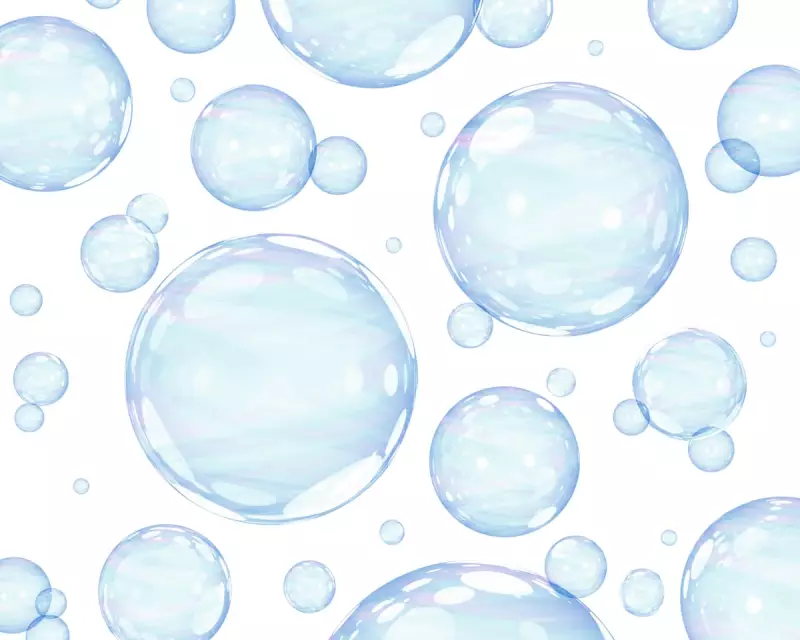
Proving this pattern mathematically requires advanced calculus, but soap bubbles find the solution instantly. When researchers create a physical model of the puzzle using two transparent plates with four short dowels representing the towns and submerge it in soapy water, the resulting soap film naturally forms the optimal network pattern.
Connection to Natural Patterns
This solution demonstrates a profound connection to patterns found throughout nature. The 120-degree angles that characterize the minimal network are the same angles that create hexagons in honeycomb structures. Bees use this geometric pattern to store honey in the most space-efficient manner possible, showing that both soap bubbles and honeybees understand optimization principles that often elude human mathematicians.
The phenomenon highlights how nature consistently finds optimal solutions to complex problems through physical processes. This particular puzzle serves as a powerful illustration of how natural systems can solve optimization challenges that would otherwise require extensive mathematical analysis and computation.
For those interested in exploring the science behind this phenomenon further, the classic 1976 article 'The Soap Film: An Analogue Computer' from American Scientist provides additional insights into how soap films can function as natural computing systems for solving complex geometric problems.