They emerged from the earth with a formidable presence, shaping the Scottish skyline for generations. A powerful new photographic collection, Brutal Scotland, casts a fresh eye on the nation's uncompromising concrete landmarks, arguing for their recognition as vital pieces of social and architectural history.
The Concrete Ambition of Postwar Scotland
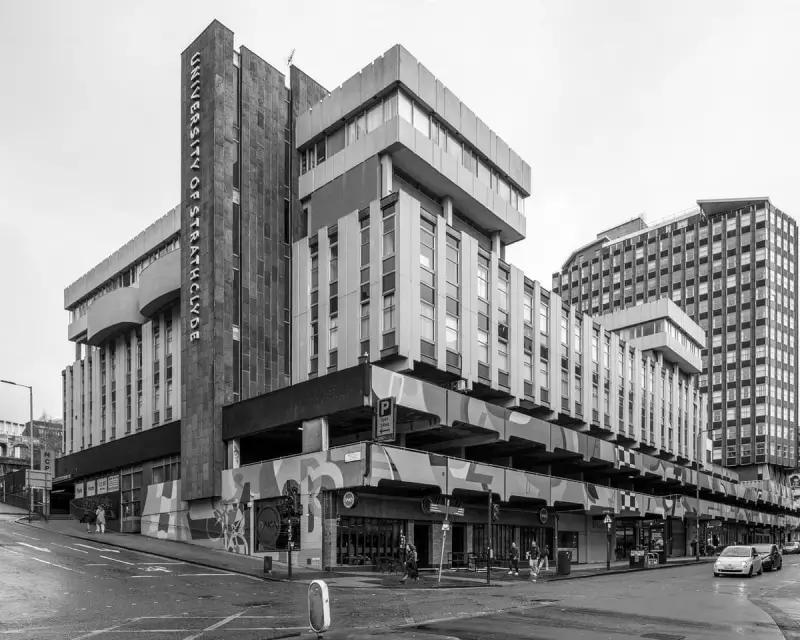
From the mid-1950s to the late 1970s, Britain experienced a dramatic architectural movement driven by social ambition. In Scotland, this period produced some of the boldest and most ambitious structures ever built. These buildings – stadiums, homes, leisure centres, churches, and libraries – were conceived for a nation in flux, embodying a vision of a new era free from the 'five evils' of want, disease, ignorance, squalor, and idleness identified by William Beveridge.
The aftermath of the Second World War, coupled with population growth and slum clearance, demanded rapid, economical construction. Concrete became the material of choice, favoured for its strength, affordability, and the dramatic, column-free spans it enabled. This allowed architects to design open, sculptural forms that would define the Brutalist aesthetic.

Icons in Concrete: From Pools to Churches
The book, featuring photography by Simon Phipps and text by Catherine Slessor, documents standout examples across the country. One highlight is the Dollan Aqua Centre in East Kilbride. Designed by Alexander Buchanan Campbell and opened in 1968, it was Scotland's first competition-length pool. Its monumental vaulted hall, supported by splayed concrete ribs, was directly inspired by Kenzo Tange's gymnasia for the 1964 Tokyo Olympics.
Other key structures include the listed Kildrum Parish Church in Cumbernauld (1960–62) and the Wolfson Centre in Glasgow (1969–72). In Dundee, the Medical Sciences Institute (1970) and the former Thomas C Keay Ltd offices (1970) stand as testaments to the era's civic confidence. Phipps describes the now-closed Lang Stracht Hotel in Aberdeen as having a 'sculptural confidence that rose out of the ground like it belonged there'.
A Legacy Reassessed and at Risk
Despite their grandeur, many of these buildings have faced decades of neglect, often perceived as ugly or alienating. Yet, as Phipps notes, 'they were never just about concrete and form – they were about ideas, about society'. His journey began in 1994 with a photograph of the Fulton Building in Dundee and evolved into a nationwide project documenting not just architecture but the often-overlooked public art that accompanied it.
The current revival of interest, catalysed by the internet and a reaction against bland neo-modernism, sees Brutalism celebrated on everything from tea towels to gallery walls. However, the physical structures themselves remain vulnerable. The poignant Bernat Klein Studio in High Sutherland (1972), a graceful modernist pavilion, sits on the Buildings at Risk Register, though it was acquired for restoration in July 2025.
Ultimately, Brutal Scotland makes a compelling case for looking past the weathering and prejudice. These buildings represent a unique, historically significant corpus—a 'big sneeze in architecture', as John Summerson put it, whose reverberations of ambition and social hope can still be felt across Scotland's cities and new towns today.