An Architectural Icon Seeks New Steward
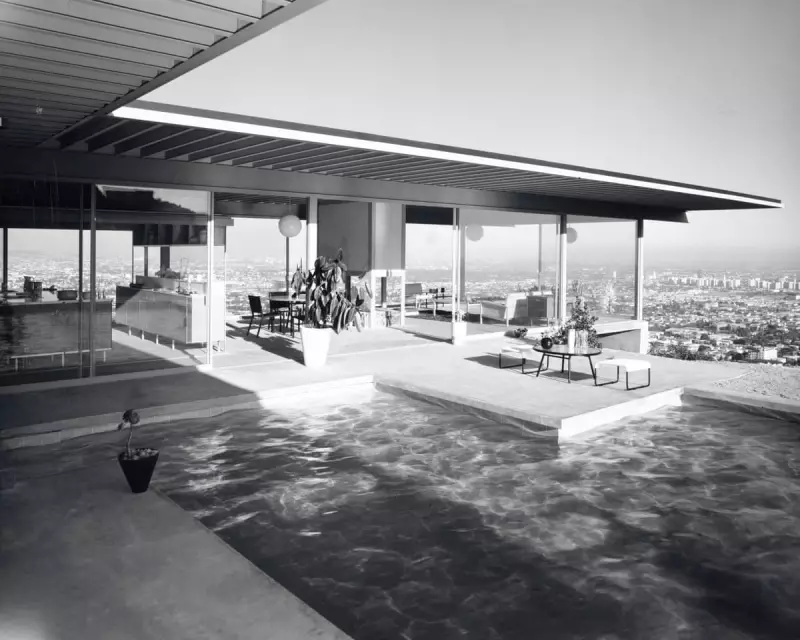
One of Los Angeles's most celebrated architectural landmarks, the Stahl House, has been listed for sale for the very first time in its 65-year history. Perched dramatically in the Hollywood Hills, this cantilevered midcentury modern masterpiece carries an asking price of $25 million.
A Family's Difficult Decision
The Stahl family, who have owned the property since its construction, released a statement explaining their decision to sell. Bruce and Shari Stahl, children of the original owners, cited the increasing challenges of maintaining the historic home. "This home has been the center of our lives for decades," they wrote, "but as we've gotten older, it has become increasingly challenging to care for it with the attention and energy it so richly deserves."
The family emphasised they are seeking a new custodian who appreciates both its architectural importance and its cultural significance to Los Angeles and beyond. They described the ideal buyer as someone who understands the responsibility of stewarding such an important piece of architectural history.

From Humble Beginnings to Architectural Legend
The story of the Stahl House began in May 1954 when CH "Buck" and Carlotta Stahl purchased a challenging hillside plot in the then-undeveloped Hollywood Hills for $13,500. Buck Stahl, a graphic designer and sign painter, often remarked that despite the home's eventual fame, "nobody famous ever lived here," describing his family as "blue-collar family living in a white-collar house."
Buck created the initial design during the summer of 1956, though many architects were hesitant to build on such a precarious site. The breakthrough came in November 1957 when the Stahls interviewed architect Pierre Koenig, who agreed to take on the ambitious project.
With support from the innovative Case Study program, spearheaded by Arts & Architecture magazine editor John Entenza, the Stahls received subsidies to hire Koenig. Adrian Scott Fine, president of the Los Angeles Conservancy, explained that the program "was about experimentation" and "using new materials and building in places that maybe previously the technology didn't really allow."
Construction began in May 1959 with the home becoming Case Study house No 22. The family notes that construction cost "a mere $37,500" and the home was ready for occupancy by May 1960. Fine describes the result as "an idealized version of what everyone thinks LA is and should be."
The Photograph That Made History
Soon after completion, architectural photographer Julius Shulman captured what would become one of the most famous architectural photographs of all time. The iconic image, taken through the home's floor-to-ceiling glass windows, shows two women seated in the living room appearing to float above the glittering Los Angeles skyline.
Kevin Daly, founder of Kevin Daly Architects and UCLA professor, noted: "I think the enduring impact of Shulman's photo is due to the way it conveys an idea about living in Los Angeles, an ambivalence about being both in the city and removed from it."
Preserving a Cultural Landmark
The Stahl House's cultural impact extends beyond architecture, with appearances in numerous films and television shows including Playing by Heart (1998), Galaxy Quest (1999), and Nurse Betty (2000). Its significance was formally recognised when Los Angeles declared it a historic-cultural monument in 1999, followed by listing on the National Register of Historic Places in 2013.
The home has been open for public tours for the past 17 years, with all currently sold out through February. The family has promised to give "ample notice" before discontinuing tours following the sale.
The property listing emphasises the importance of finding a buyer committed to preservation, stating: "For collectors of design, patrons of architecture, or institutions seeking to safeguard an American masterpiece, there is simply nothing comparable. This is not merely a sale; it is a passing of responsibility."

As Adrian Scott Fine observed, the transition to new ownership always brings concern for such significant properties: "I think any time a longtime owner, and a stewardship like this, is transferring hands of a property like this, it always gives us a little bit of a pause – because you never know what the next owner, what their intentions will be."