If you've ever found yourself navigating the labyrinthine walkways of the Barbican Estate, you've likely pondered the reasoning behind its distinctive concrete landscape. This iconic London development represents far more than just architecture - it stands as a testament to ambitious post-war idealism born from destruction.
From Ashes to Ambition
The area now occupied by the Barbican suffered catastrophic damage during the Blitz, with its chemical-storing warehouses intensifying fires that reduced entire neighbourhoods to smouldering ruins. Among the few surviving structures was St Giles-without-Cripplegate church, an 11th-century building that remains operational today, providing a stark contrast to the estate's modern towers.
Following the war, city planners faced an unprecedented opportunity: a blank canvas equivalent to a small city. Rather than recreating the traditional street patterns, they envisioned something revolutionary - a utopian community elevated above the hustle of city life.

Architectural Ambition and Design
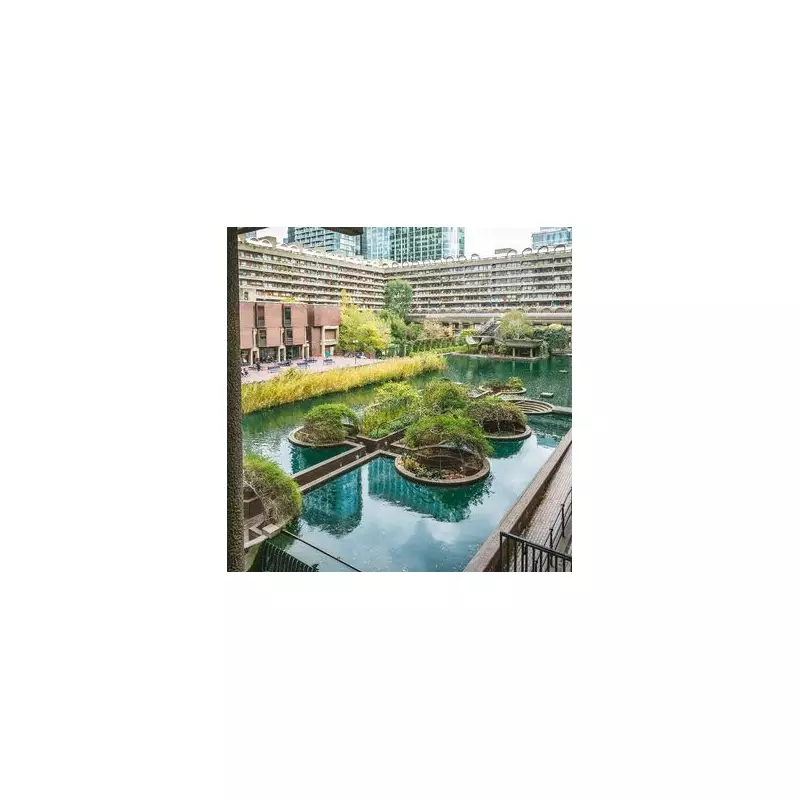
Construction commenced in the late 1950s, with architects drawing inspiration from European civic spaces. The design incorporated communal piazzas, reflective lakes, elevated walkways and striking silhouettes that would become Brutalist landmarks.
The development eventually encompassed approximately 2,000 flats of diverse configurations, ranging from single-floor studios to expansive family apartments and even two-level houses suspended above street level. Three residential towers soared over 40 storeys high, complemented by extensive terraces and gardens.
When the Barbican Centre opened in 1960, it served exclusively as a private social hub for residents. The cinemas, theatre, rehearsal rooms and library were initially accessible only to those living within the estate, with a single entrance discreetly positioned deep within the complex.
Enduring Legacy and Community
Today, the Barbicon stands as one of Europe's largest arts centres and an architectural icon. Approximately 4,500 residents call the estate home, comprising City workers, academics, artists and long-term inhabitants who form one of London's most close-knit communities.
The maze-like pathways, deliberately designed to foster community interaction while reducing traffic, continue to serve their original purpose. The strategic placement of towers maximises natural light between buildings, while the engineered lakes provide tranquil oases within the financial district.
The estate even houses a remarkable conservatory containing around 1,500 species of plants and trees, adding to its self-contained character. Property listings show flats starting from £210,000, reflecting the ongoing demand for this unique living environment.
While the utopian vision never fully materialised as architects originally hoped, the Barbican remains a powerful monument to post-war optimism. It represents not just the reconstruction of buildings, but the reimagining of how Londoners might live following chaos. The estate continues to embody that radical spirit of renewal with every concrete walkway and reflective lake.