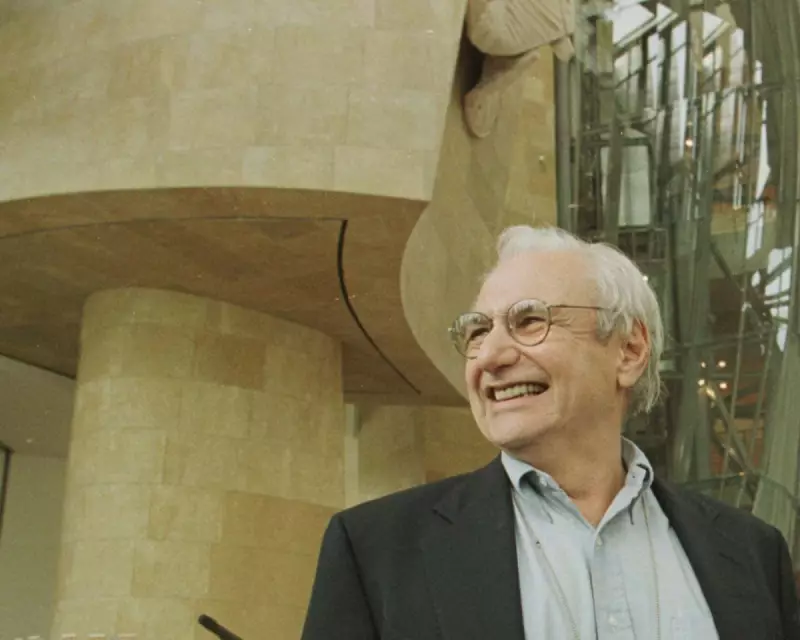
The architectural world is in mourning following the death of Frank Gehry, the Canadian-American visionary whose sculptural, titanium-clad buildings redefined city skylines across the globe. He was 96.
Gehry passed away from natural causes at his home in Los Angeles, confirmed by his firm, Gehry Partners. His death marks the end of an era for a designer who was arguably the most famous architect of his time, transforming the very purpose of cultural buildings with masterworks like the Guggenheim Museum in Bilbao.
From Toronto to Global Stardom
Born Frank Owen Goldberg in Toronto on 28 February 1929, his early life was shaped by creativity. His grandmother would buy bags of wood scraps for him to build imaginary cities, a formative experience he often cited. The family moved to Los Angeles in 1947, where he later studied at the University of Southern California and Harvard.

After a stint in the US Army, he began his career in conventional practices before founding his own firm in 1962. An early sign of his rebellious spirit came with the 1978 renovation of his own Santa Monica home, where he wrapped a traditional bungalow in a chaotic shell of corrugated metal and chain-link fencing. This act announced his break from modernist orthodoxy.
The Bilbao Effect and Architectural Legacy
While he designed notable buildings like the Vitra Design Museum in Germany, it was the 1997 opening of the Guggenheim Museum Bilbao that catapulted him to international superstardom. The building's swirling, shimmering forms were an instant sensation, credited with revitalising the entire Basque city. This phenomenon became known globally as the "Bilbao Effect" – the power of architecture to drive economic and cultural regeneration.
Other landmark projects followed, cementing his legacy. These include the Walt Disney Concert Hall in Los Angeles, the Fondation Louis Vuitton in Paris, the Biomuseo in Panama, and the Dr Chau Chak Wing Building for the University of Technology Sydney, often called the "brown paper bag" building.
His work, often labelled deconstructivist, was celebrated for its artistic freedom and engineering brilliance. He received architecture's highest honours, including the Pritzker Prize in 1989 and the Royal Institute of British Architects (RIBA) Gold Medal in 2000.
A Complex Character and Enduring Influence
Gehry was known as a charismatic, sometimes combative figure, fiercely protective of his artistic vision. He maintained that his buildings were deeply contextual and functional, not mere sculptures. His later years saw him engage with digital design tools to realise ever more complex forms.
He is survived by his second wife, Berta Isabel Aguilera, his two sons from his first marriage, and several grandchildren. The world of design has lost a true original, a man who taught us that buildings could dance, shimmer, and inspire awe, forever changing the relationship between architecture and the public sphere.