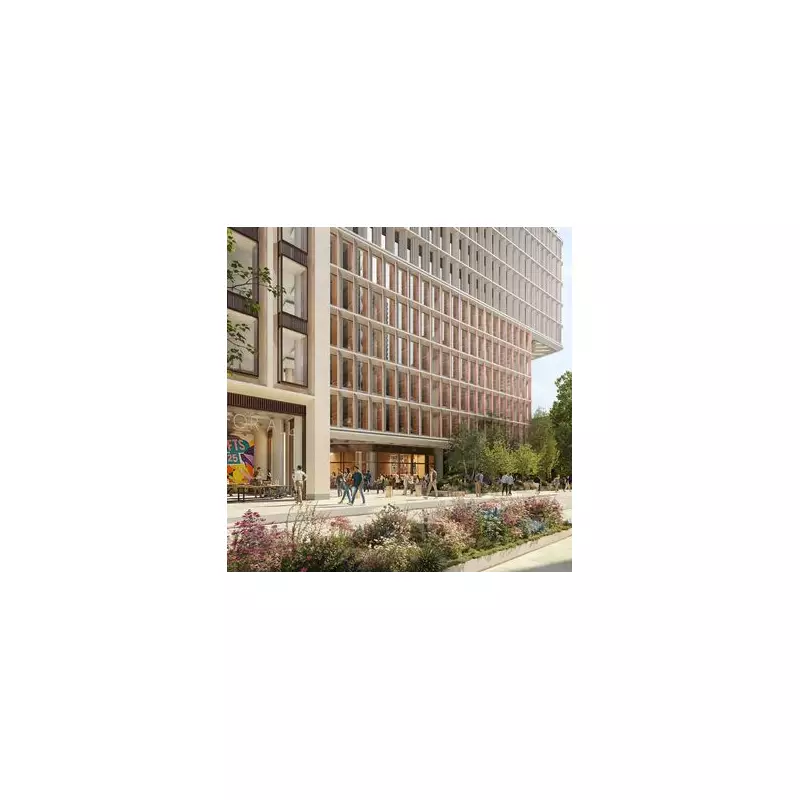
‘Needlessly Overpowering’: Barbican Residents Rally Against 21-Storey Office Plan
A contentious proposal to demolish and replace a 1980s office building with a 21-storey tower directly opposite the Barbican Estate in the City of London has been met with a wave of public dissent, amassing more than 730 formal objections in just two months.
The scheme for One Silk Street, currently occupied by the Magic Circle law firm Linklaters, was submitted this summer by real estate company LaSalle and developer Lipton Rogers. It proposes razing the existing structure and constructing a new, significantly larger office block, alongside a series of public realm improvements.
Resident Outcry and Heritage Concerns
The plans have ignited strong feelings among residents of the iconic Barbican Estate, a Grade II listed complex renowned for its brutalist architecture. Many homes sit just across the road from the proposed development site.

One objector, Jessica Bailey, described the proposal as a "huge skyscraper" that would "ruin the integrity of the Barbican estate." She raised alarms about the loss of natural light, increased noise, and air pollution for residents, stating, "Frankly, yet another office is nowhere near as needed as safe, breathable homes."
Another resident, Silvia Kolbowski, branded the design "needlessly overpowering and insensitively designed," criticising the failure to create a building that respects the scale and sensitive detailing of the adjacent listed housing and cultural complex.
The opposition extends beyond local residents. The Council for British Archaeology has voiced significant concerns about the impact on the historic former Whitbread Brewery site, which includes a Conservation Area and several listed buildings. Dr Alison Edwards, a Listed Buildings Caseworker, warned that the "taller, bulkier adjacent structure" would negatively impact the area's aesthetic and architectural character.
Furthermore, The Gardens Trust has objected due to the potential harm to the Barbican, which is a Grade II* registered park and garden. Dr Toni Griffiths, a Consultant Conservation Officer, stated the development "would introduce a markedly dominant form" that would disrupt the estate's deliberately enclosed and inward-looking character.
Developer's Position and Pre-Submission Consultations
In defence of the project, a planning statement prepared by consultancy DP9 argues that the current 1980s buildings "no longer meet the needs of modern office tenants" and "offer nothing to the street." The site is described as having limitations such as low natural light and restricted floor-to-ceiling heights.
The developers highlight that three rounds of public consultation were held before the application was formally submitted, during which the proposals were altered. The new design promises an "active and vibrant ground floor" with shops and restaurants, aiming to contribute to the area's arts and creative cluster.
Despite these claims, a spokesperson for the local campaign group Barbican Quarter Action (BQA) told the Local Democracy Reporting Service that the proposal is a "devastating blow and needlessly harmful" to the Barbican's architectural coherence. The group is calling for a more visionary building that the city can be proud of.
A spokesperson for the One Silk Street project said, "In line with standard planning process, we will engage with the City of London and other stakeholders once the consultation period concludes."
A Broader Context of Development Disputes
This controversy is not isolated. Campaigners contesting another major development in the area, London Wall West, were recently granted approval to take their case to the High Court. The Barbican Quarter Organisation is challenging the City of London Corporation's decision to approve the demolition of Bastion House and the former Museum of London for new office buildings on environmental grounds.

As the consultation period for One Silk Street concludes, all eyes are on the City of London Corporation to see how it will balance the demands for modern commercial space against the preservation of one of London's most treasured architectural landmarks and the communities that reside there.