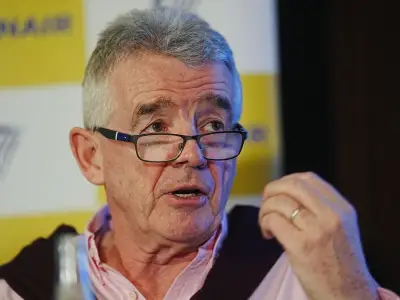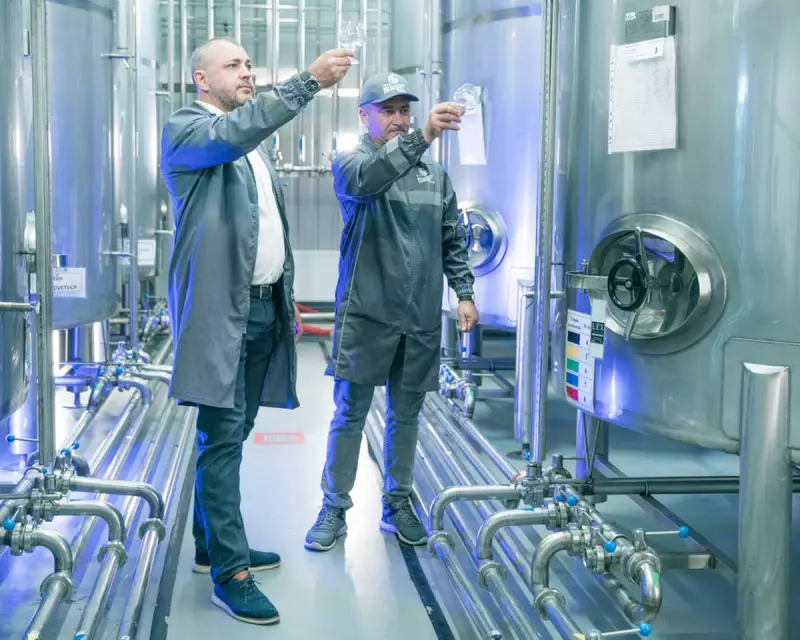
In a powerful display of wartime resilience, the chief executive of Ukraine's largest spirits export brand has declared it is 'business as usual' for the company, even as Russian missiles destroy shipments and disrupt production. Yuriy Sorochynskiy, CEO of Nemiroff vodka, has revealed the brand is actively working to expand its international footprint, with exports to major UK supermarkets continuing to flow despite nearly four years of conflict.
Bombed Shipments and Business Resilience
Sorochynskiy detailed the stark realities of operating during a full-scale invasion. In late 2023, a Nemiroff shipping container holding 17,000 bottles was hit by bombing at the crucial port of Odesa. A supplier's shipment was also recently destroyed. 'We had one or two containers destroyed in port by missile attacks,' he stated, framing such devastating events as part of the new normal for Ukrainian industry.
Since Russia's invasion in February 2022, maintaining production of key exports like vodka, grain, and sunflower seeds has been a vital component of Ukraine's economic resistance. For Nemiroff, this has involved significant adaptation and investment. The company purchased a gas generator to keep its distillery running during attacks on Ukraine's power grid. It also found space to rehouse its Italian bottle-top supplier after the supplier's subsidiary in Sumy, near the Russian border, took a direct missile hit in August last year.

Seizing Market Opportunity in the West
The withdrawal of Russian vodkas from European supermarket shelves in solidarity with Ukraine has created a significant opportunity. Nemiroff has capitalised on this, becoming one of the UK's fastest-growing premium vodka brands. Sales in Britain surged by 24% last year to £6.25m.
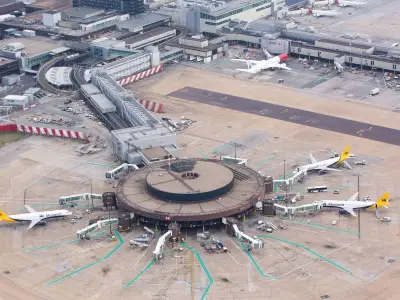
The brand's strategic partnerships have bolstered its profile. It sponsors Ukraine's heavyweight boxing champion Oleksandr Usyk and has deals with Premier League football clubs Aston Villa, Fulham, West Ham, and Everton. Its products are now listed in Tesco, Sainsbury's, Waitrose, and the Co-op, and it returned to the duty-free market at Heathrow and Gatwick airports in October.
This western expansion marks a dramatic shift. Following its immediate exit from the Russian and Belarusian markets after the invasion—which included terminating a major licensing deal in Russia—global sales plummeted from about 10 million cases in 2010 to 2.4 million in 2022. However, they have since partly recovered to 4.4 million cases, with over 40% of sales now coming from the West.
Logistics, Solidarity, and Looking Ahead
With Black Sea shipping routes blocked and ports under fire, Nemiroff has been forced to completely overhaul its export logistics. 'Now we are mostly shipping out by truck,' Sorochynskiy explained. 'Before 2022 we used a lot of sea containers but we stopped that when the Black Sea was blocked. It took us four months to find an alternative.'
The company is also demonstrating remarkable solidarity within Ukraine's business community. Sorochynskiy revealed that Nemiroff provides bottling facilities for some competitors to help keep the industry afloat. 'There are a huge number of examples of competitors helping each other out in order to survive,' he said.
Looking forward, the company is even considering installing bathing facilities for workers who struggle to wash at home due to power cuts from infrastructure attacks. Sorochynskiy highlighted the daily challenges for city dwellers in flats, who cannot easily install alternative energy sources, leading to queues at shopping centres not just for goods but for electricity and wifi.
Owned by siblings Yakov and Bella Finkelstein along with Anatoliy Kipish, Nemiroff is based in the city of Nemyriv, where distilling has a history dating back to 1752. As the Ukrainian government, with EU support, builds new railway lines to Hungary, Slovakia, and Poland to facilitate exports, companies like Nemiroff continue to embody a defiant spirit. They are not waiting for peace but are forging ahead, ensuring that Ukrainian products remain on the world's shelves.