Major Policy Reversal on Australian Food Imports
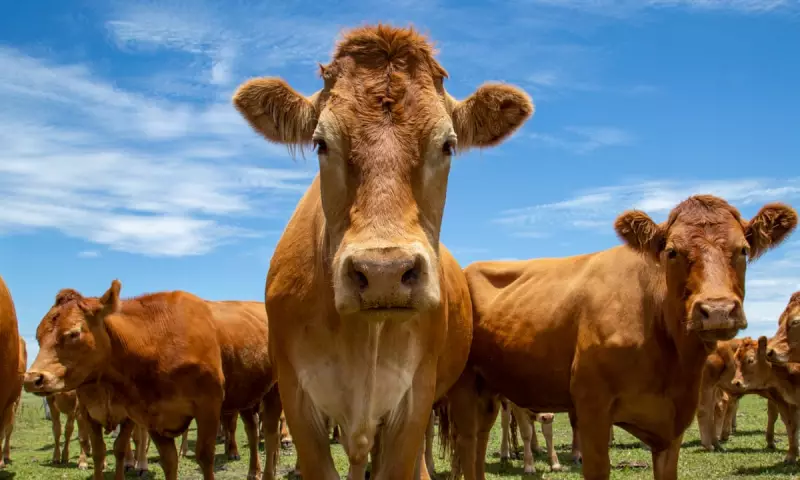
In a significant shift in trade policy, US President Donald Trump has signed an executive order reversing tariffs on Australian beef and other agricultural imports. The decision, made during Australian morning hours on Saturday, marks a notable departure from the administration's previous stance that import duties weren't contributing to inflation pressures.
The executive order specifically targets food imports including beef, coffee and bananas, with President Trump acknowledging that "current domestic demand for certain products, and current domestic capacity to produce certain products" influenced the policy change.
Australian Response and Economic Impact
Australian Trade Minister Don Farrell immediately welcomed the decision, stating the government had consistently maintained that tariffs were "an act of economic self-harm" that ultimately burdened American consumers through higher retail prices.

"We welcome the removal of tariffs on Australia's world-class agricultural exports, including beef," Farrell said. "We maintain our position that tariffs on any Australian products are unjustified, and continue to advocate for their removal."
The economic significance of this decision is substantial, given that meat was Australia's second largest export to the US last year, trailing only non-monetary gold. Since Trump's tariff regime took effect in April, Australian producers had been facing a 10% export duty on most goods, including beef.
Industry Perspectives and Market Dynamics
Cattle Australia chief executive Will Evans revealed that Australia exports approximately $4 billion worth of beef to the United States annually, making the tariff removal particularly significant for the agricultural sector.
However, market analysts suggest the immediate impact might be limited. Angus Gidley-Baird, senior analyst at Rabobank, noted that Australian beef producers might not see dramatic changes in demand in the short term because the US market "is so strong and their local production is so slow" following drought conditions in 2022 and 2023.
Gidley-Baird highlighted an interesting dynamic: the previous tariff structure had actually given Australian producers an advantage over competitors like Brazil, which faced much higher duties. "For us the bigger question is the longer term – if the tariffs [are reintroduced] and the US rebuilds its herd and its production," he observed.
Broader Economic Implications
Economics professor Richard Holden from the University of New South Wales business school provided context on the wider implications. While acknowledging that Australia might have benefited relative to other nations facing higher tariffs, he emphasised that the Trump administration's tariffs had "shrunk the overall global trading system" that has historically benefited all countries, particularly Australia.
"Anything that pushes back towards where we were in terms of free trade is really good for everyone, Australia included," Holden stated.
The trade relationship between the two nations remains substantial, with data showing the US was the fifth largest destination for Australian goods in 2024, accounting for $23.8 billion in exports, while serving as Australia's second largest trading partner for imports at $50.5 billion.
Jenny Gordon, honorary professor at ANU and former chief economist at the Department of Foreign Affairs and Trade, noted that because Australia maintains a trade deficit with the US, the tariffs didn't have a major direct effect on the local economy. "What we're more concerned about is that indirect effect on our economy," she explained. "Anything that's in that right direction, we're grateful for."
Professor John Quiggin from the University of Queensland offered a balanced perspective, suggesting that while the Australian beef industry might have benefited on balance from the previous tariff structure due to lower rates compared to other exporters, "it's better not to have an administration that just uses tariffs more or less randomly as public policy."