Starmer Confronts 'Severe' Trade Risk Warnings During China Visit
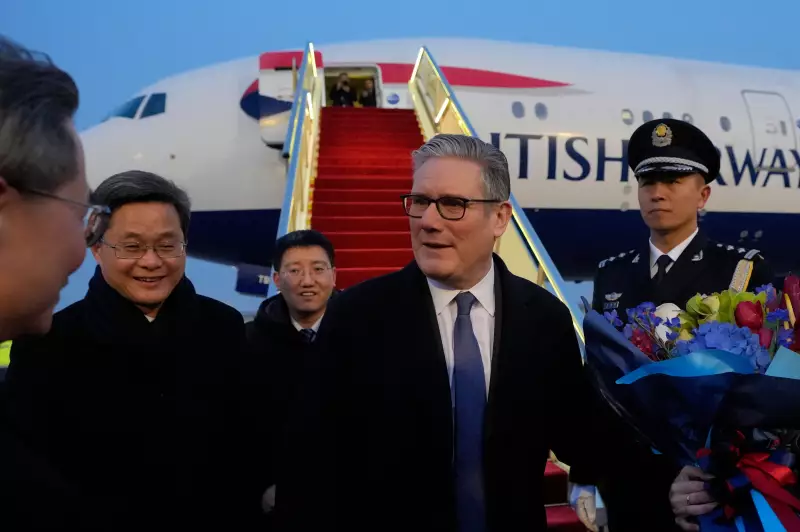
Prime Minister Keir Starmer has been confronted with stark warnings about the "severe" risks of trading with China as he arrived in Beijing for high-level meetings with Chinese officials, including President Xi Jinping. The Labour leader's visit, which began on Wednesday 28 January 2026, aims to build economic relations with the world's second largest economy to drive UK growth, but faces significant concerns about payment delays and security threats.
Payment Collection Complexities Pose Major Export Hazard
Research conducted by Allianz Trade has revealed that China presents a particularly hazardous environment for UK exporters due to protracted delays in payment collections. The analysis indicates that buyers in China, which accounts for approximately 10 per cent of all UK exports, take as long as 94 days to settle payments. This extended collection period creates substantial financial uncertainty and operational challenges for British businesses operating in the Chinese market.
According to Allianz Trade's country rankings on collection complexity, China emerges as the sixth riskiest market for UK exporters, positioned behind nations including Saudi Arabia, Mexico and South Africa. The research further demonstrates that China represents a greater trade risk than other major economies such as India and the United States. Analysts have noted that difficulties surrounding debt collection are "compounded by opaque legal structures comprising county, state and federal systems" within China's administrative framework.

Security Concerns and Political Opposition
Beyond financial risks, British firms have received warnings about significant security vulnerabilities when trading with China. Reports indicate that state-backed hackers have successfully accessed sensitive information across the private sector and launched attacks against internal systems. The UK government has previously sanctioned Chinese-based companies linked to Salt Typhoon, a state-affiliated hacking operation known for its sophisticated cyber capabilities.
Conservative leader Kemi Badenoch has voiced strong opposition to Starmer's approach, stating: "When it comes to China, Keir Starmer is too weak. Yes we need a relationship with China. But China doesn't believe in democracy, it has sanctioned our MPs, disrupts the global trade system, and has designs on Taiwan. We must not be in hock to China."
Government Delegation and Economic Ambitions
Starmer's delegation includes City minister Lucy Rigby, business secretary Peter Kyle and dozens of business officials, reflecting the Labour government's determination to strengthen economic ties with China as part of its growth strategy. Upon arriving in China, Starmer emphasised: "As one of the world's biggest economic players, a strategic and consistent relationship with them is firmly in our national interest. That does not mean turning a blind eye to the challenges they pose – but engaging even where we disagree."
The Prime Minister has connected his trade ambitions to his government's central message on addressing the cost of living crisis, suggesting that successful engagement with China would help put "money in [people's] pockets." Current trade between the two nations is valued at approximately £103 billion annually, providing substantial economic incentive for continued engagement despite the acknowledged risks.
Business Support and Economic Perspectives
Some business organisations have expressed support for Starmer's diplomatic mission. Steven Lynch, trade director at the British Chambers of Commerce, has endorsed efforts to reduce trade barriers with China, highlighting potential benefits for UK businesses. Meanwhile, Bank of England policymaker Alan Taylor has suggested that greater trade diversion from China into the UK, potentially resulting from President Trump's tariffs, could accelerate the reduction of inflation more rapidly than many economists currently anticipate.
The visit represents a delicate balancing act for the Starmer government as it navigates the economic opportunities presented by China against substantial financial and security risks identified by trade analysts and security experts.