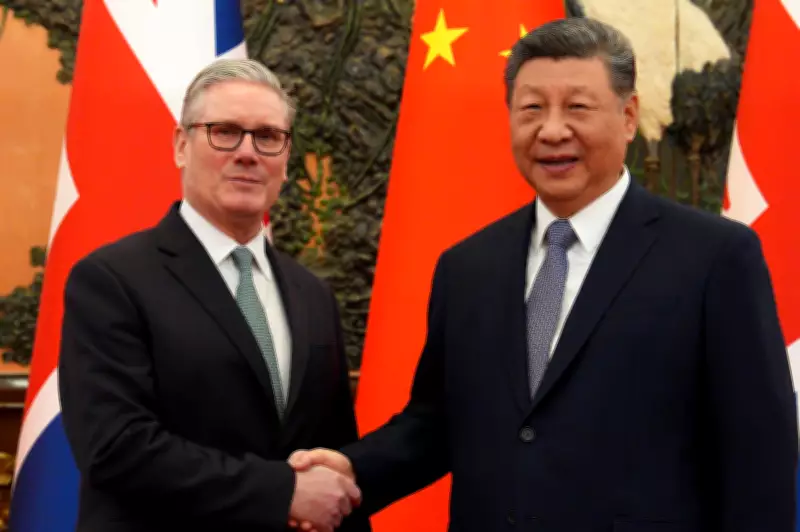
Prime Minister Keir Starmer has declared that British businesses are "crying out for ways" to expand into Chinese markets, as he unveiled a series of new agreements aimed at strengthening economic ties between the UK and China. The announcement follows his high-profile meeting with President Xi Jinping in China, where Starmer championed his government's strategy to enhance relations with the world's second-largest economy, despite mounting scrutiny over security risks.
New Visa Rules and Trade Deals Announced
Among the key initiatives is a visa-free travel arrangement for British citizens visiting China for stays of fewer than 30 days, a perk that will also extend to business travellers. This move is designed to facilitate easier access for UK firms seeking to establish or grow their presence in China. Starmer emphasised the economic imperative behind these measures, stating that they would support growth and job creation domestically while opening up lucrative export opportunities.
Security Concerns and Political Backlash
The push for closer UK-China relations has not been without controversy. Opposition benches in the House of Commons have voiced almost-unanimous criticism, citing security threats linked to China's activities. These concerns include the construction of a new mega embassy near the City of London, allegations of state-backed phone-hacking, and the collapsed case involving two spies in parliament. Starmer, however, defended the engagement as essential for addressing such issues directly, noting that he raised human rights concerns, including the jailing of pro-democracy campaigner Jimmy Lai in Hong Kong and the treatment of the Uighur minority, during his "respectful discussion" with Xi.

Business Support and Major Investments
Starmer's trip to China was bolstered by the presence of senior officials from major corporations such as HSBC, Standard Chartered, and GSK, who endorsed his trade-boosting plans. In a significant development, AstraZeneca announced a substantial investment of nearly £11 billion in China to expand its medicines manufacturing capabilities. Starmer praised this deal, highlighting its potential to sustain thousands of UK jobs and foster innovation in breakthrough treatments like cell therapy and radioconjugates.
Economic Implications and Historical Context
Trade between the UK and China is currently valued at up to £103 billion, with a notable influx of imports into Britain. Economists, including the Bank of England's external member Alan Taylor, suggest that diversifying trade with China could help mitigate inflation in the coming months. President Xi acknowledged the historical role of Labour governments in fostering bilateral relations, expressing China's readiness to develop a long-term strategic partnership with the UK. This backdrop underscores the delicate balance Starmer must strike between economic ambition and national security, as businesses eagerly await the promised easier access to Chinese markets.