Europe's Strategic Pivot: Trade Deals That Respect Sovereignty
The European Union has embarked on a significant strategic recalibration of its international trade relationships, moving decisively away from coercive tactics and towards a model of cooperative partnership. This shift was prominently showcased through two landmark agreements: the trade pact with India and the upgraded ties with Vietnam. These deals represent more than mere economic transactions; they signal a profound philosophical departure from the traditional power dynamics that have long characterised global trade negotiations.
The India Agreement: A Symbolic Reset
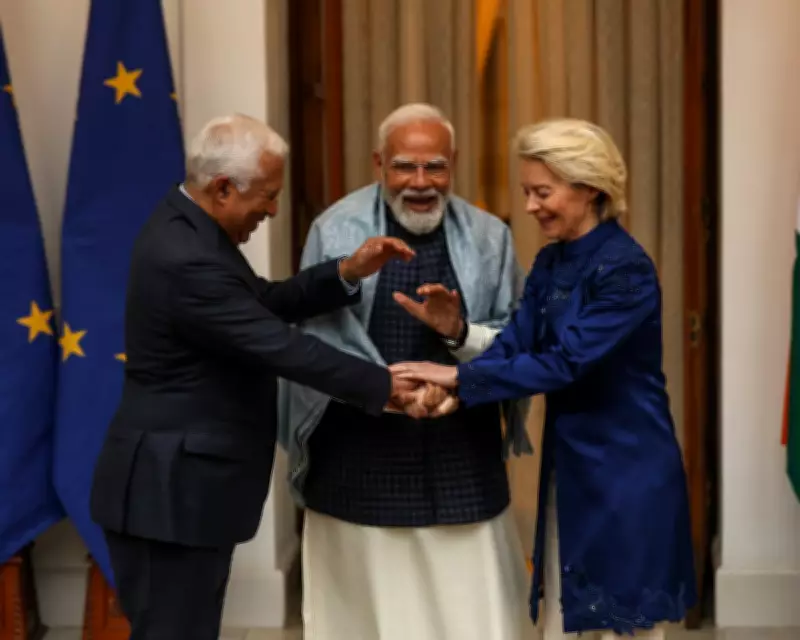
European Commission President Ursula von der Leyen famously described the EU's trade agreement with India as the "mother of all deals." While the immediate financial impact appears modest—with tariff reductions amounting to approximately €4 billion in a trading relationship worth €180 billion—the symbolic importance cannot be overstated. This agreement represents a fundamental reset in how economic heavyweights choose to cooperate in an era increasingly defined by protectionist tendencies.
The deal grants the European Union unprecedented access to politically sensitive Indian markets, most notably in vehicle imports, while simultaneously implementing protective measures such as quotas and phased implementation to safeguard India's domestic industrial strategy. In return, Europe opens its markets widely to Indian exports, particularly textiles, without imposing onerous conditions that might undermine India's economic sovereignty.

Vietnam's Value Chain Advancement
Concurrently, the European Union's upgraded relationship with Vietnam demonstrates a similar commitment to cooperative development. Unlike previous arrangements that sought to lock Asian partners into fixed industrial roles, the EU now actively encourages Vietnam's transition into high-technology production. This strategic shift will likely displace Vietnam's labour-intensive manufacturing to other regions, with India positioned as a prime beneficiary capable of absorbing this redirected demand.
What distinguishes these European agreements from alternative approaches is their explicit recognition of geopolitical realities. The EU demonstrates remarkable pragmatism by turning a blind eye to India's continued purchases of Russian oil—a necessity born from the energy shock following Russia's invasion of Ukraine. Similarly, Europe refrains from demanding that Vietnam choose sides in its complex trading relationship with Beijing.
Contrasting Approaches: Cooperation Versus Coercion
This European approach stands in stark contrast to the trade philosophy exemplified by the United States under Donald Trump's administration. Where the US has threatened India with tariffs for maintaining historical links to Russia and imposed "reciprocal" levies on Vietnam due to its Chinese connections, treating trade as an instrument of political compulsion, the European Union has chosen a different path.
The EU treats trade not as a weapon to signal dominance but as architecture for organising sustainable development pathways across Asia. This approach encourages Vietnam's ascent up the value chain, facilitates India's manufacturing scaling, and anchors both economies to Europe without demanding political fealty or submission. It represents trade as a mechanism for shared growth rather than unilateral advantage.
Historical Context and Future Implications
This strategic shift acknowledges a critical historical reality that economist Ha-Joon Chang has long emphasised: wealthy nations typically achieved their prosperity through protectionism, strategic trade policies, and state support, only to subsequently insist that poorer countries prosper through openness alone. The European Union's new approach effectively acknowledges this historical ladder that was climbed and then kicked away.
For decades, EU trade relationships in Asia were structured around one-way access and managed dependency. By encouraging industrial upgrading in Vietnam and tolerating selective protection in India, Europe is no longer freezing late developers into low-value economic roles. This represents not generosity but realism—an understanding that sustainable development requires policy space and that arrangements denying such space have ultimately failed.

When contrasted with Britain's tentative rapprochement with China, the depth and strategic significance of the EU's Asian agreements become particularly apparent. The bloc's moves echo Canadian arguments that middle powers can build resilience through interdependence without surrendering autonomy. As global trade dynamics continue to evolve, this European model of cooperation over coercion may well establish a new paradigm for international economic relationships in the 21st century.