The European Union is preparing a colossal retaliatory tariff package targeting American goods worth €93 billion, following what European leaders have labelled "blackmail" by US President Donald Trump over the Greenland crisis.
Trump's Tariff Ultimatum Over Greenland
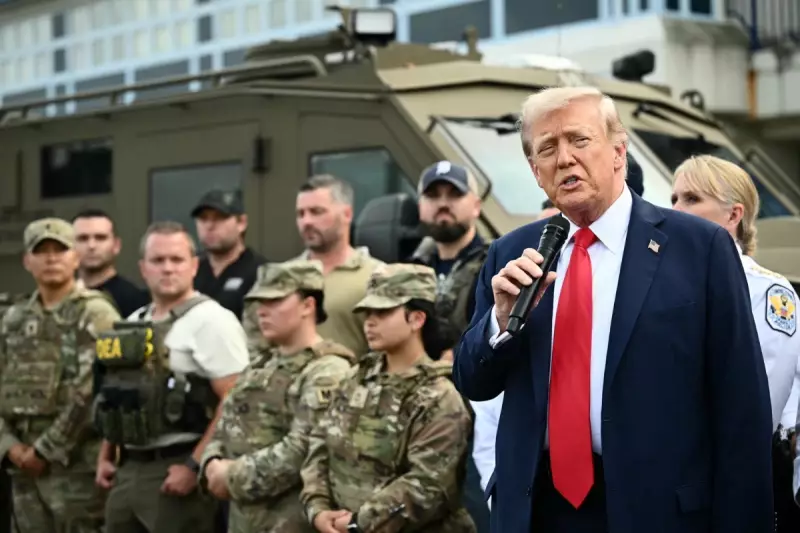
President Trump used his Truth Social platform on Saturday to announce a new wave of import duties targeting key European allies. He stated that the United Kingdom, Denmark, Norway, Sweden, France, the Netherlands, Finland, and Germany would all face an initial 10 per cent tariff from 1 February.
This levy is set to escalate sharply to 25 per cent on 1 June 2026. Trump declared the tariffs would remain enforced until "a deal is reached for the complete and total purchase of Greenland". The move comes after these nations staunchly defended Greenland's sovereignty. Greenland is an autonomous territory of Denmark, handling its own domestic affairs while Copenhagen manages its defence and foreign policy.

Europe's Swift and Unified Response
In urgent response, EU ambassadors convened in Brussels on Sunday to discuss a countermeasure. According to reports from the Financial Times, the bloc is considering imposing tariffs on €93bn (£80.7bn) of US goods. Officials hope this will provide crucial leverage ahead of pivotal meetings with US representatives at the World Economic Forum in Davos this week.
UK Prime Minister Sir Keir Starmer spoke directly with President Trump on Sunday, with Downing Street confirming the leader told Trump that "applying tariffs on allies for pursuing the collective security of Nato allies is wrong". Starmer has publicly called the US plan "completely wrong".
The condemnation is widespread across the continent. Italy's Prime Minister, Giorgia Meloni, branded the tariffs a mistake, while Dutch foreign minister David van Weel directly compared Trump's threats to acts of "blackmail".
Market Reactions and Analyst Views
Financial markets delivered a mixed, albeit initially muted, response to the escalating trade tensions. London's FTSE 100 index fell 0.4 per cent at market open before recovering some of its losses.
"The direction of market movements is consistent with past examples, but the scale of the reaction appears modest," noted Patrick Munnelly, a partner at Tickmill Group. "Investors may believe the present will be another instance of 'TACO' (Trump Always Chickens Out), where the eventual outcome differs from the initial threat."
This reaction pales compared to the 11 per cent plunge the FTSE 100 suffered in under a week following Trump's 'Liberation Day' tariffs in April 2025.
Meanwhile, traditional safe-haven assets surged. Gold reached a record high above $4,680 per ounce on Monday morning, and silver jumped around four per cent to an all-time peak.
Chris Beauchamp, chief market analyst at IG, observed: "The FTSE 100 seems to be the teflon index – not even a new US-Europe trade war and the potential collapse of NATO seems capable of stopping it. While we should take all of today’s moves with a pinch of salt due to US markets being closed for MLK Day, the selling has been relatively contained, perhaps awaiting a bigger response from the EU."