In a landmark development for global commerce, India and the European Union have officially concluded a historic free trade agreement, which European Commission President Ursula von der Leyen has triumphantly declared the 'mother of all deals'. This monumental pact, finalised after nearly two decades of intermittent negotiations, marks a significant shift in international trade dynamics, creating a free trade zone encompassing approximately two billion people.
A Deal Decades in the Making
The journey to this agreement began as far back as 2007, with talks initially stalling due to disputes over market access for key sectors such as automobiles, agriculture, and dairy products. However, negotiations were revitalised in 2022 and gained remarkable momentum over the past six months. This acceleration was driven in part by external pressures, including heavy punitive tariffs imposed by the Trump administration in the United States and shared concerns over China's dominant position in global manufacturing and its restrictions on critical exports.
Unprecedented Market Access and Economic Synergy
The comprehensive agreement is poised to dramatically reshape trade flows between the two economic powerhouses. It is projected to double EU exports to India by 2032 by eliminating or substantially reducing tariffs on an estimated 96.6% of traded goods by value. This move is expected to generate savings of approximately €4 billion (£3.5 billion) in duties for European companies, providing a substantial boost to their competitiveness in the Indian market.

In a reciprocal arrangement, the deal will facilitate easier access for Indian exports, particularly in sectors such as textiles, gems, and pharmaceuticals. For the European Union, it promises enhanced market entry for flagship products including cars and wine, sectors that have long faced significant barriers in India's traditionally protected market.
Transformative Impact on Key Industries
One of the most notable provisions of the agreement involves the automotive sector. India has committed to slashing tariffs on cars to 10% over a five-year period, down from rates as high as 110%. This reduction is set to benefit major European car manufacturers, including Volkswagen, Renault, Mercedes-Benz, and BMW, potentially revolutionising their market presence in the world's most populous nation.
Prime Minister Narendra Modi emphasised the scale of the agreement, noting that it represents about a third of global trade and could be considered the 'biggest free trade deal in history'. He highlighted the 'massive opportunities' it presents for India's 1.4 billion citizens and millions across Europe, framing it as a powerful example of synergy between two major global economies.
Strategic Context and Future Implementation
The signing of this deal occurs against a backdrop of complex global economic challenges. India is currently contending with 50% tariffs on its exports to the United States, while the European Union faces threats of increased tariffs over geopolitical disputes. This agreement, therefore, represents a strategic pivot, strengthening economic ties between the EU and India as they navigate an increasingly volatile international trade environment.
Officials have indicated that the formal signing ceremony for the agreement is scheduled to take place later this year, with the potential for the deal to come into effect by early next year. This timeline underscores the urgency and importance both parties place on implementing the provisions swiftly to reap the anticipated economic benefits.
A New Chapter in EU-India Relations
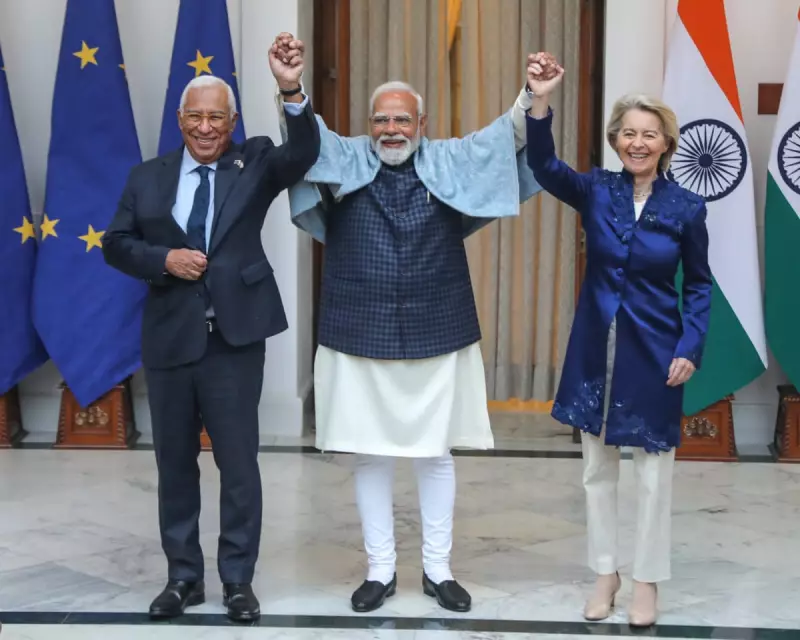
President von der Leyen, who met with Prime Minister Modi in Delhi to cement the agreement, stated, 'Europe and India are making history today. We have created a free trade zone of two billion people, with both sides set to benefit.' Her remarks reflect the profound significance of this pact, not only as a commercial arrangement but as a foundational element in the evolving strategic partnership between the European Union and India.

As the world's largest country by population and one of its fastest-growing economies, India is on track to become the fourth-largest global economy this year, according to International Monetary Fund projections. This agreement positions the European Union to capitalise on that growth, while offering India enhanced access to European markets and technology, setting the stage for a new era of economic collaboration and mutual prosperity.