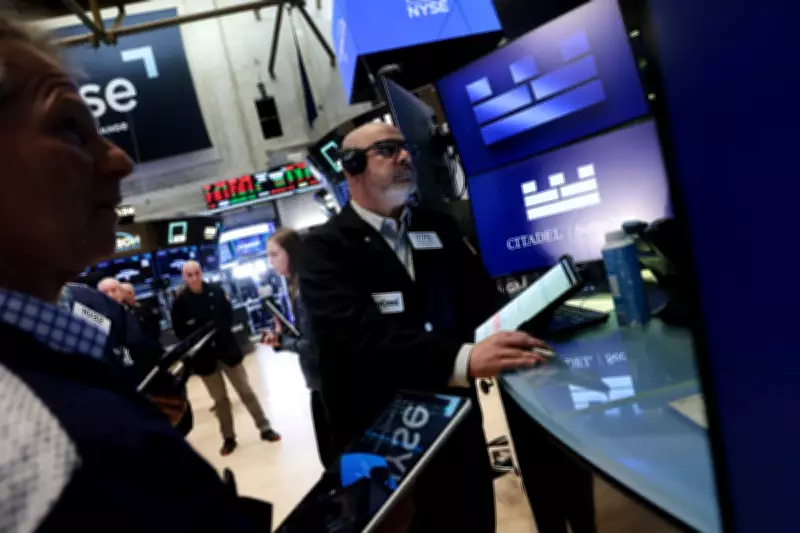
The US stock market concluded a turbulent week on Friday with a significant selloff, extending its losing streak to five consecutive weeks of declines. This downturn pushed the Dow Jones Industrial Average into correction territory, highlighting growing investor anxiety amid escalating economic pressures.
Market Performance and Correction Territory
On Friday, the Dow plummeted by 800 points, a drop that officially placed the index in correction territory, defined as a decline of 10% or more from its recent peak. This sharp fall underscores the mounting volatility in financial markets as traders grapple with persistent uncertainties.
Meanwhile, the tech-heavy Nasdaq index, which had already entered correction territory on Thursday afternoon, experienced an additional 2% decline. The broader S&P 500 index also suffered, closing 1.6% lower, reflecting widespread losses across multiple sectors.
Oil Prices and Geopolitical Tensions
Oil prices continued their upward trajectory, with Brent crude, the global benchmark, surging past $110 per barrel. This spike is largely attributed to ongoing geopolitical tensions in the Middle East, particularly related to the conflict involving Iran.
Despite an announcement from former President Donald Trump this week regarding an extended pause on Iranian energy strikes, markets remained on edge. Trump has asserted that oil prices and stock markets will stabilize once the conflict resolves, but skepticism persists among investors about the timeline and impact of such developments.
Consumer Sentiment and Economic Outlook
A new survey from the University of Michigan, released on Friday, revealed a significant drop in US consumer sentiment across all demographics in March. The survey indicated a 6% decline this month, reaching its lowest level since December 2025, painting a bleak picture of how Americans are coping with the economic fallout from the Iran war.
Consumers in the middle to higher income brackets and those with stock wealth experienced particularly large drops in sentiment. The survey, conducted between February 17 and March 23, also noted that inflation expectations for the year climbed from 3.4% to 3.8%, marking the largest one-month increase since last April when Trump announced tariff plans.
Short-Term vs. Long-Term Expectations
Short-term economic expectations among consumers plunged by 14%, although long-term expectations saw less severe declines. Joanne Hsu, director of the Surveys of Consumers, commented in a statement that these patterns suggest consumers may not anticipate recent negative developments to persist far into the future. However, she cautioned that views could change if the Iran conflict becomes protracted or if higher energy prices lead to broader inflation.
Global Economic Impact and Projections
Consumer concerns align with economic analyses indicating that the conflict will drive higher inflation. The Organization for Economic Cooperation and Development (OECD) revised its global GDP growth projections downward on Thursday, citing significant uncertainty from the Middle East war.
The OECD report emphasized that the evolving conflict has human and economic costs for directly involved countries and tests global economic resilience. Disruptions such as halted shipments through the Strait of Hormuz and damage to energy infrastructure have triggered a surge in energy prices and disrupted the supply of key commodities like fertilizers.
Additionally, the group warned of elevated global inflation due to rising energy prices and found that the Middle East conflict would disproportionately harm the UK's economy compared to other industrialized nations.
As markets navigate these challenges, the interplay between geopolitical events, energy markets, and consumer confidence continues to shape the economic landscape, with investors closely monitoring developments for signs of stabilization or further turmoil.