Tuesday 12 May 2026 5:37 am | Updated: Monday 11 May 2026 11:19 am
What Poker Can Teach Investors About Risk
By Jo Living
Poker is a game of statistics, not certainty. Good players do not wait until they know the outcome. They make decisions based on probabilities, position, momentum and the behaviour of others, says Jo Living.
Investment still loves the language of risk. Who is bold, who is cautious, who is “risk averse” enough to protect capital but not so cautious that they miss returns? That framing is too blunt. The more useful distinction is between risk aversion and risk calibration: the ability to take the right risk at the right time, even when the information is incomplete.
That distinction matters because the most important decisions in investing are rarely made with perfect clarity. They are made under pressure, with partial evidence, shifting signals and the constant possibility of being wrong. In that respect, investing has more in common with poker than many in the industry would like to admit.
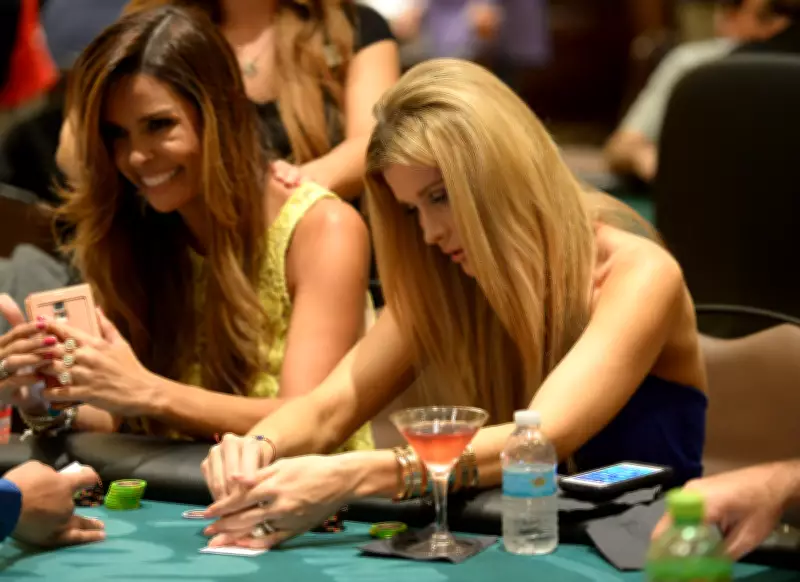
Poker is a game of statistics, not certainty. Good players do not wait until they know the outcome. They make decisions based on probabilities, position, momentum and the behaviour of others. They know when a weak hand is worth folding, when a strong hand should be pushed, and when the table dynamics matter more than the cards themselves. Investing works the same way. The best outcomes do not come from eliminating uncertainty. They come from making disciplined choices in the face of uncertainty.
A Berkeley study previously found that overconfident investors – who believe their knowledge about the value and future of an investment or the market in general is better than it actually is – trade more frequently and achieve lower returns. A study found that women investors traded fewer times, but outperformed men. Women’s returns on their investments were on average about 1.2 percentage points higher. Further Neil Stewart, Professor of Behavioural Science conducted a study which found that women investors traded fewer times, but outperformed both the men. Women’s returns on their investments were on average about 1.2 percentage points higher, and when surveyed by Professor Stewart’s team, men were more likely to be drawn to more speculative stocks whereas women are more likely to focus on shares that already have a good track record.
On the surface, that looks like caution. But it can also be read as selectivity: a higher threshold for conviction, a clearer sense of when risk is worth taking, and less willingness to confuse action with progress. Indeed, women were more likely than men to stay the course in the face of market volatility and research from 2022 shows that the belief in the existence of gender differences in risk attitudes is stronger than the evidence supporting them.
In both poker and investing, overcommitting to a weak position is expensive. So is failing to act when the odds are in your favour. The problem is not that some investors avoid risk altogether. The problem is that they misread it. They take the wrong risks, at the wrong time, for the wrong reasons. Behavioural finance helps explain why. Investors under pressure tend to lean on shortcuts. Decision fatigue, limited attention and confidence bias can all distort judgment. NBER research on analysts and investors shows that these biases are not abstract flaws in theory; they shape real-world decisions, including how people process information and how quickly they react to it. When the market is noisy, it is easy to mistake action for insight. When uncertainty rises, it is easy to chase weak signals or to freeze in front of strong ones.
Poker is useful precisely because it makes these errors visible. Players who overplay marginal hands are usually doing one of two things: they are overestimating their edge, or they are trying to avoid the discomfort of folding. Investors do the same. They hold onto weak positions because admitting a mistake feels costly. They add to mediocre ideas because abandoning them would force a decision. And on the other side, they may hesitate when a stronger opportunity appears, because the fear of being wrong outweighs the logic of acting.
The parallels are so evident that forward-thinking investment companies – like Susquehanna International Group (SIG) and many others – are now using poker as a training tool for investment managers, to recalibrate risk and reward, know when to walk away, and to distill strategy from emotion. New hires at SIG spend significant time playing poker during training programmes and it is a core part of trader development. It’s a safe simulation to practice disaggregating emotion from decision, parking egos, and not conflating quality of decision with quality of outcome.
This is where conviction becomes a discipline, not a personality trait. In poker, conviction is about knowing when the expected value justifies action. In investing, conviction should work the same way. It is not about backing your instincts, and it is certainly not a licence to ignore risk. It is the willingness to commit when the evidence is good enough, even if it is not complete. That is the real lesson wealth managers can take from poker. Not that every portfolio should be run like a poker game, but that judgment under uncertainty is the core skill in both fields. The best poker players do not ask whether they can guarantee a win. They ask whether the decision is better than the alternative. Investors should ask the same question more often. Too much of the industry still treats uncertainty as a problem to be solved with more data. But more data does not automatically produce better decisions. Better judgment does.
A noisy, high-conviction bet is not automatically better than a patient, well-timed one. The industry should stop rewarding the appearance of decisiveness and start rewarding the quality of decision-making. A noisy, high-conviction bet is not automatically better than a patient, well-timed one. In fact, the opposite is often true. Poker teaches that the costliest mistake is not failing to convert strong hands, it’s failing to minimise your losses. It is staying in the wrong hand for too long, perhaps being too emotionally or egoically attached to the outcome, and losing sight of rational decisions. In a world where overconfidence is often rewarded until it is not, judgement is your edge.
Investing is not a test of who feels least afraid. It is a test of who can separate signal from noise, act with discipline and recognise that risk is not something to be avoided blindly. It is something to be calibrated.
Jo Living is founder of Aces High