Nvidia has delivered a staggering financial performance that challenges sceptics questioning the sustainability of the artificial intelligence boom, posting third-quarter revenue of $57bn that comfortably exceeded market forecasts.
The Bubble Debate Confronted
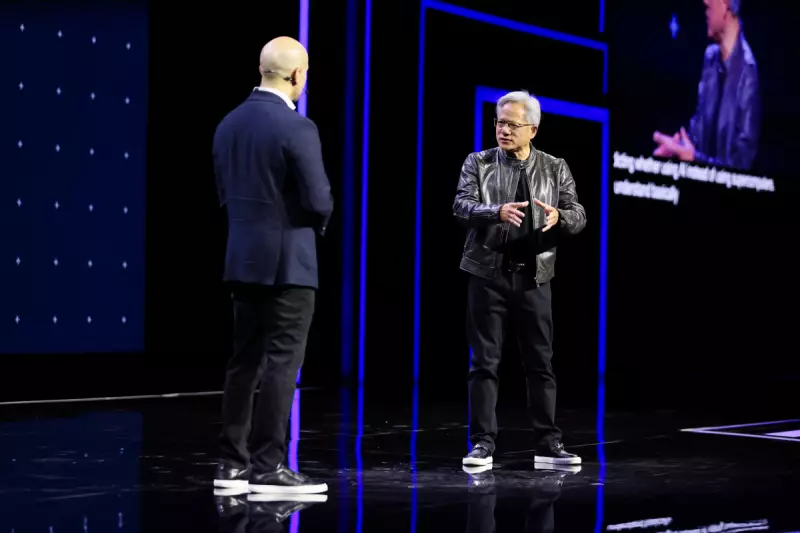
During Thursday's earnings call, Nvidia founder and chief executive Jensen Huang directly addressed mounting speculation about an AI bubble, firmly rejecting the notion. "There's been a lot of talk about an AI bubble. From our vantage point, we see something very different," Huang stated, emphasising that demand across all major segments remains "off the charts".
The chip manufacturer's data-centre revenue demonstrated remarkable growth, surging 66% year-on-year to reach $51.2bn. This figure not only surpassed expectations but eclipsed the annual revenue of most independent semiconductor companies. Meanwhile, the firm's gross margins reached an impressive 73.6%, with projections for the current quarter set at a staggering $65bn.
Market Impact and Analyst Reaction
The results provided immediate relief to nervous global markets, with the FTSE 100 opening 0.7% higher and European indices following suit. The positive sentiment extended to Wall Street futures, indicating a broader market recovery following recent volatility.
Jakub Dubaniewicz, senior equity analyst at Syz Bank, noted that Nvidia's performance comfortably exceeded buy-side expectations, while Russ Mould, investment director at AJ Bell, observed that "Nvidia's reassuring results have brought a sense of calm to markets following a wobbly few days."
Dan Coatsworth, also at AJ Bell, summarised the sentiment: "Crisis averted… for now."
Underlying Challenges and Long-term Outlook
Despite the celebratory mood, analysts identified several areas requiring attention. Inventory and receivables are increasing faster than sales, echoing patterns seen during the dot-com bubble. Vendor financing has become increasingly embedded in AI deal structures, while access to data-centre power remains a significant bottleneck.
Sales in China, previously a substantial growth driver, have dwindled to "effectively zero" according to company reports.
Shaun Modi, chief executive of Capitol AI, provided perspective on the broader trajectory: "Nvidia's positive earnings clearly show there is still great belief and faith in the profitability of AI, an indicator the world wants progress." He acknowledged medium-term bubble risks but emphasised that long-term productivity gains could reach trillions of dollars.
Bill Conner, former adviser to Interpol and GCHQ, highlighted that the competition extends beyond technological supremacy. "This isn't only a global AI arms race for processing power or chip dominance. It's a test of trust, transparency, and interoperability at scale," he noted, describing AI advancement as fundamentally "a trust race".
As Huang declared that "AI is going everywhere, doing everything, all at once," Nvidia's latest figures provide compelling evidence that, for now, the reality matches the rhetoric driving global AI investment.