US Markets Hold Steady After Trump's Explosive Weekend Ultimatum
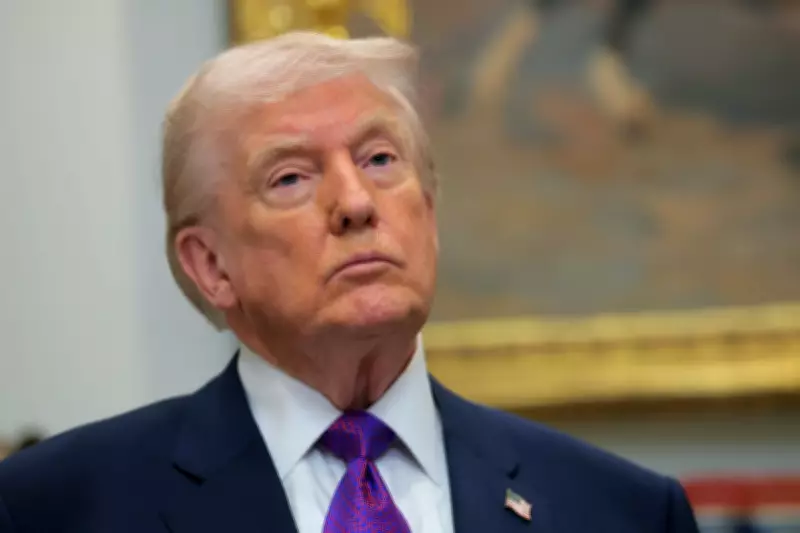
US financial markets demonstrated remarkable resilience on Monday, as Wall Street traders resumed operations following President Donald Trump's profanity-laden demands for Iran to reopen the Strait of Hormuz. The trading session unfolded with notable composure despite the president's incendiary language directed at Tehran.
Commodity and Equity Market Movements
Brent crude oil maintained its position at the $107-per-barrel threshold, though the global benchmark experienced a slight overall easing. It settled at $107.54, representing a modest decline of $1.50 from previous levels. European stock exchanges remained closed for the extended Easter holiday period, but futures markets indicated expectations for New York's S&P 500 index to open higher when US trading commenced.
The broad market benchmark was projected to gain approximately 23 points during London morning trading, with New York's official session scheduled to begin at 2:30 PM British Summer Time. This positive indication suggested that investors were largely dismissing the president's volatile rhetoric.
Strong Economic Data Offsets Geopolitical Tensions
Market participants appeared to absorb Trump's latest expletive-filled tirade with relative equanimity, supported by robust employment figures released just days earlier. The March non-farm payroll report, published on Friday, revealed the creation of 178,000 jobs in the United States outside the agricultural sector.
This headline number significantly surpassed consensus forecasts of 65,000 new positions, while the unemployment rate unexpectedly decreased to 4.3 percent from 4.4 percent. According to analysis from international banking institution ING, these numbers contributed to an ongoing trend of strong economic data throughout 2026.
James Knightley, chief international economist for the United States, commented: "As with most economic indicators from the beginning of the year, this represents a positive surprise and suggests the US economy maintains solid footing to address challenges presented by Middle East conflicts."
Underlying Vulnerabilities and Future Concerns
Despite Monday's relative market tranquility, investor sentiment remained susceptible to the unpredictable developments of international conflicts and Washington's erratic diplomatic communications. Knightley cautioned that economic indicators would soon reflect the war's impact, stating: "Our primary concern is that with the Middle East conflict showing minimal signs of imminent resolution, an overlay of heightened geopolitical, economic, and market anxiety will not encourage businesses to initiate aggressive hiring campaigns."
The economist further warned: "With rising cost pressures and consumer spending power constrained by elevated gasoline prices, corporate profitability will encounter increasing challenges." Knightley specifically highlighted the "risk that employers will implement cost containment measures," which could translate to weaker payroll numbers in subsequent months.
Continued Geopolitical Monitoring
Investors maintained vigilant monitoring of news developments as Trump threatened to target Iran's power infrastructure and bridges. The president's communication on Truth Social was particularly stark: "Tuesday will be power plant day, and bridge day, all wrapped up in one, in Iran. There will be nothing like it!!!"
This persistent geopolitical uncertainty suggests that even robust economic data may face mounting pressure should hostilities prolong. The financial markets' current stability reflects a delicate balance between encouraging domestic economic indicators and escalating international tensions that could potentially disrupt global trade flows through critical waterways like the Strait of Hormuz, which typically facilitates approximately one-fifth of worldwide crude oil transportation during peaceful periods.