Global Markets Surge as Ceasefire News Sparks Oil Price Collapse
Financial markets worldwide have experienced a significant rally following the announcement of a two-week ceasefire between the United States, Israel, and Iran. This development has injected optimism into global trading floors, leading to substantial gains across major indices. However, the ceasefire notably excludes Lebanon, where Israel has conducted its most extensive wave of air strikes since the conflict began on March 2.
Oil Markets in Freefall as Hormuz Strait Reopens
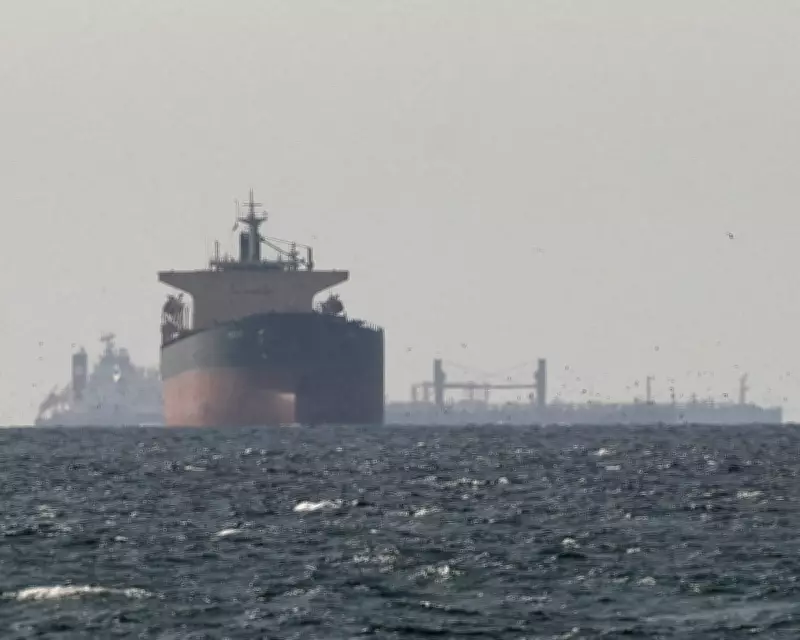
In a pivotal move, Iran has agreed to reopen the strategically vital Strait of Hormuz, where approximately 1,000 ships have been trapped. A senior Iranian official informed Reuters that Tehran could open this crucial shipping route as early as Thursday or Friday, ahead of scheduled peace talks in Islamabad. This decision has triggered a dramatic plunge in oil prices.
Brent crude, the international benchmark for oil, has tumbled by 15.5% to $92.28 per barrel, representing a drop of nearly $17. This positions Brent for its most substantial daily decline since April 2020, during the onset of the COVID-19 pandemic, when prices fell by 24%. Concurrently, UK gas prices have plummeted by 18%, with the May delivery contract dropping 24.3p to 110.67p per therm.
Stock Markets Rally Globally from Asia to Wall Street
Equity markets have rallied aggressively around the world, commencing in Asia. Japan's Nikkei index leaped by 5.4%, while South Korea's Kospi soared an impressive 7.5%. In Europe, London's FTSE 100 surged 275 points, or 2.66%, to reach 10,623, and Germany's Dax jumped by 5.2%. Across the Atlantic, Wall Street stocks surged to one-month highs, with the Dow Jones gaining 2.5%, the S&P 500 rising 2.2%, and the Nasdaq climbing 2.8%.
Currency and Bond Markets React to Geopolitical Shift
The US dollar has weakened significantly, sliding 1.1% against a basket of currencies, while sterling gained 1.2% to $1.3451. Government bond yields have plummeted globally as traders scaled back bets on interest rate hikes. In the United Kingdom, borrowing costs experienced their sharpest decline in three years, measured by the yield on two-year gilts. Bond yields, which are highly sensitive to inflation prospects, have closely tracked the dramatic fall in oil prices.
This market movement underscores how geopolitical developments in the Middle East continue to exert profound influence on global financial stability and economic forecasting.