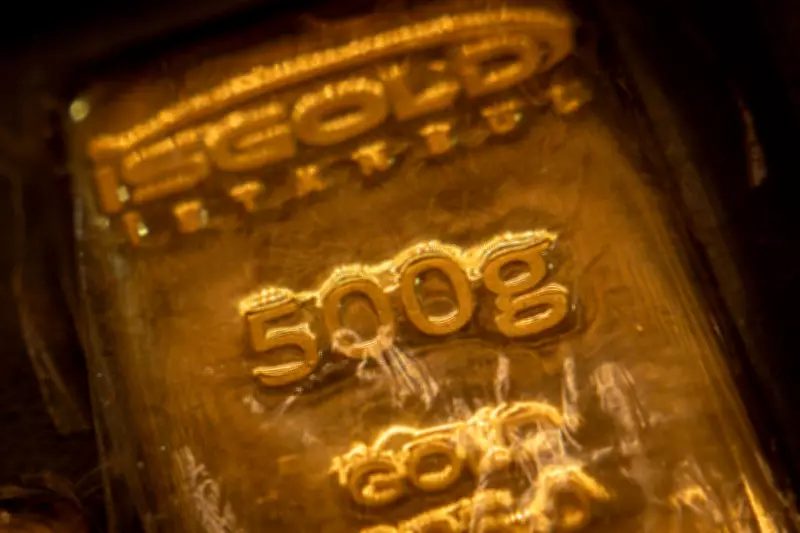
Gold's Spectacular Crash: From Record Highs to Sharp Correction
The precious metals market has experienced a breathtaking reversal of fortunes in early 2026, with gold prices undergoing one of the most dramatic corrections in recent memory. What began as a spectacular rally has transformed into a painful lesson for speculative traders who ignored centuries-old wisdom about the true nature of value.
A Rollercoaster Week for Precious Metals
The volatility has been nothing short of extraordinary. Last Thursday witnessed gold surge to an unprecedented intraday peak of $5,600 per ounce, marking a historic milestone for the yellow metal. Yet this triumph proved fleeting as prices tumbled below $5,200 before the day's end. The decline accelerated through Friday, with gold breaking through the $5,000 barrier, before Monday's opening brought a shocking plunge to $4,400 per ounce.
By the close of UK trading on Monday, gold had stabilised somewhat around $4,700 per ounce, representing a staggering 16 per cent decline from the previous week's all-time high. The precious metals rout extended to silver, which mirrored gold's wild fluctuations, soaring to $121 per ounce on Thursday before collapsing below $75 on Monday morning, eventually settling at $79.50 per ounce - approximately one-third below its recent peak.
The Anatomy of a Speculative Frenzy
Nitesh Shah, Head of Commodities and Macroeconomic Research at WisdomTree, captured the unprecedented nature of these movements, observing that "these are price swings that would typically be expected over the course of a year - not within a single trading day." The remarkable volatility stems from gold's traditional role as a hedge against uncertainty, which propelled an extended rally throughout Donald Trump's second presidential term.
When Trump assumed office in January 2025, gold traded around $2,700 per ounce. By year's end, it had climbed to approximately $4,300, before the bull market intensified dramatically at the beginning of 2026. Investors grew increasingly anxious about Trump's foreign policy ambitions and his perceived threats to the independence of the US Federal Reserve, creating perfect conditions for precious metals to flourish.
Leverage and the Rush to Exit
Leveraged trading strategies amplified the upward momentum, creating an environment where many traders became convinced of inevitable further gains. This excessive optimism left the market dangerously exposed to a sharp correction. The turning point arrived on Friday following Trump's announcement of Kevin Warsh as his nominee for Federal Reserve chair.
Warsh, generally regarded as an inflation hawk with greater market-friendly credentials than other potential candidates, strengthened the US dollar while diminishing gold's safe-haven appeal. However, according to Neil Wilson, UK investor strategist at Saxo, the severity of the sell-off primarily resulted from "unwinding of ETF and options positions." He elaborated that "Warsh's appointment has eased some worries about the Fed being dragooned into too many rate cuts, but the fallout was a meme-stock-like unwinding of speculative positioning and a rush to the exits."
Fundamental Drivers Remain Intact
Despite the technical nature of the correction, analysts emphasise that the underlying fundamentals supporting gold's long-term appeal remain largely unchanged. John Wyn-Evans, head of market analysis at Rathbones, noted that "the strategic rationale for holding gold as a diversifier - against market volatility, geopolitical risk and policy uncertainty - remains intact."
Barclays analysts concurred in a research note, stating that while "the volatility has been extreme, positioning is stretched, and short term technicals look overheated - it seems that the broader drivers behind the move remain powerful and persistent." These enduring factors include escalating sovereign debt levels and Donald Trump's ongoing efforts to reshape the global economic landscape, both capable of triggering significant market instability.
Market Recalibration and Future Outlook
Nitesh Shah suggested that last week's forced selling may have "flushed out a significant portion of speculative froth," potentially creating opportunities for long-term strategic buyers to enter the market. In the immediate future, gold prices are likely to maintain elevated volatility levels, though most analysts consider it premature to declare the beginning of an extended bear market.
The dramatic events of recent days serve as a potent reminder that while gold continues to glitter, its price trajectory remains subject to the complex interplay of geopolitical developments, monetary policy decisions, and speculative market dynamics that can transform rallies into routs with breathtaking speed.