Precious Metals Boom Reflects Deepening Global Economic Concerns
In an extraordinary financial trend, the rush to buy gold and silver has intensified throughout 2026, with analysts describing it as a fundamental re-pricing of trust in global currencies and institutions. This surge comes amid heightened geopolitical risks and economic instability, largely attributed to the policies of Donald Trump's second term in the White House.
Record-Breaking Price Movements in Gold and Silver
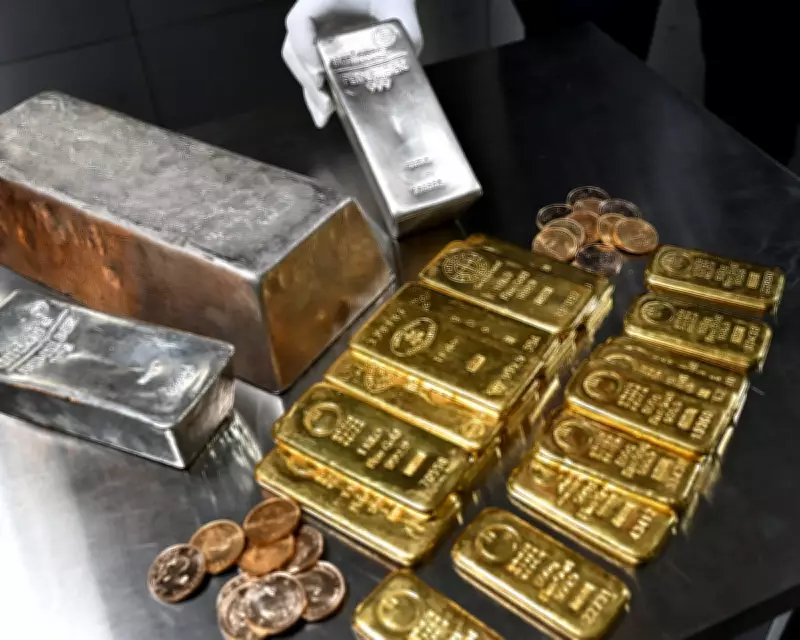
Gold has experienced a remarkable rally since last summer, repeatedly shattering previous records. This month alone, it has surged by more than a quarter, reaching a new peak of just under $5,595 per ounce on Thursday. Although it later dropped to $5,250 due to speculation about potential US actions in Iran, this price remains nearly double what it was at the start of Trump's second term a year ago.
Silver has mirrored this explosive growth, skyrocketing from below $30 per ounce last April to over $118 per ounce today. This represents an almost fourfold increase, with the most rapid acceleration occurring in the past month. Giuseppe Sersale, a strategist at Italy's Anthilia, has characterised these market movements as parabolic, noting that they bear all the hallmarks of a speculative mania.
Drivers Behind the Precious Metals Frenzy
Traditionally, gold has served as the ultimate safe haven asset, preserving value during times of inflation and economic uncertainty. The current administration's aggressive stance has amplified these risks, including punitive tariffs on trading partners, threats of military action in regions like Greenland and Iran, and unprecedented pressure on the Federal Reserve to cut interest rates. Notably, the launch of a criminal case against Fed Chair Jerome Powell has further eroded confidence, prompting investors to seek refuge in precious metals.
Daniela Hathorn, a senior market analyst at Capital.com, encapsulates the sentiment: Gold and silver are reflecting more than short-term market stress; they are signalling a re-pricing of trust. Trust in currencies, in institutions, and in the stability of the post-cold war economic order. This shift suggests that even if US inflation spirals out of control, potentially debasing the dollar, gold is perceived as a reliable store of value.
Central Bank Activity and Retail Investor Involvement
According to the World Gold Council, central banks have been actively adding to their gold reserves, albeit at a slower pace than in previous years. In 2025, purchases totalled 863 tonnes, a 21% decrease from the year before. This trend indicates a modest diversification away from US treasuries, as anxieties grow over holding substantial IOUs from a Washington perceived as chaotic under Trump's leadership.
However, the recent uptick in demand is significantly driven by retail investors. Louise Street, a senior market analyst at the WGC, observes that both consumers and investors have been buying and holding gold in an environment where economic and geopolitical risks have become the new normal. In the UK, for instance, the Royal Mint actively encourages retail consumers to fortify their financial futures with gold, capitalising on its timeless allure.
Impact on the Dollar and Broader Financial Markets
Concerns over Federal Reserve independence and US policymaking stability are not only fuelling the precious metals boom but also exerting downward pressure on the dollar. In recent weeks, the euro briefly surpassed $1.20, while the pound strengthened to $1.38, gaining nearly five cents in a fortnight. Eszter Gárgyán of UniCredit notes that the dollar has faced renewed depreciation pressure since mid-January, linked to geopolitical risks, rising trade tensions, and fears regarding Fed autonomy.
The Trump administration appears conflicted on this issue, with the president recently dismissing the dollar's weakness as great, while Treasury Secretary Scott Bessent reaffirms a strong dollar policy. This ambiguity adds to market volatility, particularly as rapid moves in Japanese government bonds complicate the global financial landscape.
Contrasting Trends in Stock and Bond Markets
Interestingly, despite the flight to safe havens like gold and silver, US stock markets have remained robust over the past year. The S&P 500, buoyed by the so-called magnificent seven tech companies and the AI boom, delivered a 17.9% return in 2025, including dividends. Investors seem to be adopting a dance-while-the-music-plays mentality, as Chuck Prince of Citigroup famously remarked in 2007, driven by hopes of future interest rate cuts if inflation stays subdued.
Moreover, the sell America narrative has not yet extended to bond markets, unlike a year ago when treasuries experienced a brief sell-off. This divergence highlights the complex and multifaceted nature of current investment strategies, where precious metals serve as a hedge against uncertainty while other assets continue to attract capital based on growth prospects.
In summary, the extraordinary rise in gold and silver investment underscores a profound shift in investor sentiment, marked by dwindling trust in traditional financial systems and a search for stability in an increasingly unpredictable world.