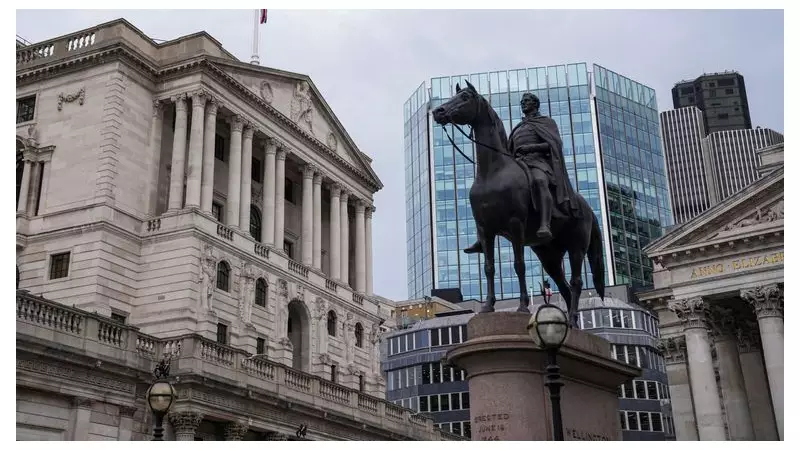
The Bank of England has delivered a mixed message to the City, easing capital rules for major lenders to help stimulate the economy while simultaneously issuing a stark warning that risks to the UK's financial system have grown.
Stability Report Highlights Mounting Threats
In its twice-yearly Financial Stability Report, published on Tuesday 2 December 2025, the Bank's Financial Policy Committee (FPC) stated clearly that risks to financial stability have increased during 2025. The report points to a cocktail of pressures, including elevated global geopolitical tensions, fragmentation in trade and financial markets, and strains on sovereign debt markets.
The Bank specifically highlighted that elevated geopolitical tensions raise the likelihood of cyberattacks and operational disruptions. Furthermore, it expressed significant concern over asset valuations, which it judges to be "materially stretched," particularly for technology companies focused on artificial intelligence.
"Equity valuations in the US are close to the most stretched they have been since the dot-com bubble, and in the UK since the global financial crisis," the FPC warned, noting this heightens the risk of a sharp market correction. The trend of tech firms using debt to fund investments also came under scrutiny.
Regulatory Ease Amid Government Pressure
Despite these warnings, the Bank announced a move long urged by the government and business groups: a reduction in the core capital buffer that banks must hold. The sector's main capital requirement was cut from 14% to 13%.
This decision, which frees up billions of pounds for potential lending or shareholder returns, was made as UK regulators face government pressure to focus more on supporting economic growth. The move was announced alongside confirmation that the UK's seven largest lenders—Barclays, HSBC, Lloyds, NatWest, Santander UK, Standard Chartered, and Nationwide—had all passed the Bank's latest severe stress tests.
These tests simulated a 5% contraction in UK economic output, a 28% plunge in house prices, and a Bank Rate soaring to 8%. The Bank concluded that each institution was strong enough to continue supporting households and businesses even under such dire scenarios.
Households Face Mixed Mortgage Outlook
The stability report also shed light on the ongoing challenges for UK homeowners. While three million households are expected to see their mortgage payments fall in the next three years, a larger group—3.9 million households—are forecast to refinance onto higher rates.
The Bank projected that a typical owner-occupier rolling off a fixed-rate deal in the next two years would face a £64 monthly increase (8%) in their costs.
Market reaction was positive for banking stocks, which rose at the open despite wider global caution. Analysts noted that the stress test results and capital buffer reduction were a clear signal of the sector's robust health, coming after the industry avoided new tax hikes in the recent budget.