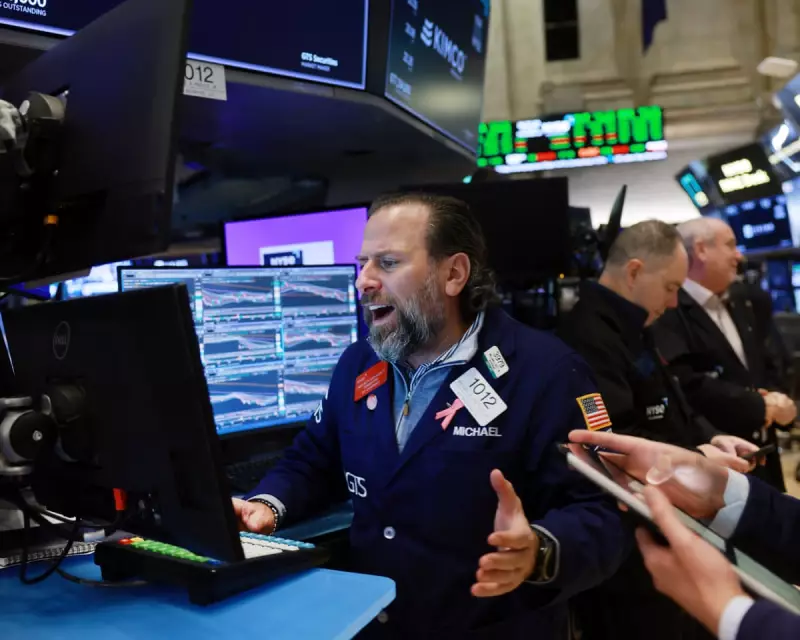
Fears of an overinflated artificial intelligence bubble have returned to haunt investors, causing a sharp downturn on Wall Street just hours after a rally sparked by stellar results from chipmaking titan Nvidia.
From Rally to Retreat
The initial market euphoria on Thursday, driven by Nvidia's reassuring figures demonstrating robust demand for its advanced data centre chips, proved short-lived. The optimism quickly dissipated, placing intense pressure on the very technology stocks that have been at the heart of the AI boom.
By the close of trading in New York, the benchmark S&P 500 had fallen 1.6%, while the Dow Jones Industrial Average dropped 0.8%. The technology-heavy Nasdaq Composite was hit hardest, closing down a significant 2.2%.
This sell-off occurred against a more positive backdrop in other global markets. Earlier in the day, London's FTSE 100 had edged up 0.2%, Frankfurt's Dax rose 0.5%, and Tokyo's Nikkei 225 saw a strong gain of 2.65%.
The Core of the Concern
Nvidia, now valued at a staggering $4.4 trillion, has been the primary driver behind a massive surge in the valuations of AI-focused companies. However, as businesses invest heavily in chips and data centres to secure their position in the AI race, anxieties about a potential market bubble have intensified.
Analysts point out that while Nvidia itself is profiting handsomely from the demand for its hardware, the companies purchasing these chips to build AI infrastructure may be spending beyond their means.
"The people who are selling the semiconductors to help power AI doesn't alleviate the concerns that some of these hyper-scalers are spending way too much money on building the AI infrastructure," said Robert Pavlik, senior portfolio manager at Dakota Wealth. "You have the company that's benefiting from it, but the others are still spending too much money."
Reflecting this nervous sentiment, shares in Nvidia itself sank 3.2%, and the VIX index, a key measure of market volatility, climbed by 8%.
Economic Backdrop and Interest Rates
Further influencing trader sentiment was a mixed US jobs report released on Thursday morning. The data showed healthy growth in the labour market for September, but also recorded a slight rise in the unemployment rate.
This combination has reinforced expectations among investors that policymakers at the US Federal Reserve will likely keep interest rates on hold at their next meeting in December, maintaining a 'higher for longer' stance as they continue to monitor economic indicators.