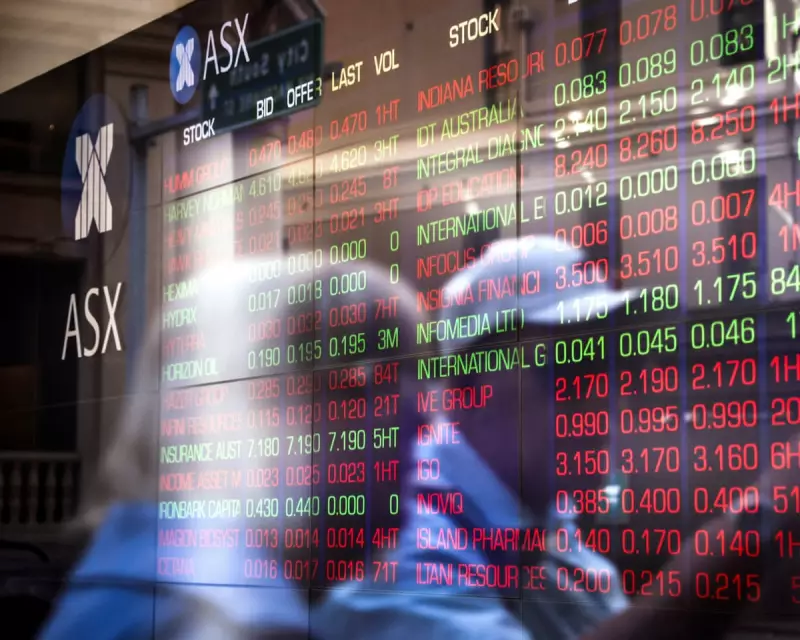
Australian Market Follows Wall Street's AI-Led Slide
The Australian share market has been caught in the wake of Wall Street's turbulence, where growing concerns about an AI-driven technology stock rally have sparked fears that valuations may have surged too rapidly. The benchmark S&P/ASX 200 index, which reached a record high of 9,115 points in October, subsequently experienced a sharp decline, shedding approximately 7% of its value within a short period.
What's Driving the Australian Market Downturn?
Global markets, including Australia's, were experiencing significant pressure until Nvidia, the world's leading chip manufacturer, reported staggering financial results. The company announced a 65% year-on-year profit increase to US$31.9 billion, providing temporary relief to anxious investors. However, this positive news has intensified debates about whether the market's enthusiasm for artificial intelligence represents justified optimism or an impending bubble.
Omkar Joshi, Chief Investment Officer at Sydney-based Opal Capital Management, notes that Australia's economic outlook has shifted dramatically. "We've moved from a country expecting rate cuts to one where the next move may even be a rise," Joshi states. "That's quite a different place to be sitting relative to where we were only a few months ago; we've moved from risk on to risk off."
The market adjustment coincided with diminishing expectations for a US Federal Reserve rate cut in December, driven by persistent inflation concerns. This development has similarly reduced hopes for additional rate reductions in Australia, creating a more cautious investment environment.
Assessing the AI Bubble and Market Valuations
Australian technology stocks have demonstrated particular volatility, with significant price fluctuations affecting companies like TechnologyOne, WiseTech Global, and location-sharing application Life360. Even Commonwealth Bank, Australia's largest listed company, experienced a dramatic trajectory – its shares surged more than 30% between March and June before undergoing a double-digit decline amid valuation concerns.
Lochlan Halloway, an equity market strategist at Morningstar, characterizes the current market as "modestly overvalued," noting that "investors are bidding up in multiples, in that they are paying more for the same things."
The cryptocurrency market has also felt the impact of growing bubble anxieties. Bitcoin's value dropped from its October peak of US$126,000 to US$90,000, a development that Tony Sycamore, market analyst at IG Australia, describes as the "canary in the risk coalmine."
Michael McCarthy, a veteran financial markets commentator with online trading platform Moomoo, draws parallels with the dotcom era. "What often happens at the beginning of a new industry, and in my mind we're definitely looking at the beginning of a new industry, is initially markets vastly overestimate the potential," McCarthy explains. "Then markets crash, and there is a long period of underestimation, before the industry starts to prove itself."
McCarthy anticipates that current market volatility represents part of a "big shakeout" that will eventually create investment opportunities within the AI sector, though he cautions that "if it unwinds, it could get very nasty."
As investors monitor for a potential "blow off top" – that final, rapid price surge often signalling the end of a boom – the Australian market remains delicately balanced between technological promise and valuation realities.