The 'Bro-Coding' Phenomenon Sweeping LinkedIn
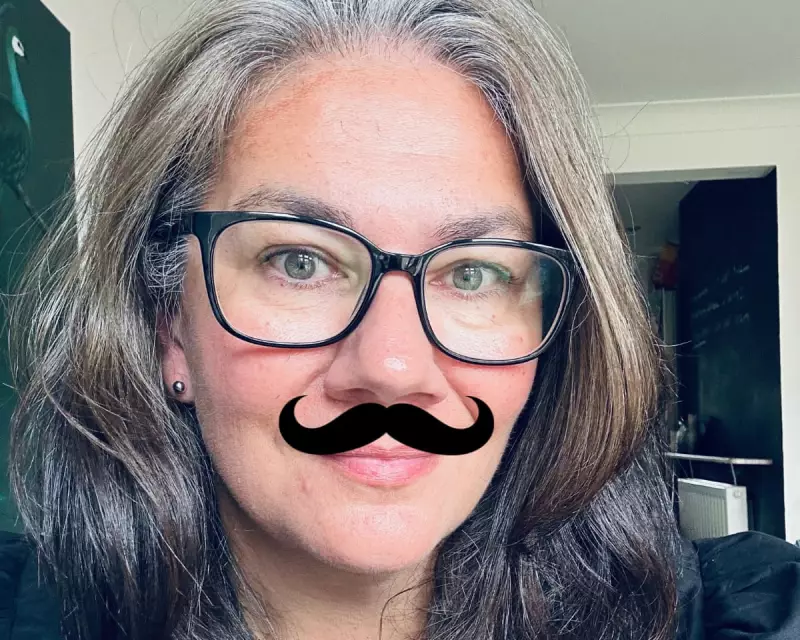
Dozens of professional women across the UK are reporting staggering increases in their LinkedIn visibility after conducting an unusual social experiment: pretending to be men on the platform. The collective investigation began after multiple users noticed that switching their gender to 'male' and adopting typically masculine business language led to dramatic improvements in their reach and engagement.
Staggering Results from Gender-Switching
Simone Bonnett, an Oxford-based social media consultant, decided to test the theory by changing her pronouns to 'he/him' and altering her name to 'Simon E' on her LinkedIn profile. The results were nothing short of extraordinary. 'The kind of stats that I'm seeing at the moment are a 1,600% increase in profile views, which is wild if you think about what social media views look like at the moment, and a 1,300% increase in impressions,' Bonnett reported.
Another professional, Megan Cornish, a communications strategist for mental health tech companies, took the experiment even further. After noticing her reach declining earlier this year, she changed her gender to 'male' and used ChatGPT to rewrite her profile using what she described as 'male-coded' language. This included action-oriented buzzwords like 'strategic', 'leader', 'drive', 'transform' and 'accelerate'.
The outcome was equally impressive. Cornish's reach on LinkedIn spiked by 415% in just one week after implementing these changes. When she wrote about her experience, the post went viral, accumulating nearly 5,000 reactions from other LinkedIn users.
The Psychological Toll of 'Bro-Coding'
Despite the impressive metrics, many women found the experiment emotionally draining. Megan Cornish described her discomfort with the new persona she had to adopt. Her previous posts had been 'concise and clever, but also warm and human,' whereas her 'bro-coded' content felt 'assertive and self-assured – like a white male swaggering around.'
Cornish abandoned the experiment after just one week, despite the positive results. 'I was going to do it for a full month. But every day I did it, and things got better and better, I got madder and madder,' she confessed.
LinkedIn's Response to Algorithm Bias Claims
In response to the growing discussion, LinkedIn published a blog post addressing the trend. The platform firmly denied that demographic information, including gender, plays any role in their content distribution algorithm. A spokesperson stated that 'changing gender on your profile does not affect how your content appears in search or feed.'
Instead, LinkedIn claims to use 'hundreds of signals' to determine post visibility, focusing on content quality and relevance rather than user demographics. The company also mentioned conducting regular 'checks for gender-related disparities' in their algorithms.
However, the platform acknowledged that some users have experienced recent declines in reach, attributing this to a 24% increase in comments and a significant spike in video uploads during the past quarter, creating more competition for attention.
Mixed Results and Broader Implications
Not all participants in the experiment reported positive outcomes. Cass Cooper, a writer on technology and social media algorithms who is Black, changed both her gender to 'male' and her race to 'white'. Contrary to others' experiences, she saw a decline in her profile's reach and engagement.
Cooper suggested that while algorithmic bias clearly exists, it's difficult to pinpoint exactly how it functions in specific cases. She expressed frustration not with the platform itself, but with 'the lack of progress [in society]' regarding broader biases.
Simone Bonnett noted that the prevalence of 'bro-coding' on LinkedIn appears to be increasing. 'You always think of LinkedIn as being more genteel, more businesslike. It's not like that any more. It's starting to become the wild west,' she observed.
This collective experiment highlights ongoing concerns about algorithmic transparency and gender equality in professional spaces, raising important questions about whether LinkedIn's platform inadvertently rewards traditionally masculine communication styles.