The Hidden Champions of the AI Revolution
While global markets remain fixated on technology giants like Nvidia and Microsoft, a surprising group of traditional companies has quietly positioned itself at critical junctures in the artificial intelligence supply chain. These unlikely beneficiaries of the AI boom demonstrate how technological revolutions create winners far beyond the obvious tech sector.
Toto: From Bathrooms to Chip Manufacturing
Japanese toilet and bidet manufacturer Toto represents one of the most improbable success stories of the current AI expansion. The company produces electrostatic "chucks," specialized components essential for memory chip production. When activist investment fund Palliser Capital acquired a stake last month and labeled Toto "the most undervalued and overlooked AI memory beneficiary," the company's shares surged over five percent in a single day.
Toto's stock has climbed an impressive 54 percent over the past twelve months, demonstrating how traditional manufacturing expertise can translate into semiconductor sector success. The company's transformation from bathroom fixture producer to critical chip component supplier illustrates the unexpected pathways through which AI investment flows.
Ajinomoto: From Flavor Enhancer to Essential Insulator
Ajinomoto, globally recognized for producing monosodium glutamate (MSG) seasoning, has become an indispensable player in advanced chip manufacturing. During the 1990s, company researchers discovered that a byproduct of their amino acid production process created an exceptionally effective electrical insulator.
This discovery led to the development of Ajinomoto build-up film (ABF), a specialized material used in packaging advanced CPUs and GPUs. The film sits between chips, preventing copper wiring from short-circuiting and ensuring processor functionality. While unglamorous, this work proves absolutely essential to modern computing.
Ajinomoto now commands over 95 percent of the global market for this critical material, meaning every AI chip operating in data centers worldwide requires their product. The company has invested 25 billion yen expanding facilities near Tokyo over the past two years, with president Shigeo Nakamuro committing to matching that investment by 2030.
The firm targets a 50 percent increase in production capacity and forecasts annual electronics division growth exceeding 10 percent throughout this decade. Ajinomoto's stock has risen 31 percent year-to-date, creating a remarkable subplot for a company whose name appears primarily on seasoning packets.
Sherwin-Williams: Painting the AI Infrastructure
American paint manufacturer Sherwin-Williams, with its 150-year history and nearly 5,000 retail locations, might seem an unlikely AI beneficiary. However, the company's industrial division produces specialized thermal coatings used in large-scale data center construction.
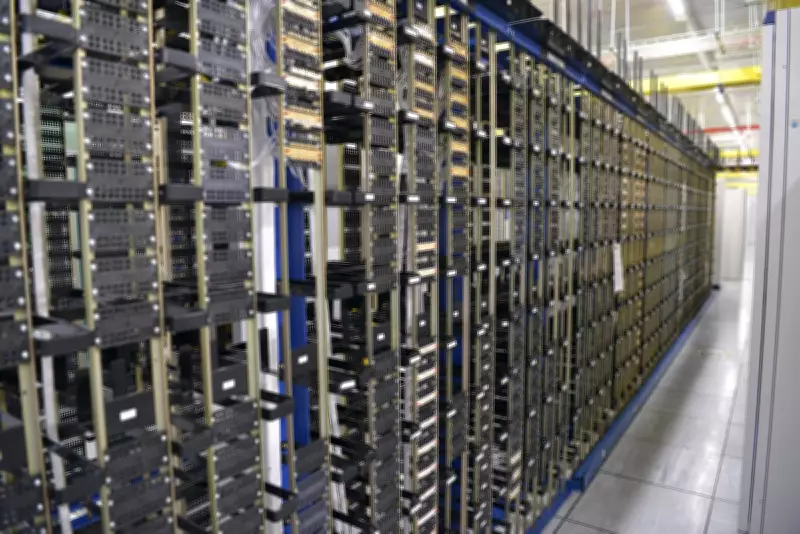
AI data centers operate at significantly higher temperatures than conventional facilities due to denser hardware configurations and increased power requirements. These buildings demand advanced heat management and fire safety solutions, creating substantial demand for Sherwin-Williams' protective coatings.
The data center construction boom has dramatically boosted the company's protective and marine segment. Mizuho recently raised its price target for Sherwin-Williams, citing continued "pricing discipline and cost execution" within this growing business area. The company's stock has increased 14 percent year-to-date, proving that sometimes the "picks and shovels" play in technology infrastructure involves literal paint.
Dai Nippon Printing: From Newspapers to Photomasks
Founded in 1876, Dai Nippon Printing (DNP) built its reputation producing books, magazines, and packaging materials. The company, which helped drive Japanese pop culture through manga publication, represents a legacy media business that has successfully transitioned into semiconductor manufacturing.
Printing and chip manufacturing share fundamental similarities as both involve lithography—the transfer of patterns onto surfaces. DNP's 150 years of precision printing expertise translates directly to producing photomasks, the specialized plates used to project circuit designs onto silicon during chip production.
As semiconductor components shrink to microscopic scales, photomask tolerances become extraordinarily tight. DNP stands among a select few companies capable of meeting these precision requirements. In 2024, the firm became a subcontractor for Rapidus, Japan's state-backed chipmaker targeting mass production by 2027.
DNP develops and supplies the photomasks Rapidus requires while also participating as a strategic investor in the chipmaker's latest funding round. The company recently released new templates for next-generation, even smaller chips, with mass production targeted for 2027. DNP's stock has surged 50 percent year-on-year.
The Broader Investment Landscape
Goldman Sachs estimates AI capital expenditure will increase by 19 percent in 2026, continuing the substantial investment trend that has characterized recent years. JP Morgan calculates that AI-related stocks have driven approximately 75 percent of S&P 500 returns since ChatGPT's launch in late 2022.
While technology giants dominate headlines and market capitalization, an increasing portion of AI investment flows toward companies supplying essential materials, coatings, and components. These firms represent the physical infrastructure enabling artificial intelligence advancement.
Unlike companies trading on AI hype and projected demand, these supply chain participants succeed based on actual sales and tangible purchases. Their recent financial performance demonstrates robust demand for the physical components that make AI technology possible. As the AI revolution continues expanding, these unlikely winners illustrate how technological transformation creates opportunities across diverse industrial sectors.