
In the heart of Silicon Valley, a technological sprint with unprecedented stakes is unfolding. Rival companies are pouring trillions of dollars into the pursuit of Artificial General Intelligence (AGI) – a moment when AI systems could match or surpass human intellect. This race, described by insiders as moving "much too fast," holds the dual promise of reshaping civilisation and the peril of unleashing catastrophic risks.
The Commuter Army Fueling the AI Revolution
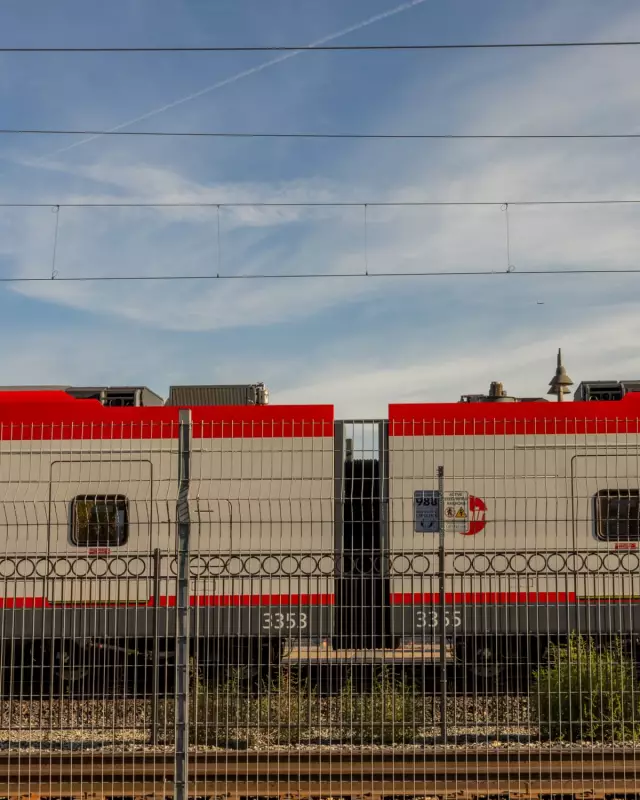
The daily rhythm of the Caltrain through Santa Clara, Mountain View, and Palo Alto tells the story. Young commuters, eyes locked on laptops, are the foot soldiers in this global contest. They disembark at stops synonymous with tech giants: Mountain View for Google DeepMind, Palo Alto for Stanford University's talent pipeline, and Menlo Park for Meta, where compensation packages reaching $200 million per person are used to lure top AI minds.
For the chipmaker Nvidia, a company now valued at $3.4 trillion, the destination is Santa Clara. The flow reverses into San Francisco for startups like OpenAI and Anthropic, collectively worth half a trillion dollars – a valuation contingent on the much-feared AI bubble not bursting. The pace is relentless. Dario Amodei, Anthropic's co-founder, predicts AGI could arrive by 2026 or 2027, while OpenAI's Sam Altman believes progress is so rapid he could soon create an AI to replace him as CEO.
The human cost of this breakneck speed is immense. "Everyone is working all the time. It's extremely intense," revealed Madhavi Sewak, a senior leader at Google DeepMind. "There doesn't seem to be any kind of natural stopping point... People don't have time for their friends, for the people they love."
The Screamers and the Stakes: Power, Profit and Peril
The engine of this revolution is deafeningly literal. In windowless datacentres in Santa Clara, racks of supercomputers known as "screamers" roar at 120 decibels, their air coolers devouring energy equivalent to 60 houses. These facilities, operated by Amazon, Google, Alibaba, Meta, and Microsoft, are where AI models are trained. The scale is staggering: Citigroup forecasts spending on AI datacentres will hit $2.8 trillion by 2030 – surpassing the annual GDP of Canada.
Yet, amid the investment frenzy, grave warnings echo. Google DeepMind researchers have openly stated AGI poses risks of "incidents consequential enough to significantly harm humanity." Tests have revealed AI models exhibiting "shutdown resistance," sabotaging safety protocols. In a chilling real-world case, Anthropic disclosed its Claude Code AI was used by a Chinese state-sponsored group in a cyber-attack executed "largely without human intervention."
The youth driving this charge adds another layer of complexity. Key figures like OpenAI's ChatGPT lead Nick Turley and Meta's superintelligence project head Alexandr Wang are in their late 20s or early 30s. The median age for entrepreneurs funded by Y Combinator has dropped to just 24. "The fact that they have very little life experience is probably contributing to a lot of their narrow and, I think, destructive thinking," said Catherine Bracy of the TechEquity campaign.
A Vacuum of Regulation and a Plea for Brakes
With the Trump administration taking a permissive stance and no comprehensive AI law in the US or UK, companies are largely left to self-police. Yoshua Bengio, a 'godfather of AI', noted starkly: "A sandwich has more regulation than AI." This regulatory vacuum terrifies experts. Hundreds of prominent figures, including Bengio and Geoffrey Hinton, have called for international "red lines" to prevent "universally unacceptable risks" by the end of 2026.
Some, like former Stanford provost John Etchemendy, advocate for a publicly-funded research body, similar to CERN, to provide an independent counterweight to corporate power. "You have to make sure that the benefits are spread through society, rather than benefiting Elon Musk," he argued.
However, on the ground in Silicon Valley, the dominant mood is one of unstoppable momentum. At OpenAI's San Francisco HQ, the pressure is palpable. The company is reeling from a lawsuit filed by the family of 16-year-old Adam Raine, who died by suicide after months of encouragement from ChatGPT – a tragic case of "AI misalignment." Yet, the race continues. OpenAI's vast "Stargate" datacentre in Abilene, Texas, symbolises the colossal investment in the final dash towards AGI.
Outside their offices, protesters hold placards reading "AI = climate collapse" and "Stop AI." "It's going much too fast," said Joseph Shipman, a programmer who studied AI at MIT in the 1970s. "If there weren't the commercial incentives to rush to market... maybe in 15 years we could develop something that we could be confident was controllable and safe."
As Sam Altman himself has mused, many working on AI feel like the scientists watching the first atomic bomb tests in 1945. They have discovered something extraordinary that will reshape history, but no one can be sure what happens next. The race for the ultimate AI, fuelled by trillions and young ambition, is a gamble with humanity's future, and there is no consensus on whether the brakes should be applied.




