
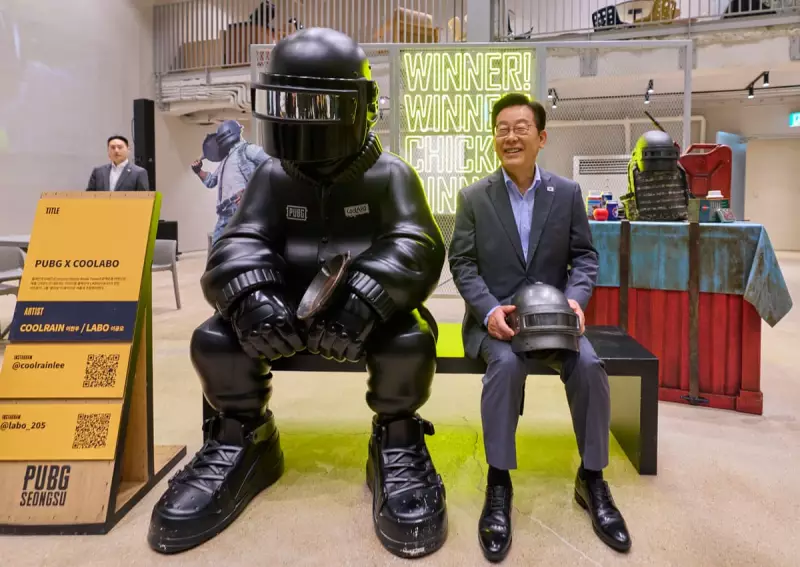
South Korea has undergone a dramatic transformation in its relationship with video games, evolving from a nation that once legally equated gaming with drugs and gambling to a global industry leader worth billions. This shift is personified by professional players like Son Si-woo and cemented by recent government declarations that games are not addictive substances.
From Social Stigma to Strategic Industry
The change in official attitude is stark. In October, President Lee Jae Myung publicly stated that "games are not addictive substances." This marked a definitive break from 2013, when lawmakers sought to classify gaming as one of the country's four major social addictions, alongside drugs, gambling, and alcohol.
This policy reversal has been matched by explosive economic growth. Between 2019 and 2023, South Korea's domestic gaming market expanded by 47%, reaching a value of 22.96 trillion won (£11.7bn). Industry exports surged 41% in the same period to 10.96 trillion won (£5.6bn). Gaming now accounts for nearly two-thirds of all Korean content exports, vastly outperforming other cultural sectors like K-pop.
The Esports Academy Pipeline
At the heart of this ecosystem are professional esports and the academies that train future stars. At the Nongshim Esports academy in Seoul's Guro district, aspiring gamers train in stark white rooms, hunched over screens in intense silence. The academy, run by the conglomerate that backs the professional team Nongshim RedForce, charges about 500,000 won (£253) for 20 hours of monthly training.
However, the path to professionalism is narrow. Evans Oh, CEO of Nongshim Esports, estimates only 1–2% of trainees secure professional playing jobs or related esports careers. Since opening in 2018, the academy has produced 42 professionals. Training mirrors elite sport, with long days of gameplay, video analysis, and psychological coaching.
The career of Son Si-woo, known professionally as Lehends, exemplifies this journey. Now a multiple League of Legends champion at 27, he recalls his mother turning off his computer during an interview for a pro-gaming spot, fearing his addiction. His breakthrough came after winning an amateur tournament and giving the 2 million won (£1,000) prize to his parents, finally earning their belief.
A High-Stakes, High-Reward Profession
For the select few who make it, the rewards can be substantial. Top-tier players can earn six-figure salaries in US dollar terms, through a combination of wages, prize money, and sponsorships. The profession has gained significant cultural cachet; in a recent survey, professional gamer ranked fifth among desired jobs for elementary school boys in South Korea.
Yet the career is notoriously short, often ending before the age of 30—a timeline further compressed for Korean men by mandatory military service. Hwang Sung-hoon (known as Kingen), a 25-year-old teammate of Lehends, describes a ruthless market: "If you're not good enough, you have to give up quickly."
South Korea's dominance is undeniable. Aiden Lee, secretary-general of the League of Legends Champions Korea (LCK) league, notes that LCK teams have won 10 out of the last 15 world championships. He attributes this to an unparalleled competitive intensity, where "Korean pro players can practise more than 16 hours a day."
The government now seeks to balance this fierce growth with protection. It supports seven "healing centres" nationwide for young people considered overly immersed in gaming and has introduced standard contracts for youth players that cap official training hours.
Back at the academy, trainees like 22-year-old Roh Hyun-jun, who has paused his mechanical engineering degree, remain singularly focused. "I want to leave my name as the most famous pro gamer," he says. His ambition reflects the new reality of a nation that has successfully redefined a once-stigmatised pastime into a legitimate, celebrated, and hugely profitable pillar of its modern economy.




