
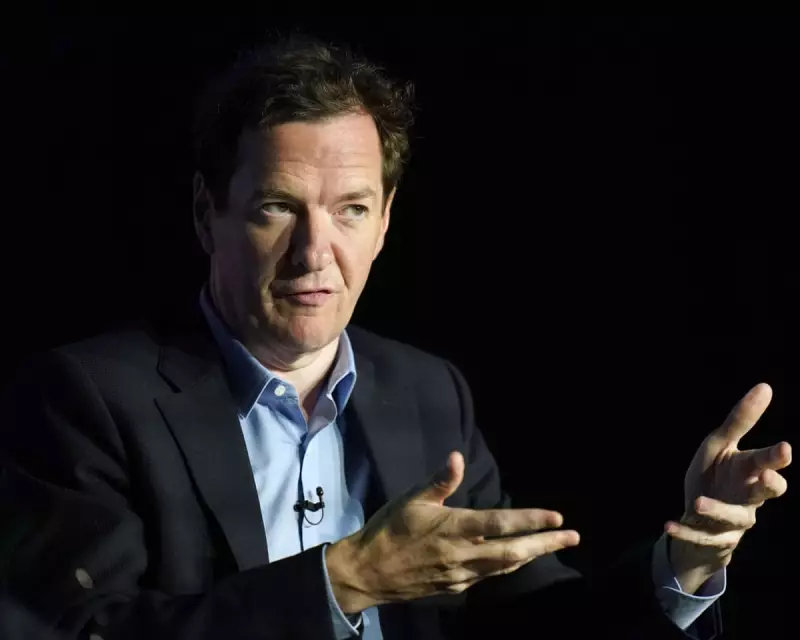
In a move that underscores the shifting power dynamics of the 21st century, former Conservative Chancellor George Osborne has taken a senior role at artificial intelligence giant OpenAI. His appointment to lead OpenAI for Countries, a new unit focused on government relations, is more than just another line on his crowded post-political CV. It is a stark signal that the world's most powerful technology firms are increasingly behaving like political actors, building diplomatic corps from the ranks of former statesmen.
From the Treasury to the Tech Frontier
Since leaving frontline politics, George Osborne has maintained a portfolio of influential positions. He has chaired the Northern Powerhouse Partnership, edited the Evening Standard, advised asset manager BlackRock, and joined advisory firm Robey Warshaw. He also chairs the British Museum and has roles with crypto firm Coinbase.
However, his latest position is arguably his most significant. Announced via a tweet in late 2023, Osborne will helm OpenAI's efforts to embed its models, like ChatGPT, and its ambitious Stargate datacentre programme into the national infrastructure of governments worldwide. OpenAI is reportedly in talks with around 50 countries. The role is explicitly designed to make the company's technology an indispensable part of state machinery, raising profound questions about sovereignty and dependence.
A Well-Trodden Path for Political Elites
Osborne is far from the first British political heavyweight to swap Westminster for Silicon Valley. His coalition government colleague, former Deputy Prime Minister Nick Clegg, now serves as President of Global Affairs for Meta, Facebook's parent company. Clegg's hiring in 2018 was initially seen as a public relations manoeuvre but ultimately confirmed that social media platforms had become unavoidable political entities.
The trend extends beyond Osborne and Clegg. In a striking example, former Prime Minister Rishi Sunak took advisory roles with Microsoft and AI firm Anthropic in October 2023, less than two years after hosting the global AI safety summit at Bletchley Park. These appointments highlight a critical choice for tech firms: are they hiring for technical insight or for the "institutional muscle memory" and elite networks these figures possess?
The financial stakes are colossal. The lobbying spend tells its own story: big tech now outspends the combined lobbying efforts of the largest firms in pharmaceuticals, finance, and automotive industries. In Europe alone, the sector spent over €151 million on lobbying, a clear indicator of the political battlefield they are preparing to dominate.
Democracy's New Challenge: Corporate Quasi-Governments
This recruitment drive creates a fundamental problem for democratic governance. Governments are meant to set the rules, but they are increasingly dealing with tech corporations that operate on a global scale, with resources and influence that rival nation-states. The sight of Prime Minister Sunak playing interviewer to a dominant Elon Musk at Bletchley Park was a symbolic illustration of this power imbalance.
When companies like OpenAI start negotiating directly with dozens of governments and hiring former chancellors and prime ministers, they are acting as political entities. Therefore, they must be treated as such. This demands not deference, but heightened scrutiny and transparency.
Governments must insist that any "OpenAI for Countries" agreements are published by default, allowing public and parliamentary oversight. Critical national infrastructure deals, like those for Stargate-style data centres, should be scrutinised with the rigour applied to utilities, not with the forgiving mystique often granted to startups. The era of asking which tech executive or politician you distrust least must end.
The alarming precedent has been set before by oil, pharmaceutical, and defence industries. The concentrated power of AI presents a similar, if not greater, risk. Recognising that big tech companies are now political actors is the essential first step in ensuring they are held accountable to the public, not just to their shareholders.




