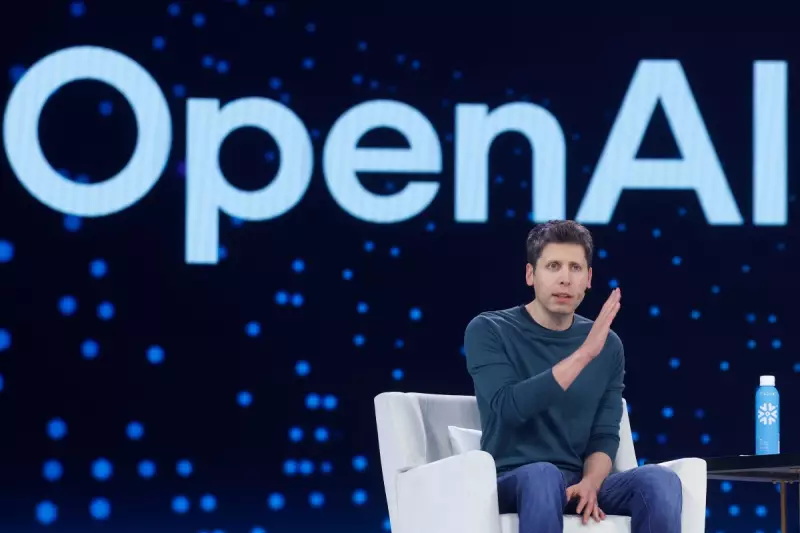
OpenAI's Strategic Pivot: From Prompt Revenue to Structural Dependency
UK businesses are fundamentally misunderstanding OpenAI's intellectual property strategy following recent comments at the World Economic Forum in Davos. OpenAI's CFO, Sarah Friar, discussed future "value sharing" models tied to intellectual property, particularly concerning scientific and commercial breakthroughs. This phrasing sparked immediate concern, with many interpreting it as OpenAI planning to claim ownership over user-generated ideas. The reality, however, reveals a more sophisticated strategic shift that warrants careful examination.
The Real Target: Enterprise Integration Over Everyday Usage
Contrary to widespread anxiety, OpenAI is not currently planning to extract value from routine ChatGPT usage. Employees utilising the platform for drafting emails, brainstorming sessions, or testing concepts are not automatically surrendering ownership of their work. The current panic stems largely from sensational headlines while overlooking a more significant transformation that has been developing for some time.
OpenAI faces substantial financial pressures despite generating considerable revenue. Operating large-scale AI models at global capacity consumes capital at rates that £20 monthly subscriptions cannot sustain. Approximately 95 percent of users still access services without payment, while infrastructure costs remain persistently high regardless of adoption growth. This economic reality has prompted OpenAI to explore diverse revenue streams including advertising, new subscription tiers, enterprise agreements, media partnerships, and custom model development.
Navigating Unsettled Legal Terrain
Generative AI operates within legally ambiguous territory across all jurisdictions. Training data practices remain contested, with courts yet to deliver definitive rulings on transformation, infringement, or permissible large-scale usage. Legal appeals will likely span years, while settlements typically obscure clarity rather than establish precedents. Businesses anticipating clear legal resolutions in the near term may face disappointment.
When major platforms encounter legal uncertainty, they typically respond with entrenchment strategies. OpenAI's accelerated pursuit of enterprise partnerships, deep integrations, and long-term commercial alignments follows this established pattern. Once AI systems become embedded within research pipelines, customer service operations, development workflows, or decision-making processes, their removal becomes prohibitively difficult regardless of legal outcomes.
The Dependency Strategy in Practice
OpenAI's enterprise partnership approach enables explicit, negotiated value-sharing arrangements. In pharmaceutical research, scientific discovery, industrial modelling, and large-scale research and development, this model proves particularly viable. OpenAI generates revenue when partner organisations succeed because its systems become integral to their achievements. This mirrors established practices within the technology sector, such as Google's approach with Isomorphic Labs.
The critical error would be interpreting this current stance as permanent reassurance rather than strategic positioning. OpenAI is not pursuing user-generated content today because such action remains unnecessary. The company continues building market position, absorbing workflows, and quietly reshaping decision-making processes across industries. As dependency deepens, monetisation opportunities naturally expand while switching costs intentionally increase.
Practical Implications for Businesses
Organisations must shift their focus from prompt and content ownership concerns toward dependency analysis. Many companies adopted ChatGPT opportunistically, allowing usage to proliferate because it appeared productive and low-risk. Formal policies often followed implementation, if they were established at all. This approach becomes problematic when suppliers experiment with new revenue models under financial pressure.
Business leadership teams should critically assess where human judgment has been replaced rather than supported by AI systems, and evaluate how easily these workflows could be dismantled if pricing, licensing, or data terms become unfavourable. Properly reviewing terms of service represents basic due diligence, while strategic thinking beyond current agreements demonstrates foresight.
Companies require clarity regarding whether they treat AI systems as tools, advisors, or infrastructure, as each category carries distinct expectations concerning trust, bias, and responsibility. Establishing clear boundaries creates operational resilience, while anticipating evolving business models represents intelligent preparation. By the time legal clarity emerges, platforms already integrated into corporate operations will prove exceptionally difficult to dislodge, even if fault becomes established.
The fundamental question for businesses is not whether OpenAI will eventually pursue value extraction, but whether organisations will recognise the strategic shift as it occurs. When the transformation becomes obvious, available choices will have already narrowed considerably. Proactive assessment and strategic planning now can prevent reactive scrambling later as dependency deepens and options diminish.