
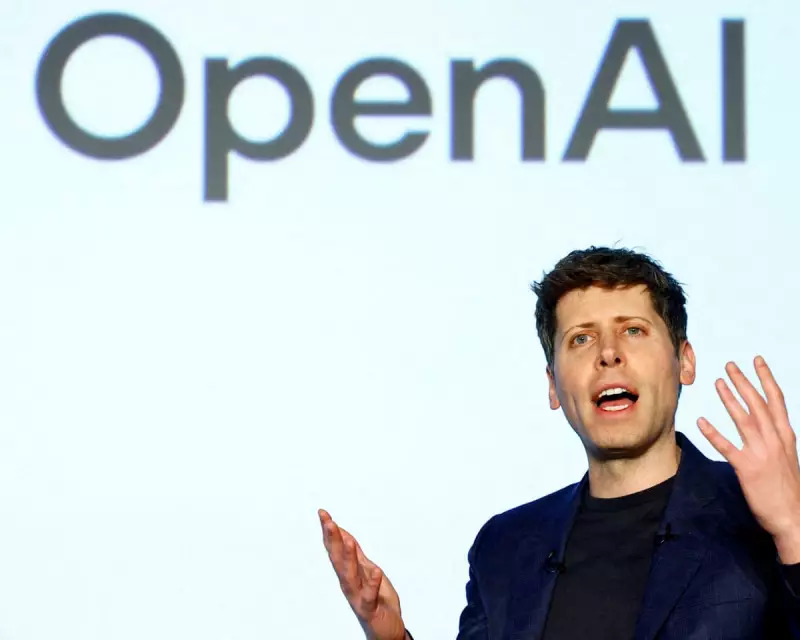
Sam Altman, the chief executive of OpenAI, faces a monumental financial challenge as his company commits to spending $1.4 trillion on computing infrastructure over the next eight years, despite generating only $13 billion in annual revenue.
The Compute Conundrum
OpenAI's ambitious artificial intelligence systems require staggering amounts of computing power, known as 'compute' in industry terminology. This infrastructure of chips and servers necessary to power ChatGPT and develop future AI models comes with a price tag that dwarfs current income streams.
The financial gap has sparked investor anxiety, particularly after awkward exchanges between Altman and Brad Gerstner of Altimeter Capital, a major OpenAI investor. Gerstner publicly questioned how the company could afford such massive compute costs, prompting Altman to abruptly end the discussion with "enough" and offer to find buyers for any concerned shareholders.
Revenue Streams and Government Backstop Controversy
OpenAI's chief financial officer Sarah Friar recently suggested that US government support might help finance chip spending, drawing comparisons to bank bailouts during the 2008 financial crisis. She told the Wall Street Journal that an "ecosystem of banks, private equity, maybe even governmental" support could reduce financing costs.
The suggestion triggered immediate damage control, with both Friar and Altman taking to social media to clarify that OpenAI does not want government guarantees for its data centres. Altman specifically stated that taxpayers should not bail out companies making "bad business decisions."
Tech analyst Benedict Evans highlights the fundamental challenge: "OpenAI wants to match or exceed the infrastructure of the big platform companies. But those companies have cashflows from their existing businesses to pay for this and OpenAI does not."
Altman's Bet on Future Demand
Altman remains optimistic about closing the financial gap through multiple revenue sources. He projects annualised revenue will reach over $20 billion by year-end and grow to "hundreds of billions" by 2030.
The company currently serves 800 million weekly users and 1 million business customers. Revenue primarily comes from:
- ChatGPT subscriptions (75% of current income)
- Corporate versions of ChatGPT
- API access for companies building their own AI products
- Future hardware devices developed with iPhone designer Sir Jony Ive
- Potential value from AI achievements in scientific research
Altman argues that the risk of insufficient computing power outweighs the risk of excess capacity, stating that based on usage trends, "we believe the risk of OpenAI of not having enough computing power is more significant and more likely than the risk of having too much."
Scepticism and Adoption Concerns
Not all observers share Altman's confidence. Carl Benedikt Frey, author of How Progress Ends and Oxford University associate professor, points to recent US Census Bureau data showing declining AI adoption among companies with more than 250 employees.
"We do not know exactly why, but it does suggest that we are at a stage where some users and businesses feel they are not quite getting what they hoped for from AI so far," Frey says. He doubts OpenAI can reach $100 billion in revenue by 2027 without "new breakthroughs."
OpenAI counters that business adoption is accelerating, with the corporate version of ChatGPT growing nine times year-over-year and gaining customers across banking, life sciences, and manufacturing sectors.
Despite the optimism, Altman acknowledges the gamble might not pay off, writing on X that "of course we could be wrong, and the market – not the government – will deal with it if we are." The success of his bet will determine whether OpenAI becomes the next tech giant or a cautionary tale about overambitious spending in the AI gold rush.




