
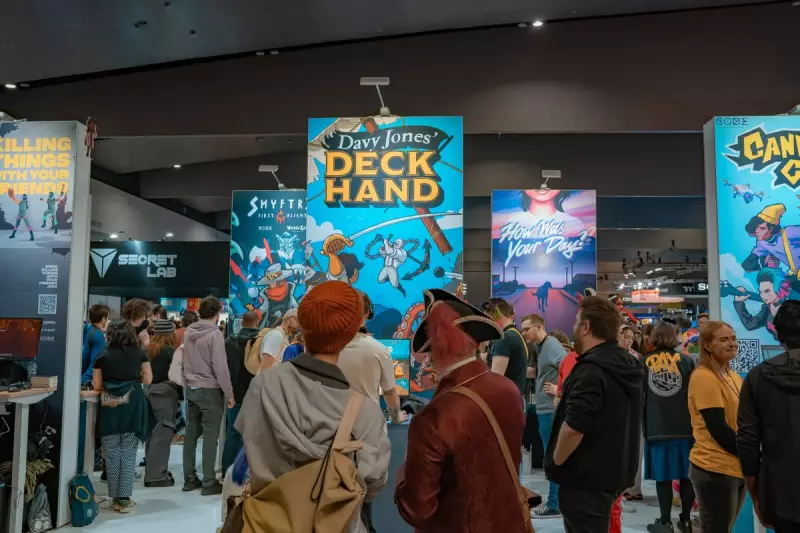
The bustling halls of Melbourne's Convention and Exhibition Centre during Pax Australia witnessed an unexpected trend this October: New Zealand's indie game developers stealing the spotlight. While Australia's own gaming scene remains strong, the most innovative and captivating titles at this year's event consistently hailed from across the Tasman Sea.
The Rise of Kiwi Gaming Talent
At the heart of this phenomenon stands Code – New Zealand's government-funded Centre for Digital Excellence. Their bustling booth featured eighteen different Kiwi developers demonstrating forthcoming games that showcased the remarkable diversity and creativity of the local scene. From the comedic parasitic antics of Headlice to the heartwarming time-loop narrative of How Was Your Day?, and the bizarre cooperative action of Killing Things With Your Friends, the variety was staggering.
The success isn't limited to critical acclaim. According to the New Zealand Game Developers Association, total revenue for local studios has experienced steady growth since 2018, with an impressive 38% surge between 2024 and 2025 to reach NZ$759 million. This figure dramatically outpaces Australia's A$339.1 million generated in 2024.
Beyond Grants: The Code Difference
What sets New Zealand's approach apart isn't just funding availability, but the comprehensive nature of the support. Established in late 2019 in Dunedin and later expanded nationally, Code offers more than just financial assistance. The programme provides crucial mentorship and specialised workshops covering everything from media engagement and budgeting to technical skills like console porting.
Vee Pendergrast, development manager of Code, explains their unique philosophy: "In this day and age, publishers and investors only want to engage with you when you have already got some degree of validation. We have that baked into our model." The programme aims to make developers self-reliant, offering multiple funding streams from initial kickstarts to expansion grants up to $250,000.
The economic return speaks for itself. Code's calculations indicate that every dollar they spend generates NZ$2.67 of investment back into the ecosystem. This multiplier effect was demonstrated before the console release of Abiotic Factor, a Code-supported title that sold over 1.4 million copies on PC alone.
Building a Collaborative Community
The success stories continue to multiply. Grinding Gear Games' Path of Exile series reported revenue of NZ$105 million between October 2024 and September 2025, while PikPok achieved more than 500 million worldwide downloads across its titles. The blockbuster success of Dredge from Black Salt Games has created ripple effects, enabling spin-off studios like Disc 2 Games to experiment with new concepts like Canvas City.
Nadia Thorne, Black Salt's chief executive and now a Code mentor, emphasises the programme's importance for emerging talent: "A lot of indie studios wouldn't be able to afford this kind of exposure. Pooling together all those resources means that we're able to come to a lot of shows that would be out of reach otherwise."
The collaborative spirit extends throughout the New Zealand development community. Jevon Wright, working on their first game Adaptory for four years, discovered Code midway through development and found immediate connection to the wider scene. Will Adamson, demoing Apothecurse at Pax, praised the sharing of ideas, experiences, and even developers within the close-knit community.
With sixty-one upcoming New Zealand games listed on Steam by NZGDA, the small nation continues to punch well above its weight in an increasingly crowded global market. As Pendergrast notes, "We get a lot of cool, quirky, Kiwi-oriented stuff. That's part of our whole brand." From office culture satire Middle Management to the two-headed robot combat of Dream Team Supreme, New Zealand's indie developers are proving that unique vision, supported by intelligent government programmes, can achieve remarkable international success.




