
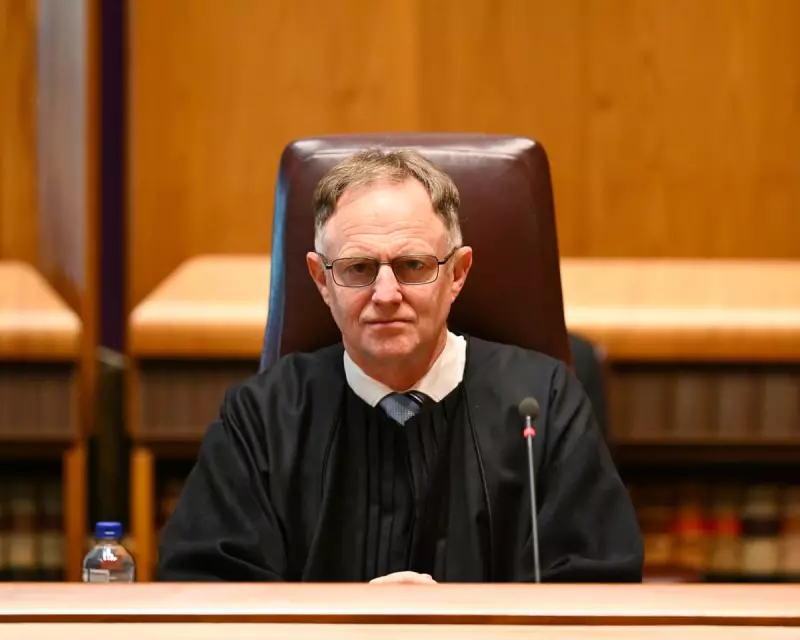
The most senior judge in Australia has declared that the nation's court system has entered an unsustainable phase of artificial intelligence adoption, revealing that judges are increasingly required to act as human filters for machine-generated legal arguments.
The AI Challenge in Courtrooms
High Court Chief Justice Stephen Gageler delivered a stark warning during his address to the Australian Legal Convention in Canberra, highlighting the growing phenomenon of both self-represented litigants and qualified legal professionals submitting AI-enhanced arguments, evidence, and legal submissions.
The speed of AI development is now outstripping human capacity to properly assess its potential risks and rewards, Gageler told attendees at the convention's opening day.
Balancing Risks and Opportunities
Despite the challenges, the chief justice acknowledged artificial intelligence could significantly benefit the legal system by helping deliver civil justice that strives to be just, quick and cheap.
Gageler, who presides over the seven-member high court and was appointed in 2023, raised the provocative possibility of AI eventually participating in decision-making within courts and tribunals. He emphasised that such developments would require careful assessment of the continuing value of human judgment in legal proceedings.
These are existential issues for our legal system, Gageler stated, underscoring the urgent need for the Australian judicature to address them comprehensively.
Practical Consequences and Judicial Wellbeing
The address also touched upon the very real consequences of inappropriate AI use, noting that a Victorian lawyer recently became the first Australian legal professional to face sanctions for submitting AI-generated false citations in a case. The practitioner failed to verify the precedents and consequently lost his ability to practise as a principal lawyer.
Gageler used his platform to highlight significant wellbeing challenges facing judges and magistrates, including:
- Stress and mental health issues from relentless workloads
- Vicarious trauma from handling cases involving family or sexual violence
- Constant media and public scrutiny
- Physical threats against judicial officers
He connected these concerns to broader systemic issues, warning that the justice system is failing to adequately support victims of sexual violence. Citing an Australian Law Reform Commission report, he noted that one in five women and one in sixteen men over age 15 have experienced sexual violence.
Gageler concluded that improving responses to family and sexual violence requires the involvement of the entire legal community, stating that all legal professionals must be aware of these problems and participate in developing solutions.




