
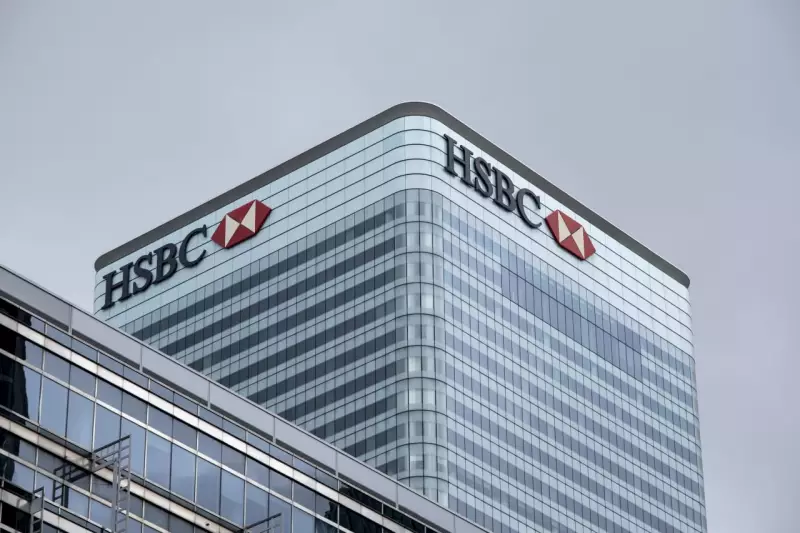
In a significant move to bolster its technological capabilities, the global banking giant HSBC has entered into a partnership with the French artificial intelligence company Mistral AI. The deal will see HSBC utilise Mistral's advanced large language models (LLMs) to develop and roll out a suite of new AI-powered tools for its operations worldwide.
Forging a Strategic Alliance in AI
The agreement, confirmed by the bank, marks a strategic step for HSBC as it seeks to harness cutting-edge AI. The bank will gain direct cloud access to Mistral's latest models through the company's dedicated platform, La Plateforme. This access is intended to accelerate the creation of various internal applications, focusing initially on areas like software development, content summarisation, and customer support research.
HSBC's Group Chief Operating Officer, John Hinshaw, emphasised the bank's commitment to exploring the most effective technologies. "We are excited to partner with Mistral AI as we continue to innovate," Hinshaw stated. He highlighted that the collaboration would allow the bank to experiment and build proofs of concept using one of the leading open-weight models available in the market today.
Integrating AI into the Banking Ecosystem
This partnership is not HSBC's first foray into artificial intelligence. The bank is already a user of Microsoft's Azure OpenAI service and has been actively exploring other technologies. The addition of Mistral's models provides the bank with further options and flexibility. The initiative falls under the purview of HSBC's Technology, Digital & Data team, led by Hinshaw, which is tasked with driving the bank's digital transformation.
Mistral AI, a Paris-based startup founded by former researchers from Meta and Google's DeepMind, has rapidly become a prominent European contender in the competitive AI landscape. The company, which has secured substantial funding from investors including Andreessen Horowitz and Nvidia, is known for developing powerful open-weight models that rival those of larger US firms.
Implications for Efficiency and the Future
The primary goal for HSBC is to leverage AI to enhance operational efficiency and improve the experience for its vast workforce of over 220,000 employees. By automating certain tasks and providing sophisticated research tools, the bank aims to free up employee time for more complex, value-added activities. This move is part of a broader trend in the financial sector, where institutions are racing to adopt generative AI to streamline processes, manage risks, and reduce costs.
The deal also represents a notable win for Mistral AI, signalling its growing credibility and ability to secure partnerships with major global enterprises beyond its home market. For HSBC, diversifying its AI suppliers aligns with prudent risk management and technological strategy, ensuring it is not reliant on a single provider. As the tools are developed and tested, the bank will be closely monitoring their impact on productivity and service delivery across its international network.




