
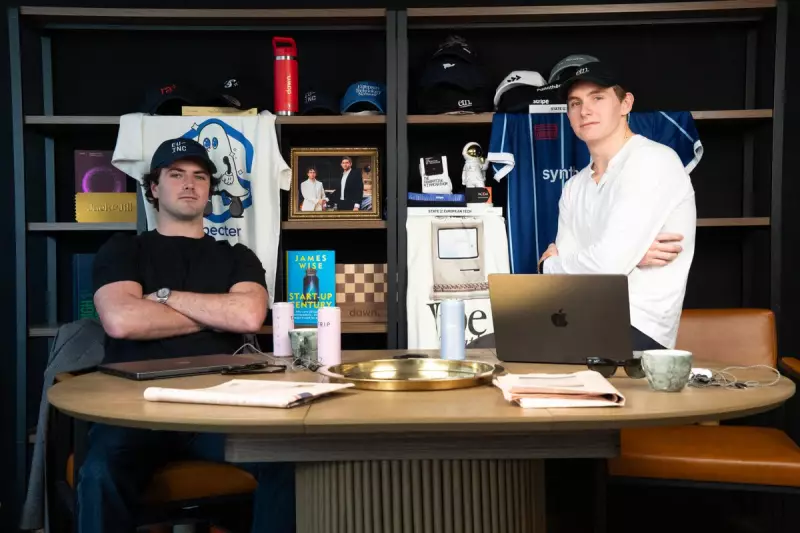
New European Tech Media Venture Emerges from London
Two London-based entrepreneurs have launched a bold initiative to address what they describe as a critical gap in European technology media coverage. Former startup operator Ronan Chambers and ex-investment associate Luke Knight have established the European Technology Network (etn), positioning it as the continent's response to successful US media formats.
The founders revealed they recently secured £150,000 in funding at a valuation exceeding £1 million from a group of European angel investors. This financial backing comes despite challenging market conditions and represents a vote of confidence in their mission to revitalise European tech journalism.
Filling the Void in European Tech Coverage
Chambers and Knight identified a significant opportunity following the decline of established tech media platforms across Europe. They pointed specifically to the disappearance of TechCrunch Europe and the scaling back of operations at The Next Web (TNW), alongside recent layoffs at Business Insider's London office.
"TechCrunch Europe is gone," the founders stated bluntly in their funding announcement. "So we built the European Technology Network." Chambers emphasised the unique timing of their venture, noting that the contraction of traditional tech media outlets coincided with unprecedented growth within the European technology ecosystem.
Knight explained that their model draws inspiration from successful US counterparts but has been carefully adapted for European audiences. "We were having conversations with people, and if they didn't know who TBPN were, we knew it wasn't a good fit," he remarked, highlighting their selective approach to investor partnerships.
A Low-Friction, Growth-Oriented Approach
The European Technology Network streams live on both X and YouTube twice weekly, with ambitions to become the primary media source for Europe's entire technology ecosystem. The founders have adopted what they describe as a "pro-growth" philosophy that celebrates European companies expanding globally rather than criticising them for building elsewhere.
"We don't exclude anyone building wherever it is best to go and build their company elsewhere," Knight explained. "Go and do it – we want to push that. We want to push pro-growth." This approach positions etn as a "hope signal" highlighting the success of European champions like Revolut, Klarna, and Mistral.
Despite being relatively new, the platform has already attracted impressive guests, including Nadir Izrael of Armis Security, Nicolas Sharp from Attio, and most recently Matt Clifford, author of Labour's AI opportunities action plan. The founders attribute this rapid traction to their low-friction format that allows guests to speak candidly.
Funding Strategy and Content Distribution
In a notable departure from conventional startup funding approaches, Chambers and Knight deliberately avoided venture capital, instead raising from 17 angel investors with minimum checks of just £1,000. This strategy ensured they partnered with backers who genuinely understood the evolving media landscape.
Their current business model relies on sponsorship rather than paywalls, reflecting Chambers' belief that "consumers will never like to pay for podcasts or the content that we push out." The platform currently produces six hours of live footage weekly, with plans to expand to fifteen hours across five days.
This substantial content library enables them to create hundreds of short clips for distribution across TikTok, YouTube Shorts, and Instagram Reels. The founders view the digital landscape as a "positive sum game" where quality content can find audiences across multiple platforms without competing for attention.
The European Technology Network is already expanding its physical presence, planning live broadcasts from major events including the Slush festival in Helsinki and partnering for a venture day at Lake Como. Knight noted the "beauty of the model" is that major figures are now approaching them without any outbound outreach, suggesting their distinctive approach to European tech media is already making an impact.




