
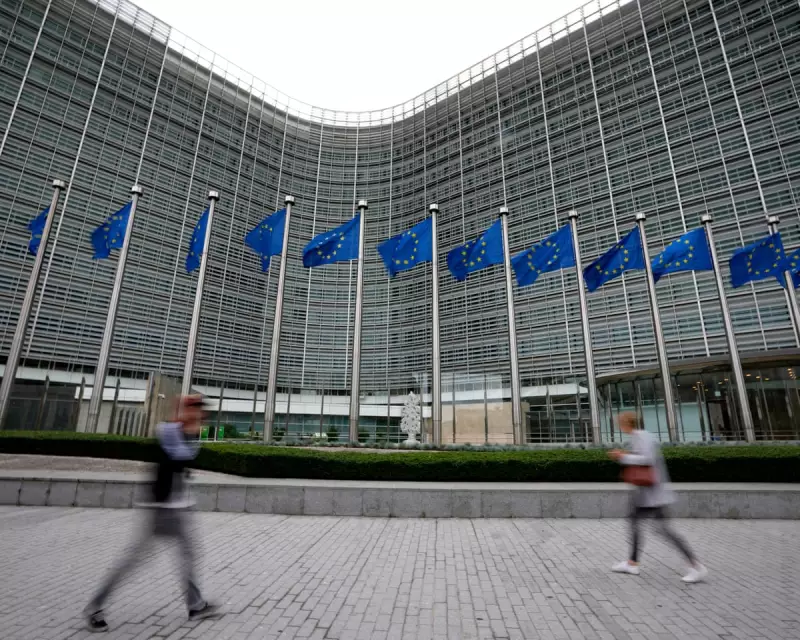
The European Commission is actively considering delaying implementation of crucial sections of its groundbreaking Artificial Intelligence Act, following significant pressure from both international business leaders and the Trump administration in the United States.
Potential Grace Periods and Regulatory Flexibility
According to internal documents seen by the Financial Times, the commission is evaluating a one-year "grace period" for companies violating rules concerning the highest-risk AI systems. This would specifically benefit providers of generative AI - systems capable of producing text, images, and other content - who had already launched products before the implementation date.
The proposed pause aims to "provide sufficient time to adapt their practices within a reasonable time without disrupting the market", according to the internal assessment. Additionally, the commission is contemplating delaying the imposition of fines for breaches of new AI transparency rules until August 2027, giving businesses more time to comply with these complex obligations.
Mounting Pressure from Multiple Fronts
The European Union has faced sustained pressure from the Trump administration to soften its regulation of technology corporations. The US president has recently threatened to impose tariffs on countries whose tech regulations or digital taxes he perceives as "designed to harm or discriminate against American technology".
This international pressure is compounded by concerns from European businesses. An open letter signed by 46 company leaders, including major players like Airbus, Lufthansa, and Mercedes-Benz, has urged for a two-year pause on the AI Act. They argue this would allow for "reasonable implementation" and send a "strong signal that Europe is serious about its simplification and competitiveness agenda".
Ongoing Reflection and Sovereign Rights
European Commission spokesperson Thomas Regnier confirmed that "a reflection is still ongoing within the commission" regarding potential delays to "targeted parts of the AI Act". He emphasised that no final decision had been made and that the commission remains "fully behind the AI Act and its objectives".
Regnier firmly stated that while the commission maintains "constant contacts with our partners around the globe", it is "not for a third country to decide how we legislate", asserting that "This is our sovereign right".
The landmark legislation, which represents the world's first comprehensive AI regulation, officially came into force in 2024. However, many of its most significant provisions, particularly those imposing obligations on companies developing high-risk AI systems, are not scheduled to take effect until August 2026 or 2027. The final decision on these potential delays is expected to be announced on 19 November, after which it would require approval from EU member states and the European Parliament.




