
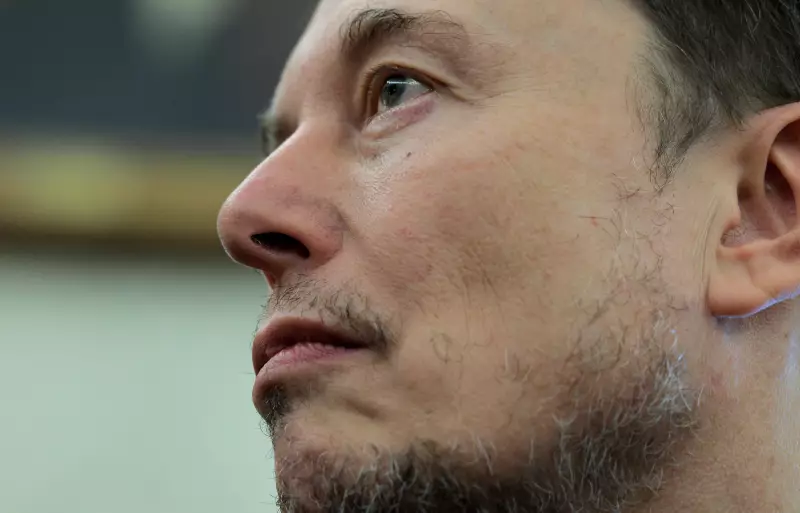
Britain's engineering and innovation sectors could learn a valuable lesson from Elon Musk's unconventional approach: the power of embracing failure as a necessary step towards progress. According to Dr Robert Rayner, a senior lecturer in automotive engineering at the University of Hertfordshire, the UK needs to adopt a more pragmatic and ambitious mindset, unafraid to learn in public.
The Musk Philosophy: Failure as Fuel
Elon Musk's ascent to trillionaire status represents more than just immense wealth; it demonstrates a unique fusion of technological vision and financial resilience. His methodology treats market volatility not as a threat, but as a creative instrument. From his early days with PayPal to groundbreaking ventures like Tesla, SpaceX, and Neuralink, Musk has consistently launched technologies ahead of market readiness, defying conventional commercial logic and ultimately reshaping entire industries.
His genius lies not in pure invention, but in the bold deployment of technology under conditions of extreme uncertainty. Critics often label him reckless, but his actions are proportionate to his vast resources. With a net worth comparable to the GDP of small nations, a multi-million dollar rocket explosion—or 'rapid unplanned disassembly'—becomes a manageable research and development cost rather than a catastrophe.
The British Contrast: Excellence in Regulation
This stands in stark contrast to the UK's traditionally cautious approach. British industry excels in risk management, with a world-class reputation for regulation, engineering standards, and governance. This discipline has built global trust in British products across sectors from aerospace to pharmaceuticals. However, this strength has also fostered a culture of caution, where the tendency is to regulate before prototyping and measure extensively before moving forward.
A prime example of this is the Automated Vehicles Act 2024, a pioneering piece of legislation that guides innovation in self-driving technology while prioritising public safety. The Act establishes clear parameters for liability, insurance, and operational boundaries before widespread deployment, demonstrating the UK's leadership in responsible technological governance.
Fostering a Culture of Bold Experimentation
The challenge for the UK is to match this regulatory excellence with a greater boldness in practical experimentation. At the University of Hertfordshire, for instance, teaching and research in connected and autonomous vehicles actively encourage students to view testing as learning and to see failure as an essential step toward genuine innovation. Musk's philosophy of rapid prototyping and fearless iteration inspires young engineers, reminding them that real progress rarely emerges from perfect conditions.
However, the broader UK innovation ecosystem often rewards prudence over provocation. Funding cycles, grant structures, and institutional caution mean that many British breakthroughs stall at the prototype stage. On what might be called the 'Musk scale'—a measure of how boldly an organisation deploys technology ahead of market readiness—Britain ranks high on ingenuity but low on the crucial process of iteration.
Of course, the UK cannot and should not blindly copy Musk's methods. His personal fortune allows him to absorb levels of risk that would be untenable for most companies or governments. For nearly anyone else, his approach would be rightly considered reckless. The true lesson is not to imitate him, but to create a culture and policy framework that makes calculated experimentation possible.
This means fostering more patient capital, strengthening public-private partnerships, and developing a national tolerance for the messy, iterative business of invention. Britain does not need to become Silicon Valley, but to remain a significant industrial power, it must climb higher on the Musk scale. Embracing risk should be seen not as recklessness, but as a responsibility for shaping the future. And if that progress involves an occasional explosion, then perhaps Britain should at least have the courage to launch.




