
Arc Raiders: The Video Game Where Players Choose Peace Over Conflict
In a post-apocalyptic setting filled with cutthroat scavengers, the video game Arc Raiders has become an unexpected hub for peaceful interactions. Surprisingly, many players are opting to team up and communicate rather than engage in violent confrontations, a trend that has captured the attention of game developers and social scientists alike.
A Surprising Shift in Player Behavior
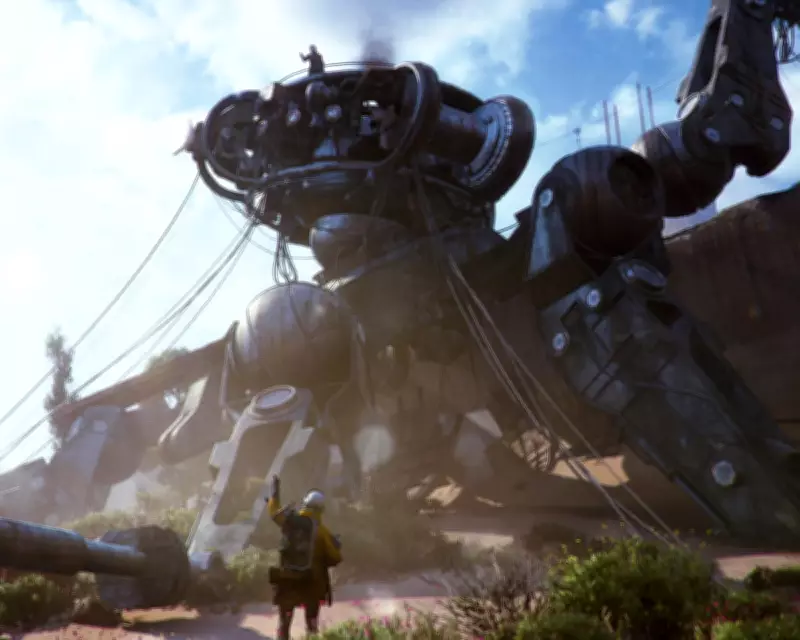
Arc Raiders, released late last year and selling over 14 million copies, is set in a lethal future where humanity survives underground while AI machines patrol the surface. Despite the high-stakes environment where mercilessness is often rewarded, executive producer Aleksander Grøndal from Embark Studios in Sweden notes that many players are embracing a more peaceful approach. "It caught us a little bit by surprise," he says, adding that the team is "pleasantly surprised" by this development.
This shift has turned the game into an unintentional social and psychological experiment. Roughly one in five players have never attacked another raider, and half have engaged in fewer than ten such conflicts. In a genre typically dominated by competitive shooters like Fortnite and Counter-Strike, this cooperative behavior stands out, especially in extraction shooters where players must race against time to survive with their loot.
Catalysts for Cooperation
Instead of shooting each other, players in Arc Raiders are finding creative ways to interact:
- Teaming up to defeat robot enemies, such as flying drones and fire-blasting spheres.
- Sneaking around to scavenge rare resources quietly.
- Holding spontaneous rave parties with music shared through microphones.
- Engaging in deep conversations about personal topics like family, work, and mental health.
Grøndal highlights that the game's proximity chat feature, used by over 95% of players, facilitates this communication, allowing shouts of "I'm friendly!" or "Peaceful!" to diffuse tensions. The introduction of a massive enemy called the Matriarch further spurred cooperation, with players quickly uniting to face the common threat.
Insights from Developers and Experts
Embark Studios reports that player preferences vary: 30% focus on cooperation, 30% on player-versus-player action, and 40% enjoy a mix. Solo players tend to be friendlier, while squads are more inclined toward firefights. Sean Hensley, a graphic artist and mental health advocate, believes players value "connection over competition," finding these interactions more rewarding than traditional game rewards.
Grøndal reflects on the broader implications, suggesting that the game may address modern isolation. "Maybe we have kind of accidentally created a place for people to connect," he says, noting that temporary virtual interactions allow openness without fear of judgment. This aligns with the game's hopeful undertones, where nature thrives despite ecological collapse, instilling a sense of optimism in players.
Conclusion: A New Paradigm in Gaming
Arc Raiders challenges conventional game design by demonstrating that human players can prioritize cooperation in a competitive world. This phenomenon not only intrigues psychologists and criminologists but also offers a refreshing perspective on the human condition. As players continue to seek connection in virtual spaces, the game serves as a testament to the enduring desire for community, even in the most unlikely settings.




