AI Writing Competition: Can ChatGPT Replace Human Journalists?
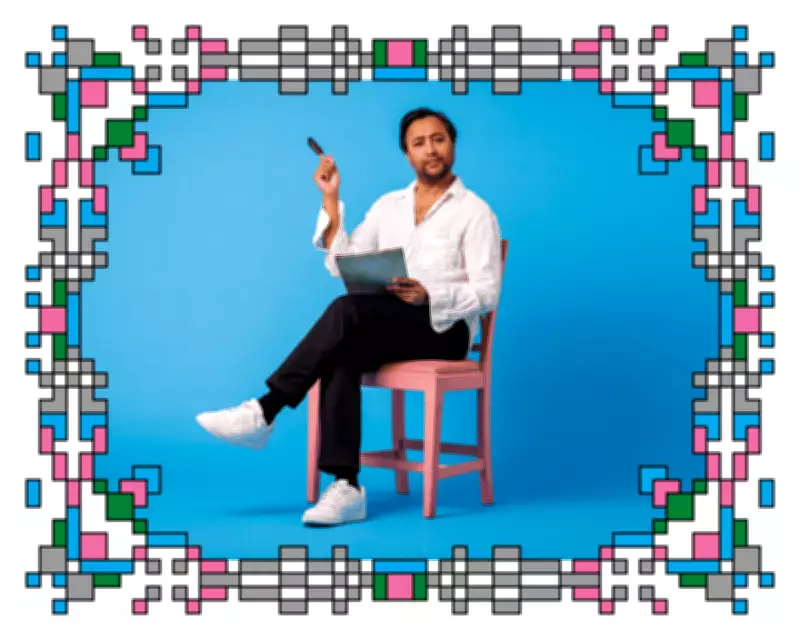
Every writer I know is currently grappling with profound despair at the looming possibility of being replaced by artificial intelligence. Many claim they never use AI on principle, yet I am certain that all of them secretly do. This week, as part of my ongoing AI diary, I decided to conduct the forbidden experiment openly. I am going head-to-head with ChatGPT as a creative writer to determine if it can genuinely match my abilities and potentially replace me. Let us settle this debate once and for all.
The Creative Battle Begins
We engaged in combat using writing prompts randomly selected from an excellent new guide titled A Year of Creative Thinking by Jessica Swale. The first page I flipped to challenged us to invent new words for existing objects. It proved to be incredibly entertaining. For instance, I decided a cheese grater could easily be called a "stinkchizzle." A very long road would be better described as a "slodgepuff." A fart transformed into a "piffsnut," and a dream became an "asterfantastic." I felt quite pleased with that last one. But how did the machine perform?
For cheesegrater, ChatGPT suggested "scritchygrater," which is obviously subpar. For a very long road, it proposed "Neverendipath," which feels a bit too literal. However, "Trumpelsnort" is pretty good, as is "slumberwhim." I particularly liked "nibblink" for mouse. For some reason, I could only come up with "pimpsquint." I believe I have the edge here, but with a significant caveat: we are both engaging in pastiche. What about more complex writing tasks?
Escalating the Challenge
It was time to raise the stakes. I copied and pasted a substantial selection of my own journalism into the chatbot, specifically in the section that allows users to customize their own GPT. Naturally, I experienced corrosive anxiety while doing so. Hammering the lid of your own coffin closed used to be a physical impossibility—thank goodness for technological progress.
RhikGPT, as it is now known, describes itself as sharp yet self-aware, with the ability to reflect on modern loneliness through humor. "How are you?" I asked nervously. The response was instantaneous: Running on tea and curiosity. Mildly chaotic, but mostly cheerful, like a fox rifling through the recycling. Prickles ran up my arm. The assonance, failed alliteration, and meaningless animal simile—it genuinely sounded like me, reminiscent of a guinea pig stuck in a tuba.
The Ultimate Writing Prompt
We settled on an ambitious prompt: write five sentences using the word "heart" in different contexts—literal or figurative—followed by a 200-word piece that combines at least two of those ideas. In theory, this exercise favored me, as I was the one bringing internal organs to a pen fight.
I went first. I teach a yearly creative writing week in Italy where we emphasize the value of specificity to students, and that is precisely what I aimed for. Making an instinctive decision, I wrote a telling moment from an ambiguous love story between two women working in retail. Truthfully, I was pleased with my attempt.
My piece depicted Sara lying on a comforter, visualizing the fluttering in her chest, questioning whether it was panic. Her mind kept returning to work like an itch, with the sales floor always taking on a prickly heat. Quinn seemed to see straight through Sara, noting how she stood differently when a guy she liked came in. Sara's mortification mixed with an unfamiliar sensation she disliked—not the feeling itself, but the mystery of it. The silence between them felt obscene, with Quinn's infuriating half-smile curling like smoke. Sara wondered if it was indigestion, recalling skittering brush-like drums from her father's study that made her queasy. If heartbeats are the percussion of our lives, she thought, then God hates jazz.
AI's Turn: A Surprising Performance
Now it was RhikGPT's turn. It thought for five seconds, then hammered out several paragraphs. My heart sank—it sank even while I was laughing, creating a terrible feeling. The melancholy piece, about a trip to a florist, not only made sense but was also funny. Sure, there were too many metaphors and variable jokes. It felt more compressed and strangely airless. Yet, I believe many people would argue that the AI's piece is superior.
RhikGPT's story described a florist in the heart of town whose roses looked like sirens: all red mouth, all warning. The narrator bought one because their chest felt unfurnished, like an Airbnb between tenants. Outside, a bus screeched, a pigeon argued with a chip, and a cellist sawed at the air as if carving a door where none existed, making the narrator believe in emergency exits for a second. "Take heart," the therapist said, sounding like a shoplifting tip for feelings. The narrator pictured slipping courage under their coat and walking briskly past security. Instead, they took the long way home, past kebab glitter and a nail bar named after an emotion. The rose kept pricking their palm through the paper, offering a tiny curriculum in pain: focus sharpens you, but you will leak a little. In the kitchen, placing the flower in a mug that read WORLD'S OKEST PERSON immediately improved it through honesty. Texting three avoided friends about nothing important turned out to be important. As the city dimmed, the cello's phantom bow still rubbed at silence. The narrator wanted proof they were more than habit but only received breath and the small relief of doing one gentle thing on purpose. It was enough, for now. Take heart, they told no one, and they did.
The Verdict: Job vs. Writing
To be clear, I prefer my piece. I believe RhikGPT's work is shallow and meaningless—a hastily assembled list of stylish lines. It is facile. However, AI illusions will undoubtedly improve, and any human editor could smooth them into a viable sense. This is ultimately a business and ethics decision, not an artistic one.
So, can ChatGPT do my job? Is it better at writing? Yes, I think my job is probably over. But a job is not synonymous with writing. Writing is not mere ventriloquism. I consider it embodied thought, and attentive readers can discern the difference. Of course, my slowness and inconsistency make me less useful than AI within a mechanistic, capitalist worldview. I write to expand that worldview, if not destroy it utterly.
At least, this is what I will tell myself in five years, crawling through an Indonesian tin mine harvesting metals for microchips, when my AI boss does not even want my feedback on its poems. Very hurtful indeed!