
In a groundbreaking development for meteorological science, Google's DeepMind artificial intelligence tool has transformed hurricane forecasting during the intense 2025 Atlantic season, potentially saving countless lives through its remarkably accurate predictions.
The Melissa Breakthrough
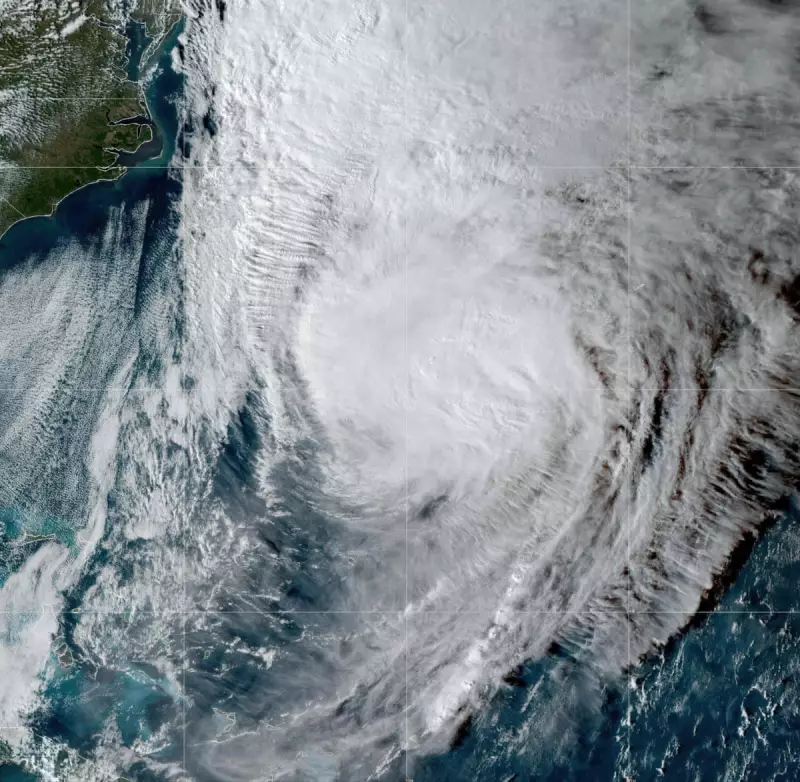
When Tropical Storm Melissa began churning south of Haiti in late October 2025, National Hurricane Center meteorologist Philippe Papin faced a critical forecasting decision. Using Google's newly released DeepMind hurricane model, Papin made what he described as the boldest prediction of his career: the storm would rapidly intensify into a Category 4 hurricane within 24 hours and turn toward Jamaica.
Papin's confidence stemmed directly from the AI model, which indicated that roughly 40-50 ensemble members showed Melissa reaching Category 5 strength. This marked the first time an NHC forecaster had issued such an aggressive rapid intensification forecast, but the AI-powered insight proved devastatingly accurate.
As Papin explained in his public discussion on 25 October: "It appears likely that a period of rapid intensification will occur as the storm moves slowly over very warm ocean waters which is the highest oceanic heat content in the entire Atlantic basin."
AI Outperforming Traditional Methods
Google DeepMind represents the first AI model dedicated exclusively to hurricane forecasting and has astonishingly surpassed traditional weather prediction methods in its debut season. Throughout all 13 Atlantic storms in 2025, the AI model consistently delivered superior performance, even beating human forecasters on track predictions.
The technology operates by identifying patterns that conventional physics-based weather models might overlook, according to Michael Lowry, a former NHC forecaster. "They do it much more quickly than their physics-based cousins, and the computing power is less expensive and time consuming," Lowry noted.
Unlike generative AI systems like ChatGPT, DeepMind employs machine learning techniques that analyse massive datasets to identify patterns. The model can produce forecasts in minutes using standard desktop computers, while traditional government models require hours of processing time on some of the world's most powerful supercomputers.
Life-Saving Implications
The real-world impact became tragically evident when Hurricane Melissa made landfall in Jamaica at Category 5 strength, ranking among the strongest landfalls ever recorded in nearly two centuries of Atlantic basin documentation. Papin's early warning, powered by DeepMind's predictions, provided Jamaican residents with crucial additional preparation time that likely saved both lives and property.
Retired NHC forecaster James Franklin expressed his admiration for the technology, stating: "I'm impressed. The sample is now large enough that it's pretty clear this is not a case of beginner's luck."
However, Franklin noted that like many AI systems, DeepMind occasionally struggles with high-end intensity forecasts, citing difficulties with Hurricane Erin earlier in the season and Typhoon Kalmaegi in the Philippines.
The Future of AI Weather Forecasting
Despite these minor limitations, the success of Google DeepMind has sparked a revolution in meteorological forecasting. The US and European governments are now developing their own AI weather models, while startup companies are receiving government funding to tackle previously challenging forecasting problems.
One significant concern among meteorologists involves the "black box" nature of AI models. Unlike traditional government models that make their methodologies publicly available, Google has kept much of DeepMind's internal workings confidential, though the company does provide real-time output on a dedicated website.
Franklin plans to engage with Google during the offseason to discuss providing additional data that would help forecasters understand precisely how the model reaches its conclusions. This transparency could further enhance the tool's utility in emergency situations.
As climate change continues to intensify hurricane activity, the emergence of accurate, rapid-response AI forecasting tools like DeepMind represents a critical advancement in global disaster preparedness, offering hope for more effective early warning systems in future storm seasons.




