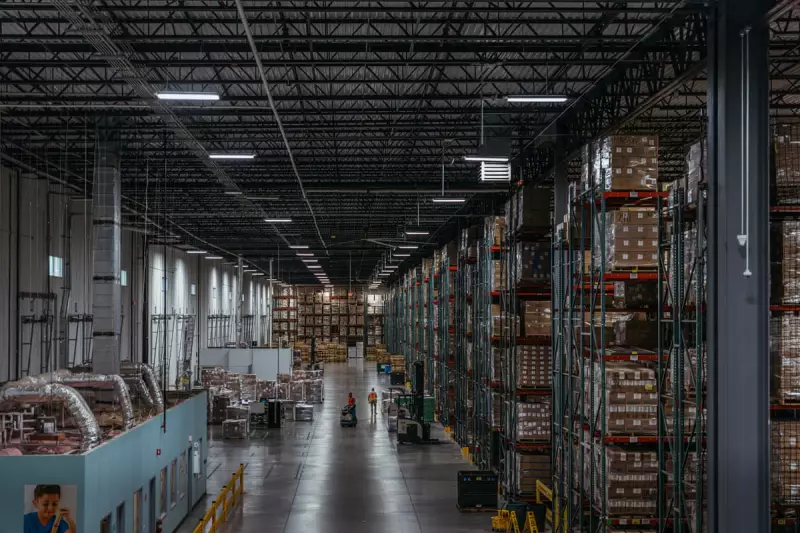
In a sprawling warehouse outside Chicago, conveyor belts hum with activity, dispatching educational toys across the United States in time for the holidays. Yet behind this scene of seasonal productivity, a high-stakes legal battle is unfolding that could have profound implications for American businesses engaged in international trade.
A Family Business Takes a Stand
Learning Resources, a family-owned company employing over 500 people, has launched one of the most significant legal challenges to date against the Trump administration. The firm, along with its affiliated brand hand2mind, is suing the president, arguing that tariffs he unilaterally imposed using the International Emergency Economic Powers Act (IEEPA) are unlawful.
The case, now before the US Supreme Court under the title Learning Resource v Trump, combines this lawsuit with others from Democratic attorneys general and libertarian groups representing small businesses. A ruling is expected in the new year, with many millions of dollars in potential tariff refunds hanging in the balance.
The Crushing Financial Impact
For Learning Resources, which manufactures the majority of its roughly 2,000 products—such as children's binoculars, cash registers, and learning games—in China, the financial burden has escalated dramatically. Stephen Woldenberg, the company's senior vice-president of sales, revealed that while they spent about $2m on tariffs in 2024, projections for this year alone stand at a staggering $14m, solely due to the new IEEPA tariffs. Costs for 2026 could be even higher if the policy remains unchanged.
"The president's unilateral tariffs are now posing the greatest challenge of their existence," states the company's legal filing, noting it has survived the Great Recession and the Covid pandemic. The risk of inaction, the Woldenberg family decided, far outweighed the risk of litigation.
Disruption and Uncertainty on the Ground
The tariffs have fundamentally disrupted operations at the company's 364,000 sq ft Vernon Hills headquarters. Woldenberg describes the situation as making planning "impossible," with rates changing on average every three days at one point this year. The consequences are tangible: the company has cut expenses, slowed hiring, and scaled back new product development for the coming year.
Approximately a third of employees are now diverted to supply chain crisis management instead of their core roles. The quest for certainty has led to a frantic diversification of manufacturing from China to countries like India and Vietnam, though this strategy carries its own risks.
A telling example is the BubblePlush, a soft toy. Production was moved from China to India to avoid high tariffs, only for the India tariff to jump from 25% to 50% while the product was in transit. It arrived six hours late for the lower rate, costing the company an extra $50,000.
A Legal, Not Political, Fight
The Woldenberg family insists their lawsuit is a technical legal argument, not a political stance. "We wanted to take action because we didn't believe that what the administration did was legal," Stephen Woldenberg explained. The decision to sue has drawn both new admirers and critics, but the family is motivated by protecting their century-old business legacy and their employees' livelihoods.
During Supreme Court oral arguments in November, justices across the ideological spectrum appeared sceptical of the administration's position. Chief Justice John Roberts noted that the "imposition of taxes on Americans" is a "core power of Congress," not the president.
Meanwhile, the Trump administration is reportedly attempting to shield itself from potential refunds by quickly depositing tariff revenues into the US Treasury, potentially placing them beyond the standard refund window.
The Broader Implications and an Unclear Future
While large US retailers have largely remained on the sidelines, wholesale giant Costco filed a similar lawsuit earlier this month, seeking refunds for tariffs it deems illegal. Learning Resources also hopes the court will address the issue of repayment.
The suggestion that production should simply move to the US is, according to Woldenberg, impractical. Quotes from American manufacturers often come in at 10 to 20 times the cost in Asia. A popular children's cash register retailing for $47.99 could exceed $100 if made domestically, pricing it out of the market.
Regardless of the Supreme Court's decision on the IEEPA tariffs' legality, Woldenberg expects trade uncertainty to persist. "We expect that there will be tariffs after a decision is brought down," he said, acknowledging the continued difficulty in making long-term business decisions.
For now, the company presses on, its warehouse a symbol of both American industry and the complex global supply chains it depends on—chains now under unprecedented strain from a trade policy being contested at the highest level of the law.