British motorists looking to purchase a new vehicle are currently positioned to secure significant savings, with fresh industry data indicating that manufacturers and dealerships are offering price reductions exceeding 10% across the board. The average discount available on new cars in the UK now stands at an impressive 11.4% of the on-the-road price, which translates to approximately £5,911, according to insights from Insider Car Deals.
Substantial Savings Across All Vehicle Types
These comprehensive on-the-road prices encompass all necessary components for driving a car legally, including road tax, registration fees, number plates, delivery charges, and VAT. The discounting trend spans petrol, diesel, and electric models, creating opportunities for consumers across different preferences and budgets.
Electric Vehicles Lead Discount Percentage
Electric vehicles are experiencing particularly notable price reductions, with an average discount of 12.9% when including savings from government electric car grants that apply to eligible models. The absolute value of discounts on battery electric cars is even more substantial at £7,091, primarily because manufacturers have been slower to develop electric versions of the smaller, more affordable cars that dominate the petrol market.
Industry executives have expressed concerns that official EV sales targets may be overly ambitious, compelling them to offer what they describe as "unsustainable" discounts on battery cars amidst fierce competition, especially from emerging Chinese automotive brands entering the UK market.
Comparative Discount Analysis Across Models
Despite the automotive industry's increasing focus on electric vehicles, some petrol models continue to offer proportionally larger discounts. For instance, the popular British-manufactured Nissan Qashqai can reportedly be found for around £36,000, representing a substantial 17.9% reduction from the recommended retail price.
Nissan has yet to commence production of an electric Qashqai model, but its similarly-sized electric vehicle, the Ariya, currently offers a more modest 13.1% discount, resulting in an average price of approximately £45,264, with certain versions qualifying for government grants.
Kia Model Price Comparisons
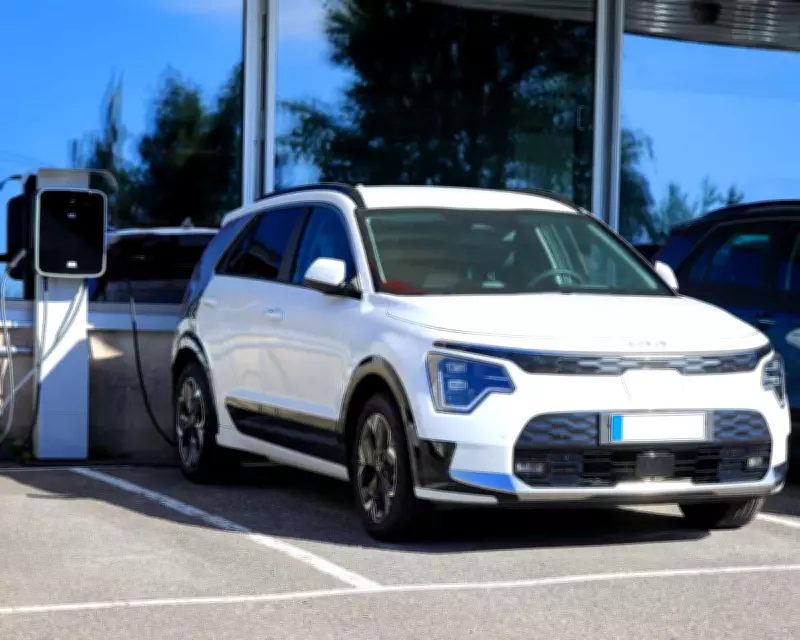
The pricing landscape reveals interesting variations between different vehicle technologies. Kia's Niro EV is available with a 7.1% discount, bringing the price to £38,460 without eligibility for government grants. In contrast, the Kia Niro Hybrid, which combines a small battery with a petrol engine, offers a more substantial 13.2% reduction, resulting in a price of approximately £33,225.
Strategic Purchasing Considerations
Regardless of which vehicle type consumers ultimately choose, industry experts emphasize that negotiation typically yields better deals, particularly towards the end of the month or quarter when dealerships may be working to meet specific sales targets.
While the initial purchase price for new electric vehicles often remains higher than their petrol counterparts, the total cost of ownership frequently proves more economical, especially for those who can charge their vehicles at home. Battery electric motors demonstrate significantly greater efficiency, resulting in reduced energy loss through heat and noise, which directly translates to lower energy costs and substantially decreased carbon emissions. Maintenance expenses also tend to be lower on average for electric vehicles.
The "Petrol Premium" Calculation
The Energy & Climate Intelligence Unit, an environmental campaign group, recently calculated that internal combustion engines incur drivers an annual "petrol premium" of approximately £1,300 based on projected 2025 fuel prices. Colin Walker, the ECIU's head of transport, notes that "with a majority of people able to charge their vehicles at home and take advantage of cheap, night-time charging tariffs, these vehicles can deliver savings worth hundreds, even thousands of pounds a year."
Price Parity Developments
The UK's electric car grant, offering up to £3,750, has facilitated price parity between electric and petrol vehicles for certain new car models. Walker highlighted the Ford Puma, the UK's bestselling car in 2025, which starts from £26,580. This compares favorably with the electric Puma Gen-E, priced at £26,245 after the government grant application.
"It's no surprise that EV sales increased so significantly in 2025," Walker observes. "The choice of models is constantly expanding and, crucially, the price of EVs is coming down as manufacturers compete with each other to hit their EV sales targets."
Market Evolution and Competitive Pressures
The current discounting environment marks a significant shift from the pandemic period, when new car shortages and subsequent chip supply constraints eliminated the need for substantial discounts to move inventory. The market is now returning to more traditional patterns, with added competitive pressure from Chinese automotive brands such as BYD, SAIC's MG, and Chery's Omoda and Jaecoo, all offering competitively priced models that have reintroduced bargaining opportunities at UK car dealerships.
Pat Hoy, founder of Insider Car Deals, comments that the current level of discounting is "not unprecedented. The market as a whole is starting to look a lot like it did just before Covid, where the manufacturers are getting back to usual sale patterns, turning discounts on and off."