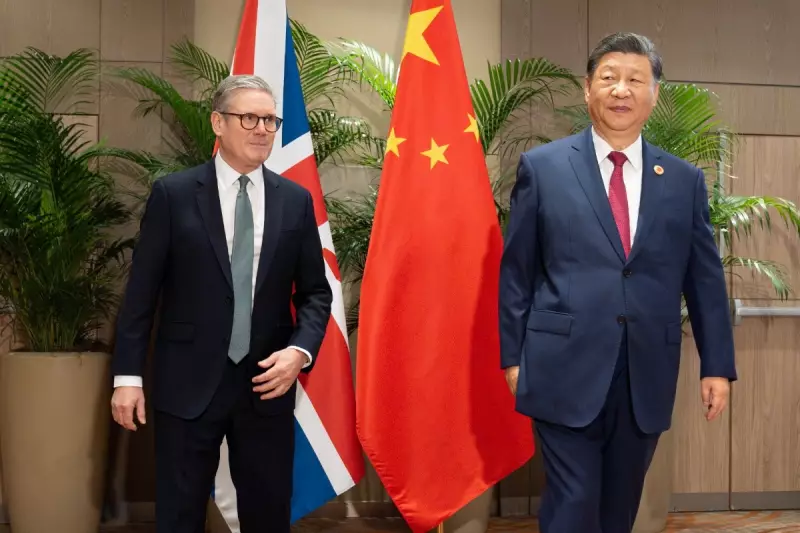
British businesses are executing a strategic retreat from Chinese supply networks as geopolitical frictions intensify, with new data from banking giant Santander revealing a dramatic reconfiguration of global trade routes.
Over half of UK firms are now actively taking steps to bring their supply chains closer to home, a decisive move driven by mounting political and economic uncertainties. The research indicates that approximately one in five companies has already completed relocating their operational networks nearer to the UK.
The Great Supply Chain Realignment
This significant shift follows a period of heavy reliance on Chinese manufacturing. Since 2023, around 40 per cent of UK businesses have depended on China for some part of their supply chain, drawn by its comprehensive industrial ecosystem, specialised labour, and massive manufacturing capacity, supported by infrastructure like the Port of Shanghai.
However, escalating tensions between Western nations and Beijing have triggered widespread concern that China could weaponise its dominant position in global business networks, potentially by restricting exports of essential components.
The situation was exacerbated earlier this year by erratic trade disputes between President Donald Trump and Beijing, which saw hefty tariffs traded back and forth, forcing a global re-evaluation of supply chain vulnerabilities.
Global Ripples and American Parallels
This trend is not isolated to the UK. Major US automakers are undertaking similar strategic pivots. Tesla has moved aggressively to eliminate Chinese suppliers from its operations, explicitly instructing partners to stop using components from the country. Meanwhile, General Motors, America's largest car company by market share, has imposed deadlines on its suppliers to find alternative sources outside China.
Jane Galvin, Head of Corporate Clients at Santander UK, contextualised the challenge for British businesses: "Ambitious UK businesses are determined to grow, but they face a challenging mix of geopolitical instability and weak domestic growth."
In the UK, security concerns have been further amplified by reports that Chinese tech firms, previously banned on national security grounds, lobbied for Beijing's new super embassy in London.
New Markets Emerge as Winners
The United States remains the most attractive export destination for UK firms, with more than a third identifying it as a key market. This follows the UK becoming the first nation to broker a post-'Liberation Day' tariffs agreement with the Trump administration, which included reducing car tariffs to ten per cent for a quota of 100,000 vehicles.
Beyond the US, China's neighbours are capitalising on this diversification. Interest in Southeast Asia has nearly doubled since Spring 2025, surpassing 12 per cent, while Central Asia attracts nine per cent of interest.
"As some move supply chains away from markets such as China and closer to home, others are exploring new emerging markets in countries such as Vietnam, Thailand, and Malaysia," Galvin confirmed, highlighting a fundamental restructuring of international trade corridors directly influenced by geopolitical pressures.