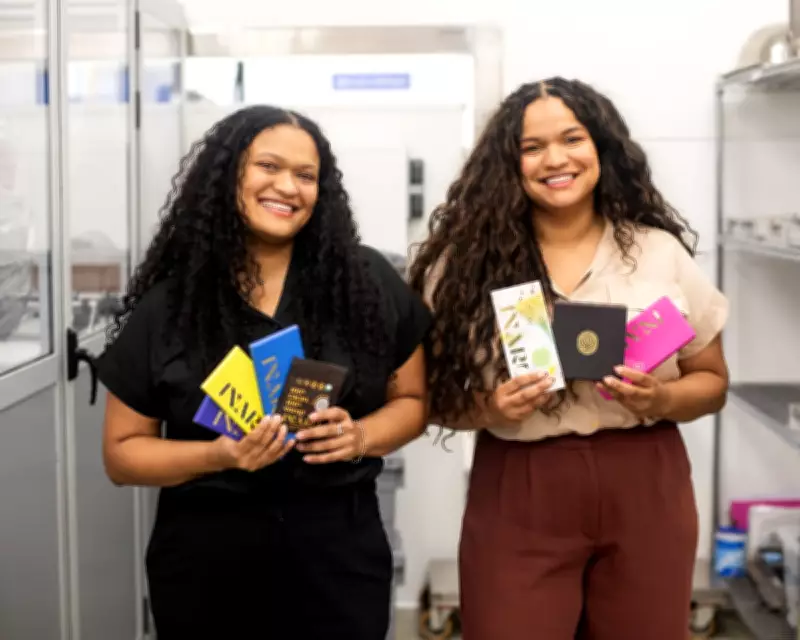
From Corporate Success to Sweet Dominican Chocolate Empire
Sisters Erika and Janett Liriano, daughters of Dominican immigrants who grew up in Queens, achieved remarkable corporate success in their twenties. Janett earned recognition on the Forbes 30 Under 30 list while serving as chief of staff at a biopharmaceutical firm, while Erika established herself in the competitive venture capital industry. Despite their professional accomplishments, both sisters felt a profound sense of unfulfillment in their corporate roles.
A Family Gathering Sparks Chocolate Revolution
During a 2019 family gathering at Janett's Kew Gardens home, the sisters tasted a traditional Dominican cacao and coffee drink prepared by their father. This simple moment ignited passionate discussions about starting a chocolate company in their parents' homeland. Their parents' encouragement proved pivotal, challenging them to redirect their formidable work ethic toward their own meaningful project rather than continuing to build value for others.
The sisters grew up hearing stories about their family's agricultural background in the Dominican Republic. Their maternal grandparents worked as farmhands, while their father's family maintained a small cocoa farm. Their parents emphasized that the country wasn't inherently poor but suffered from a systemic failure to create value that translated into genuine opportunities for its people.
Uncovering Industry Inequities
The Dominican Republic produces approximately 60% of the world's organic cacao, yet exports most of it as raw beans. This means the substantial $8 billion profit generated by chocolate production typically accrues to countries like Belgium, Germany, and the United States where the final product is manufactured. Meanwhile, many Dominican farmers struggle financially, often selling their beans to opportunistic middlemen who pay low prices, delay payments, or use rigged scales.
Antonie Fountain, managing director of the Voice Network coalition, explained this widespread phenomenon: "We call farmers 'price-takers.' In this volatile market subject to climate shocks, farmers receive whatever the world market pays unless they find a truly dedicated buyer."
The Pandemic Pivot to Purpose
In 2020, the sisters made their bold move, leaving their lucrative careers and relocating with their parents to the Dominican Republic. They spent months traveling across the country, learning about the cacao industry firsthand while bouncing between Airbnbs. Janett described this period as "following my dad around, sitting on the back of a pickup truck, trying to understand what was happening in the supply chain."
Their research revealed the exploitative practices farmers faced and solidified their determination to create a different model. They launched Inaru Chocolate, named after a Taino word meaning fertility or creation, positioning it as the country's first vertically integrated cacao company.
A Revolutionary Business Model
Inaru operates on principles fundamentally different from traditional chocolate companies. Rather than working through informal middlemen, the company contracts directly with farmers and pays purchasing agents fixed rates, eliminating incentives to undercut producers. Most significantly, Inaru pays farmers 3% of every product sold, resulting in payments 30-50% higher than what most Dominican buyers offer.
Jennifer Gomez, chief marketing officer of the Founder's Pool which supports Inaru, explained: "Rather than treating farmers as distant suppliers, Inaru views them as genuine partners in the brand's success. They've replaced a fragmented supply chain with a transparent, family-rooted model."
The financial impact is substantial: while a ton of cacao beans might fetch $30,000 on international markets, a ton of finished chocolate commands more than three times that amount. By producing high-end chocolate domestically, both the company and farmers capture significantly more value.
Building a Chocolate Factory Against Odds
In 2023, Janett as CEO and Erika as chief innovation officer opened a 7,000-square-foot chocolate factory outside Santo Domingo. Securing the location required navigating extensive paperwork, obtaining ministerial approval, and convincing an industrial park manager to allocate space officially designated as a parking lot. "To this day we are drawn in by hand on the official map of the park," Janett noted. The factory now employs 35 people.
One particularly meaningful aspect of domestic production has been sharing finished chocolate with farmers who had never tasted products made from their own beans. Erika reflected: "Being able to really see the impact and connection between the land, the people, the food and the politics on a very real, day-to-day level has been so reaffirming."
Overcoming Entrepreneurial Challenges
The journey presented significant obstacles. The sisters, who grew up speaking Spanish with their parents but responding in English, had to negotiate contracts and discuss construction plans entirely in their second language. Securing funding proved particularly challenging for women of color founders, with Black and Latino women receiving only 0.1% of US venture capital according to a 2023 McKinsey report.
Some investors demanded unrealistic prerequisites, while others expressed concerns about overseas operations. The company initially "bootstrapped it with small angel capital," including support from a former Hershey's executive, but has since raised $12 million in funding.
Sweet Success and Market Presence
Today, Inaru operates successfully on multiple fronts. Approximately 80% of their business involves supplying premium chocolate to brands like the W Hotel and Zingerman's, attracted by the product's high quality and transparent supply chain. Inaru-branded chocolates sell online and in more than a dozen boutiques and specialty shops, with premium offerings like a 2.5-ounce dark chocolate bar retailing for $11.
Fountain noted the quality distinction: "Cocoa from the DR tends to be better quality, better chocolate. This is not what you put in a KitKat." The company offers creative variations including hibiscus white chocolate, orange and fennel dark, and vanilla and chamomile flavors.
Roots Reclaimed and Futures Built
The sisters now live full-time in the Dominican Republic, making frequent trips to the United States. Creating jobs in their parents' homeland has provided deep personal satisfaction, while reconnecting with their cultural roots has been transformative. Erika expressed this connection: "From a young age, I always knew there was another way of life beyond what I knew, and it was always really alluring to be able to try to understand that better. Honestly, it feels really natural to be here."
Their journey represents more than business success—it demonstrates how ethical entrepreneurship can create sustainable value chains that benefit producers, communities, and consumers simultaneously while honoring cultural heritage and creating economic opportunities where they're needed most.