Labour's Controversial Union Mandate Threatens Small Business Viability
The British government has quietly confirmed a sweeping new policy that will fundamentally alter the relationship between small businesses and trade unions. According to a consultation response released this week, all companies employing more than 20 people will be forced to open their doors to unionization, a move that critics warn will have devastating economic consequences.
£600 Million Annual Burden on SMEs
The Adam Smith Institute has conducted a comprehensive analysis revealing that this policy will impose a staggering £600 million annual cost on approximately 112,000 small and medium-sized enterprises across the United Kingdom. These businesses, typically employing between 21 and 249 workers, represent the backbone of the British economy and the primary engine of future growth.
This substantial financial burden represents capital that will no longer be available for business expansion, research and development, or new hiring initiatives. The policy arrives at a particularly challenging economic moment, following what critics describe as Rachel Reeves' disastrous first budget in Autumn 2024, which reportedly cost the economy approximately a quarter of a million jobs.
Fundamental Shift in Economic Contract
Beyond the immediate financial impact, this mandate represents a radical departure from traditional economic principles that have long protected smaller enterprises from excessive interference. Historically, the state has maintained a delicate balance that allowed entrepreneurs who invest their "blood, toil, tears and sweat" into their ventures to maintain control over their business destinies.
Under the new framework, small company owners will face what critics describe as "trade union commissars" dictating operational decisions, potentially stifling creativity and depressing innovation across multiple sectors. This represents a significant erosion of business autonomy that could have long-term consequences for Britain's competitive position in global markets.
Precedent of Union Influence
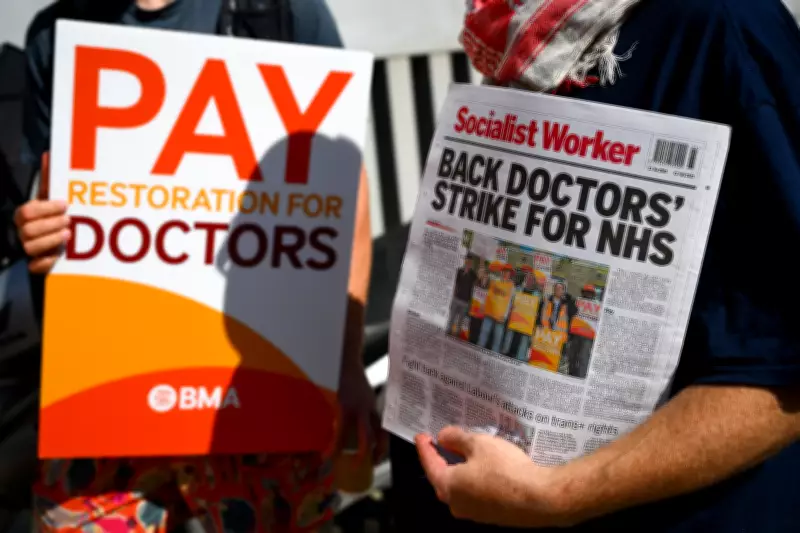
Opponents point to recent industrial actions as evidence of what widespread union access might bring. Despite receiving what many consider generous settlements, including a substantial 28 percent pay increase for junior doctors, unionized workers have continued to engage in disruptive strikes demanding even greater concessions.
The ongoing medical strikes have resulted in thousands of cancelled procedures, postponed appointments, and significant disruption to healthcare services. Critics argue this pattern demonstrates how union activities can prioritize member enrichment at the expense of broader societal interests, creating what they describe as the antithesis of capitalism's mutual benefit principle.
Rejected Compromise Proposals
The Adam Smith Institute proposed several moderate alternatives that would have mitigated the policy's economic impact while still providing some union access. These included exempting all SMEs from mandatory requirements, reducing maximum union visit frequency from weekly to monthly intervals, and limiting union activities to designated lunch and rest periods.
Additionally, the institute suggested requiring at least two existing union members within a workplace before mandating access, ensuring some demonstrated worker interest in union representation. Many small business owners had hoped these reasonable compromises would be adopted, but the government has instead implemented the most expansive version of the policy.
Broader Economic Implications
This decision represents what critics characterize as political capitulation to union interests, with potentially severe consequences for the entire economy. The £600 million annual cost represents resources that could otherwise fuel business expansion, technological innovation, and employment growth across the country.
As one commentator noted with reference to Rudyard Kipling's famous poem about appeasement, paying "Dane-geld" to make problems disappear rarely provides lasting solutions. In this case, taxpayers' resources are being used to facilitate what opponents describe as a systematic plundering of small business resources, with potentially permanent consequences for Britain's entrepreneurial ecosystem.
The policy's implementation raises fundamental questions about the balance between worker representation and business viability, with small enterprises caught in what many fear will become an increasingly adversarial relationship that benefits neither workers nor owners in the long term.