A Revolutionary Voyage Across the Atlantic
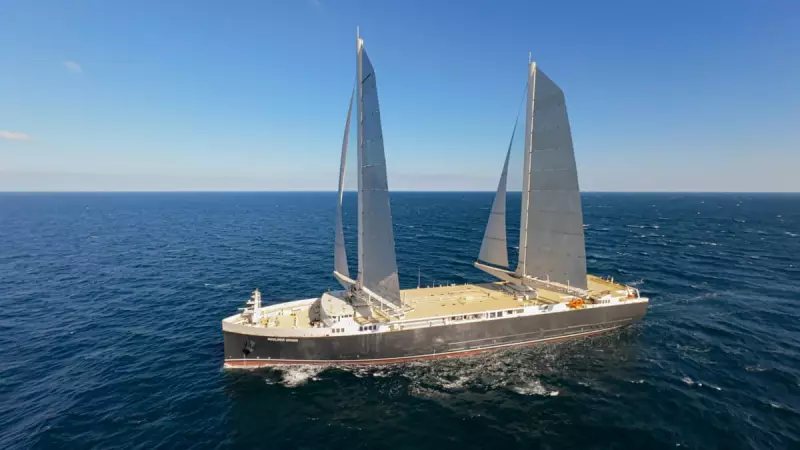
The Neoliner Origin, heralded as the world's largest sailing cargo ship, recently completed its inaugural two-week transatlantic journey from France to the United States, marking a potential turning point for the notoriously polluting shipping industry. The vessel embarked from Saint-Nazaire in Brittany, carrying an ambitious mission: to demonstrate that wind-powered commercial shipping could significantly reduce environmental impact while remaining commercially viable.
Stormy Seas and Technical Challenges
The journey proved anything but smooth sailing. Passengers experienced what Captain Michel Péry initially dismissed as a "tempête de journalistes" (journalists' storm), but which escalated into genuine hurricane-force winds reaching 74mph (force 12). The dramatic weather provided an early test for the innovative vessel and its crew.
More significantly, three days into the voyage, the ship encountered a major technical setback when the top panel of one carbon sail cracked and shattered, rendering it unusable. The damage, suspected to stem from design flaws, forced the crew to rely more heavily on the backup 4,000kW diesel-electric engine for the remainder of the crossing to Baltimore, Maryland.

The timing proved particularly unfortunate as the ship had navigated toward a low-pressure system hoping to harness powerful winds. Instead, the depression stalled directly above the vessel, creating challenging sailing conditions that highlighted the increasing unpredictability of weather patterns due to climate breakdown.
Pioneering Sustainable Shipping Technology
Despite these challenges, the Neoliner Origin represents a bold step toward decarbonising maritime transport. The 136-metre roll-on, roll-off vessel is powered primarily by two semi-rigid sails constructed from carbon and fibreglass, with the backup engine serving as supplementary power. The ambitious goal: to achieve an 80% reduction in greenhouse gas emissions compared to conventional diesel-powered cargo ships of equivalent size.
Onboard for this historic journey were 1,204 tonnes of commercial cargo, including 500,000 bottles of Hennessy cognac, container-loads of refrigerated French brioche, a dozen forklifts, and eight hybrid Renault cars. The vessel also carried eight passengers alongside its crew of more than a dozen, demonstrating potential for combined cargo and passenger transport.
Captain Antonin Petit, who described commanding the vessel as the realisation of a 15-year dream, emphasised the significance of the mission: "To do something real for the planet by not burning any fuel oil into the atmosphere to carry goods by sea – it's the dream of my life."
The Future of Wind-Powered Shipping
According to research from the International Council on Clean Transportation (ICCT), shipping accounts for approximately 3% of global carbon emissions – if it were a country, it would rank as the world's sixth-largest emitter. Much of the industry relies on heavy fuel oil, the tar-like residue from oil refining considered one of the dirtiest fossil fuels.
Bryan Comer, marine programme director at ICCT, notes that while renewable hydrogen will ultimately power 90% of shipping decarbonisation, wind-assisted propulsion can play a crucial role in reducing fuel consumption and costs during the transition. However, significant challenges remain regarding scalability and economics.
The Neoliner Origin, costing €60 million (£51 million) to build, represents a custom-designed solution rather than a retrofit. At 136 metres, it's substantially smaller than the 400-metre behemoths that dominate international shipping, raising questions about whether wind propulsion can scale effectively for global trade.
Despite the damaged sail, preliminary estimates from Captain Petit suggest the vessel still achieved nearly 50% reduction in fuel consumption compared to conventional cargo ships, relying on just one functioning sail and the engine. The company plans to publish comprehensive fuel consumption data within six months.

The vessel's arrival in Baltimore, just one day behind schedule despite the technical difficulties, marks both an ending and a beginning. For Captain Petit, it represents "a reconciliation of two parts of my life that were previously separate" – combining professional maritime expertise with personal environmental convictions.
With more than 100 passenger tickets already sold for future journeys, Neoliner Origin has demonstrated there's both commercial interest and environmental imperative to pursue cleaner shipping alternatives, even if the course toward widespread adoption remains challenging.