Ukraine's Lifeline: How Nova Poshta Defies Russian Attacks
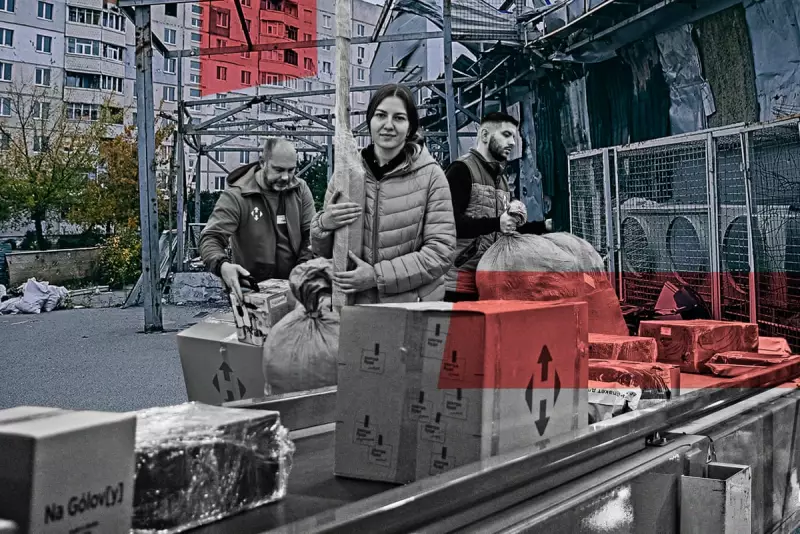
In a Kharkiv suburb just ten miles from Ukraine's eastern frontline, business continues as usual at the local Nova Poshta branch despite midnight ballistic missile attacks that lit up the sky with flames. On a chilly autumn morning, customers come and go, collecting parcels that represent fragments of normal life in a war-torn community.
Branch manager Yaroslav Dobronos, aged 30, explains the unique services this post office provides: phone-charging stations and a co-working space powered by generators during blackouts. There's even a changing room where customers can try on clothing before sending items back.
The Heartbeat of a Nation Under Fire
Behind the counters, a remarkable collection of parcels awaits collection - winter tyres, widescreen televisions, chocolate boxes from the Roshen brand, folding beds, car bumpers, skincare products, bare-root trees, rucksacks, prams, vacuum cleaners, multicookers, and crucial Starlink satellite internet components. One particularly large parcel reveals camouflage netting poking through its packaging.

Nova Poshta, founded 25 years ago, has become one of Ukraine's most vital networks, comparable to the country's rail system. It inspires national pride among Ukrainians and astonishment among foreign observers. The service remains affordable, costing between £1.50 and £2.20 to send packages weighing 5kg to 10kg within Ukraine.
"We used to see our jobs here as just work," reflects Dobronos. "Now we see that it's really important. We provide something of a peaceful life amid the war. In frontline areas, we are the last to leave and the first to come back."
Frontline Resilience and European Expansion
The company's commitment to returning to liberated areas demonstrates its crucial role. After Ukraine's lightning counteroffensive in 2022, Nova Poshta resumed operations in Balakliia just four days after liberation. In Kherson, the service delivered humanitarian aid lorries the day following Russian withdrawal.
Conversely, when Nova Poshta closes a branch, it signals the severing of a community's connection to the outside world. This occurred in Pokrovsk earlier this year when remaining staff shut the final branch as Russian forces advanced.
Drivers continue making deliveries to dangerous cities like Kherson, where vehicles face drone attacks. Near frontline areas, workers receive bulletproof vests and helmets for protection.
The service has expanded significantly since the full-scale invasion, now operating in 15 European countries including Spain and the UK (where it's called Nova Post), initially to serve millions of Ukrainian refugees.
"Even in these tough times, it is a chance for us to become a European or global delivery company," says co-founder Viacheslav Klymov, noting that next-day delivery between cities like Warsaw and Berlin is now possible.
Daily Operations Amid Constant Danger
Back in Kharkiv, battalion commander Anton Baev, 31, uses the service to send his girlfriend's possessions to her new posting. "If I could get my entire battalion delivered by Nova Poshta, I would do it," he jokes.
Moving house by post has become commonplace in Ukraine. "Almost every day we deal with house moves. We deliver furniture, fridges, motorcycles, everything," says Dobronos.
The postal service provides essential home comforts to military personnel, though weapons are prohibited. "My mother sent me homemade pie, and it arrived on the frontline," Baev shares.
When air raid sirens sound, the branch closes swiftly and reopens once the immediate danger passes. The Kharkiv premises feature two above-ground "capsule" bomb shelters equipped with medical supplies, water, and fire extinguishers.
"We know it works - when the Russians hit another branch with three Shahed drones, the capsule shelter survived," Dobronos confirms.
Sustaining Business and Personal Connections
Among the more heartbreaking tasks is dispatching fallen soldiers' possessions to their families. "It's always a weird experience," Dobronos admits. "Maybe you've seen that person in the branch, but you just don't know."

The branch operates with remarkable efficiency, aiming for "zero" monthly queue targets. Regular customers include:
- Marharyta Klymova, 24, a veterinarian receiving medical supplies for her practice
- Maksym Bilous, 33, running an online shop selling Starlink parts to eastern conflict areas
- Andrii Tomko, 24, managing his family's wholesale fabric business
- Olena Miroshnyk, 47, operating a gift hamper business after her shop plans were disrupted by invasion
Vita Kramarenko, 53, returned to Kharkiv after two years as a refugee in Germany, noting: "Despite the war, everything works and everything arrives, shelling or not. European services are a myth."
Overcoming Wartime Challenges
Operating during full-scale invasion presents enormous difficulties. "The safety of our customers and staff is the biggest challenge," acknowledges Klymov.
Russian attacks on energy infrastructure have prompted the company to become "energy independent" through generators and co-generation plants. Staffing represents another major challenge, with 4,000 workers (10% of staff) mobilised into the army.
Tragically, 22 civilian Nova Poshta employees have been killed in Russian attacks, with 218 additional casualties among drafted staff members.
The mobilisation has accelerated automation efforts. At a vast sorting depot near Kyiv, 1.5 million parcels are processed daily through automated systems and robotics.
Klymov summarises the Ukrainian customer's remarkable resilience: "The Ukrainian customer doesn't care about attacks, doesn't care about an absence of electricity supply: the Ukrainian customer needs their delivery on time."
Despite nightly attacks that leave cities without power or water, Nova Poshta continues operating, typically experiencing only hours rather than days of delay. The service has become not just a postal network, but a symbol of Ukrainian endurance and determination to maintain normalcy amid extraordinary circumstances.