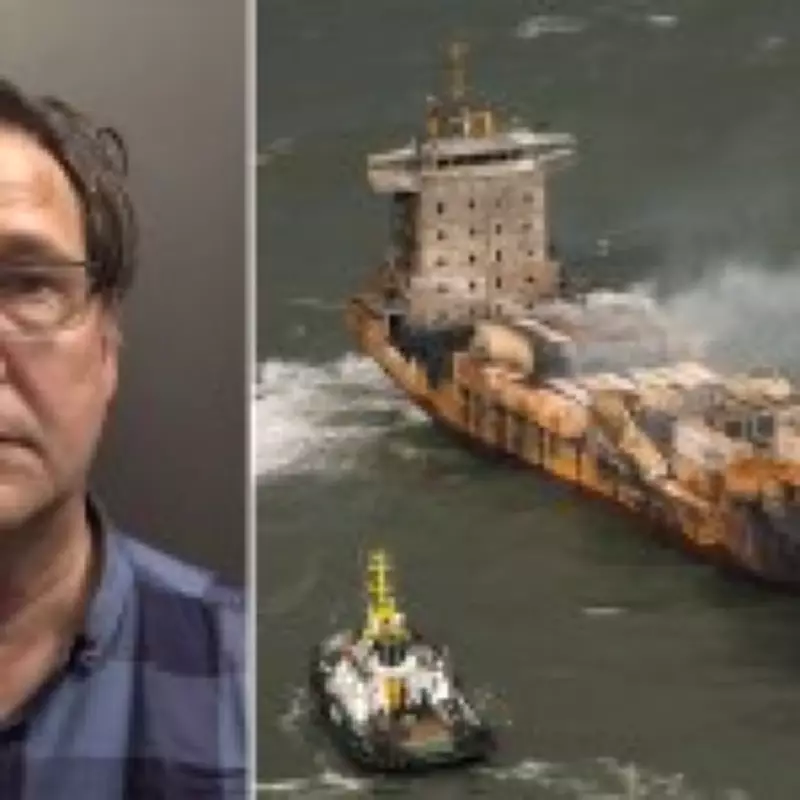
A Russian ship captain has been convicted of killing a crew member when his vessel crashed into an oil tanker in the North Sea, in a case described by investigators as a "simple, senseless tragedy." Vladimir Motin, 59, from St Petersburg, was found guilty of manslaughter by gross negligence at the Old Bailey after an eight-hour jury deliberation.
Fatal Collision Near the Humber Estuary
The incident occurred in March last year when the container ship Solong, under Motin's sole watch, collided with the anchored oil tanker Stena Immaculate near the Humber Estuary off the coast of East Yorkshire. The impact caused an immediate fire that killed 38-year-old Filipino crew member Mark Angelo Pernia instantly.
Tragically, Pernia left behind a five-year-old child and never met his second child, who was born just two months after his death. The collision between the two vessels created a dangerous situation that could have resulted in far greater loss of life and environmental damage.

Multiple Failures and False Accounts
During the trial, prosecutors alleged that Motin was responsible for multiple failures leading up to the disaster and subsequently lied about events on the bridge. Evidence presented suggested the Russian captain did "absolutely nothing" to prevent the collision despite being on an "obvious collision course" for more than half an hour.
Jurors heard that Motin failed to summon assistance, reduce speed, sound alarms, or initiate a crash stop procedure as a last resort. A concerning silence was recorded from the Solong's bridge before impact, with a full minute passing before Motin reacted to the collision.
Dangerous Cargo and Environmental Risk
The Rotterdam-bound Solong, measuring 130 metres in length, had departed from Grangemouth in Scotland carrying alcoholic spirits and hazardous substances, including empty sodium cyanide containers. Meanwhile, the 183.2-metre Stena Immaculate was transporting 220,000 barrels of JetA1 high-grade aviation fuel from Greece to the United Kingdom.
Detective Chief Superintendent Craig Nicholson emphasised the potential scale of the disaster, stating: "It's a miracle that there weren't more fatalities or serious injuries. Similarly, this could have been a huge environmental catastrophe." The Solong burned for eight days following the collision, with people present on the deck of the Stena Immaculate at the moment of impact.
Defence Claims and Prosecution Rebuttal
In his defence, Motin denied manslaughter and rejected suggestions he had been asleep or abandoned his post. He claimed to have made a "mistake" by pressing the wrong button when attempting to take the Solong out of autopilot from one nautical mile away, then unsuccessfully tried to restart the steering gear.
Motin stated he decided against a crash stop because he feared the Solong would collide with the accommodation block, potentially killing the American tanker crew. However, prosecutor Julia Faure Walker countered that it would have been "blindingly obvious" to Motin if he had pressed the wrong button and how to correct the error.
The prosecution alleged that Motin provided differing accounts of the crash to police and jurors, suggesting he lied about events to "get back to his wife" in Russia. Faure Walker told the court: "The only thing that was not working on March 10 2025 was the man in the dock."
Aftermath and Investigation
Following the collision, Motin and his remaining crew were brought ashore in Grimsby, where the captain messaged his wife saying he would be "guilty." The investigation revealed that Motin had a "constellation of information" indicating he needed to take action but instead failed to avert the disaster.
The case highlights significant concerns about maritime safety procedures and the responsibilities of vessel commanders during critical navigation situations in busy shipping lanes like the North Sea.