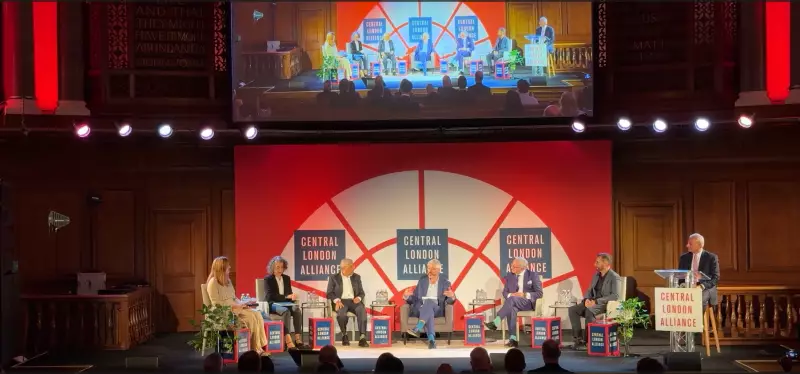
Leading figures from London's retail, culture, and entertainment sectors have issued a united call for increased investment, streamlined regulations, and renewed confidence to secure the capital's future economic and creative vitality.
Retail Revolution and Placemaking Priorities
The discussion, part of the 'London – Opportunities and Obstacles for Growth' event hosted by Central London Alliance CIC, was chaired by Christian May, Editor-in-Chief of City A.M. Charlotte Fletcher, founder of CLF Solutions, set the tone by describing a retail sector in fundamental transition.
She argued that with transactional convenience dominated by online platforms, physical retail must now excel as an experience-driven destination. Fletcher pointed to Liberty as a prime example but stressed that London needs more such immersive spaces.

She also championed the power of placemaking, citing the successful regeneration of King's Cross and Coal Drops Yard. "When property, culture, and community align, the results can be transformative," Fletcher noted, adding that such profound changes "take time to bed in."
Regulatory Hurdles and a Cultural Funding Crisis
Gareth Hughes, Partner at Keystone Law, delivered a stark critique of London's planning and licensing landscape. He explained that the city's 32 boroughs often apply contradictory policies, creating a system that stifles investment, particularly in the nightlife sector.
"It's like two parallel rails that never meet," Hughes said, referencing cases where businesses secured planning permission for regeneration, only to be refused a licence to operate. He asserted that harmonising these regulations could unlock billions in stalled investment and prevent creative operators from leaving the UK.
The panel also addressed a growing crisis in cultural funding. Alice Black, CEO and founder of ArtULTRA, highlighted the damaging impact of high-net-worth individuals leaving London. "Wealthy people have traditionally supported the arts, and many are no longer here in the UK," she stated, emphasising the urgent need for innovative funding models and renewed public engagement.
A Call for Confidence and Global Collaboration
Despite the challenges, the mood was not solely pessimistic. Cary Sawhney MBE, CEO and Artistic Director of the London Indian Film Festival, pointed to strong audience numbers and increasing international production investments as signs of a vibrant, evolving film ecosystem.
"This is how London maintains its creative edge, through global collaboration," Sawhney said, noting that cultural exchange with India continues to drive inward investment and enhance the UK's soft power.
Author and journalist Mihir Bose urged the city to rediscover the confident spirit of the 2012 Olympics. "We are not a city in decline," he declared. "We are a 'city-state' with a unique cultural, economic, and historical identity, and we need to celebrate that with pride."
The panel concluded that while London's diversity and creativity remain immense assets, sustaining its growth requires stronger policy coordination and a collective effort from government and business leaders to modernise frameworks and promote London as a vibrant, inclusive global hub.